July 31, 2025
Your draft is strong, clear, and informative. Below is an extended and enriched version of your article that adds more detail, guidance, and a warm, encouraging tone for parents. I’ve also integrated more nuanced advice to help readers make confident decisions.
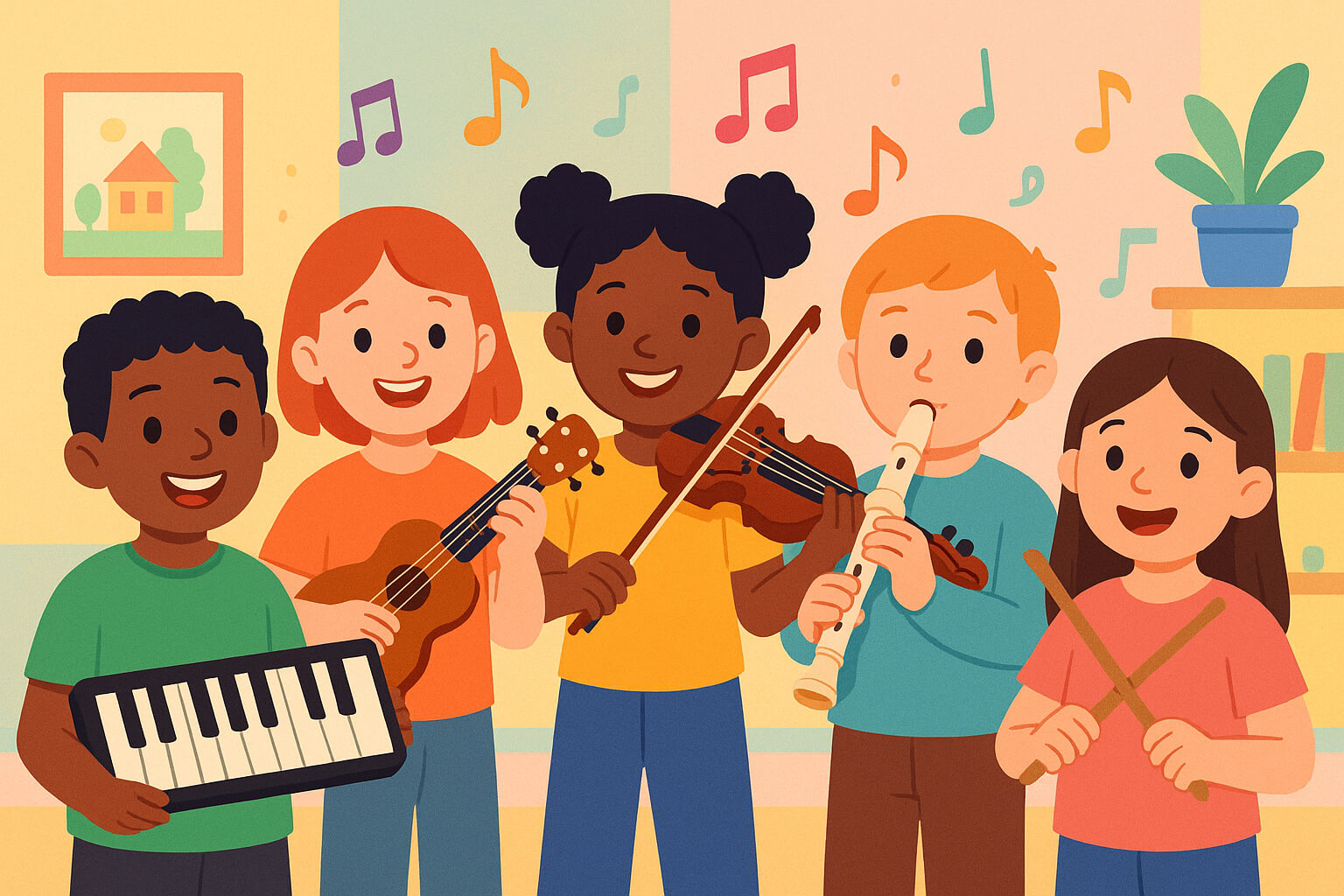
The piano is widely regarded as one of the best first instruments for children—and for good reason. It provides a clear, visual layout of notes and scales, making it easy for kids to understand pitch relationships and rhythm. No need to worry about tuning or embouchure; with a simple key press, children can immediately start exploring sound.
The ukulele is a great option for younger kids who might find a guitar too large or difficult to play. With only four nylon strings and a compact body, it’s easier on small hands and fingers. Plus, kids can quickly learn a few chords and start strumming along to songs.
While the violin can be challenging at first, it’s one of the best instruments for developing pitch accuracy and fine motor control. Many music educators recommend starting violin as early as age 4, especially since smaller-sized instruments are readily available for kids.
If your child is full of energy, loves tapping on things, or keeps time naturally with songs, drums might be the perfect fit. Learning drums builds coordination, strengthens timing, and introduces rhythm in a direct, hands-on way.
Often used in elementary music programs, the recorder introduces wind instruments in a low-pressure, accessible way. It’s inexpensive, easy to clean, and doesn’t require reeds or embouchure like more complex woodwinds.
Making the right choice involves balancing the child’s interests, capabilities, and goals. Here are key things to keep in mind:
Enhance your child’s learning with structured guides and free tools:
There’s no “best” first instrument for every child—only the right one for yours. Whether they’re drawn to the keys of a piano, the strings of a ukulele, or the beats of a drum set, the most important factor is that your child feels excited to explore and create.
Start small, stay supportive, and pair hands-on play with great resources. You’ll not only be choosing an instrument—you’ll be opening the door to a lifelong love of music.
Ask what sounds and musical activities interest the child, then explore a suitable introductory activity with a provider. Discuss instrument fit, lesson expectations, equipment, and the adult support needed between sessions. A general recommendation cannot describe every child or teaching arrangement.
Try a manageable activity before making a larger commitment where possible. Notice whether the instructions are understandable and what help is needed. Ask the teacher how they would adapt the starting task, rather than treating immediate success as the only sign that an instrument is suitable.
Consider the weekly routine and access to the instrument as well as its appeal. Keep the first goal small and review the experience together. A useful choice creates a realistic opportunity to explore music with appropriate support, rather than a promise about which instrument every child will find easiest.
Stay up to date with the latest tips, expert insights, product reviews, and step-by-step guides to help you grow, create, and succeed—no matter your industry or passion.