
How Long Does It Take to Learn an Instrument?

July 30, 2025

By RocketPages

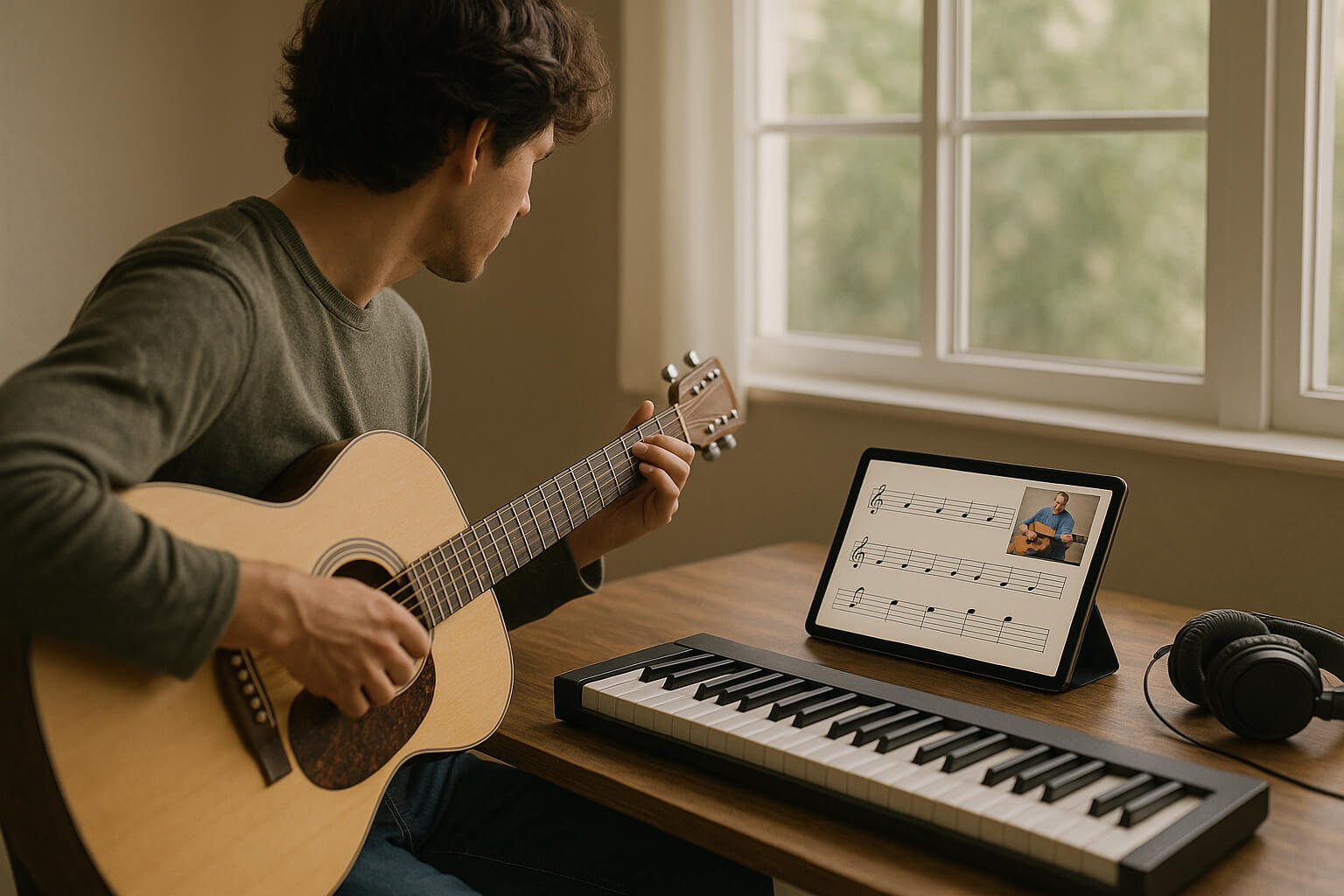
Beginner practicing music with guitar and digital lessons, showing how progress builds over time with the right tools.

If you’ve ever asked yourself, “How long does it actually take to learn an instrument?” — you’re not alone. Whether you’re thinking of picking up a guitar, sitting at a piano, or diving into drums, this is one of the most common questions every beginner has.


The truth? It depends. Your goals, how consistently you practice, your mindset, and even the instrument you choose all play a role. But here’s the good news—you’ll start enjoying the process long before you master it.


What Does “Learning an Instrument” Really Mean?


  • Before discussing how long it takes, let’s clarify what “learning” means to you.
  • For some, it’s enough to strum a few songs with friends. For others, it’s about reading sheet music, improvising solos, or even performing on stage. Your personal goal defines your timeline.
  • But regardless of your goal, those joyful “aha!” moments—like playing your first melody—happen surprisingly early.
  • To accelerate that early progress, resources like the Seven-Day Beginner Piano Practice Plan or a Beginner Guitar Chord Practice Checklist can give you a solid foundation within just a few days.


Factors That Influence How Fast You Learn an Instrument

1. Consistency & Quality of Practice


  • Practicing for 15–30 minutes daily beats sporadic long sessions. Effective practice is about showing up regularly, isolating weaknesses, and using strategies that maximize progress.
  • Explore effective methods in this guide on practice strategies, which breaks down deliberate practice, habit formation, and how to overcome practice fatigue.


2. Your Choice of Instrument


  • Some instruments offer a smoother entry point. The ukulele has soft strings and simple chords—ideal for quick wins. The piano is intuitive for visual learners, with its clear layout. The guitar might be a bit challenging at first, but once you master those initial chord shapes, your progress snowballs.
  • If you're unsure which instrument resonates with you, try experimenting with How to Evaluate AI Music Tools for a Creative Workflow to see what feels natural to play along with.


3. Your Learning Style


  • Are you a visual learner who benefits from diagrams and video tutorials? Or perhaps you’re an auditory learner who learns by ear? Maybe you’re a kinesthetic learner who needs hands-on repetition.
  • Matching your learning style with the right tools can transform your progress. For example, ear training exercises are essential for auditory learners who want to hear chords and melodies accurately.


4. Using the Right Learning Resources


  • Starting with smart resources not only accelerates your learning curve but also makes practice sessions more exciting.


5. Your Musical Background (or Lack of It)


  • If you’ve previously played another instrument, learned basic music theory, or have an ear for rhythm, you’ll likely progress faster. But even if you’re starting from scratch, tools like this Beginner’s Guide to Reading Music can help you build foundational skills quickly.


Speeding Up the Learning Process (Without Burnout)

  • Focus on Deliberate Practice
  • Don’t just play songs you already know. Target the tricky parts, slow them down, and gradually build fluency. This focused practice approach is outlined in Overcoming Plateaus, which teaches strategies to stay motivated when progress feels slow.


  • Set Achievable Micro-Goals
  • Instead of vague ambitions like “learn guitar,” set goals like:
  • Master three chord transitions by Friday.
  • Play the first verse of a song without pausing.
  • Improve rhythm control using this Rhythm Training Guide.


  • Make Practice Fun & Creative
  • Jamming to AI-generated tracks or experimenting with loops from sample packs makes practice sessions more interactive and enjoyable.


Realistic Timeline: What to Expect


  • If you practice consistently:
  • You could strum simple songs or play melodies in 2–4 weeks.
  • Confidently playing full songs will take 3–12 months, depending on your dedication.
  • Reaching an advanced level—improvising, performing, and mastering complex techniques—can take 2–5 years or more.


Final Thoughts: Progress Over Perfection


Learning an instrument isn’t a destination—it’s a lifelong journey of creativity, joy, and personal expression. With today’s digital resources, intuitive apps, and smart practice tools, it’s easier than ever to start.

Whether your dream is to:


  • Play songs with friends,
  • Write and record your own music,
  • Or perform on stage,

…the path is open.


To make the journey smoother:


And most importantly, take that first step today.


Essential Free Resources to Kickstart Your Journey:


Define the milestone before estimating time

Learning an instrument can mean playing one song, joining a group, reading a simple part, or preparing a demanding performance. Choose a concrete milestone and identify the skills it requires. An estimate is more useful when it describes a specific task and learning arrangement than when it promises a universal number of weeks.

Consider the time you can actually practice, the clarity of your materials, access to feedback, and the starting knowledge you bring. Review those factors with an instructor when possible. Keep the estimate provisional and revise it using evidence from your own sessions.

Track a small task over several sessions

Use a comparable exercise or passage and note changes in consistency, clarity, and independence. A session that feels difficult may still reveal a more precise problem to solve. Review several attempts together rather than judging the whole learning process from one day.

When the task becomes manageable, follow the next suitable step. When it remains unclear, adjust the exercise or seek feedback. A useful timeline helps organize effort and review; it should not turn another learner’s pace into a deadline for your own progress or encourage you to force an uncomfortable practice routine.

Recent Articles

Stay up to date with the latest tips, expert insights, product reviews, and step-by-step guides to help you grow, create, and succeed—no matter your industry or passion.


Portrait studio with a sitter, soft key light and camera demonstrating directional portrait lighting
Portrait Lighting Patterns: Split, Loop and Rembrandt
Judge the light on the faceA portrait lighting pattern describes the arrangement of light and shadow on the face. It is different from the make of the light, the background color, or the overall editi...
Read More
Two educators reviewing curriculum books, sample worksheets and a checklist in a school library
Choosing a School Curriculum: A Practical Review Checklist
Clarify what decision you can makeChoosing a curriculum is different from choosing a school. A curriculum concerns the sequence of knowledge, skills, learning activities, and assessment, together with...
Read More
Teacher supporting a student using geometric learning materials and a notebook in a classroom
Personalized Learning Approaches: Goals, Support and Feedback
Begin with a learning goalPersonalized learning involves making informed choices about instruction and support for a learner. Start with the knowledge or skill being developed, not with a product or a...
Read More
