
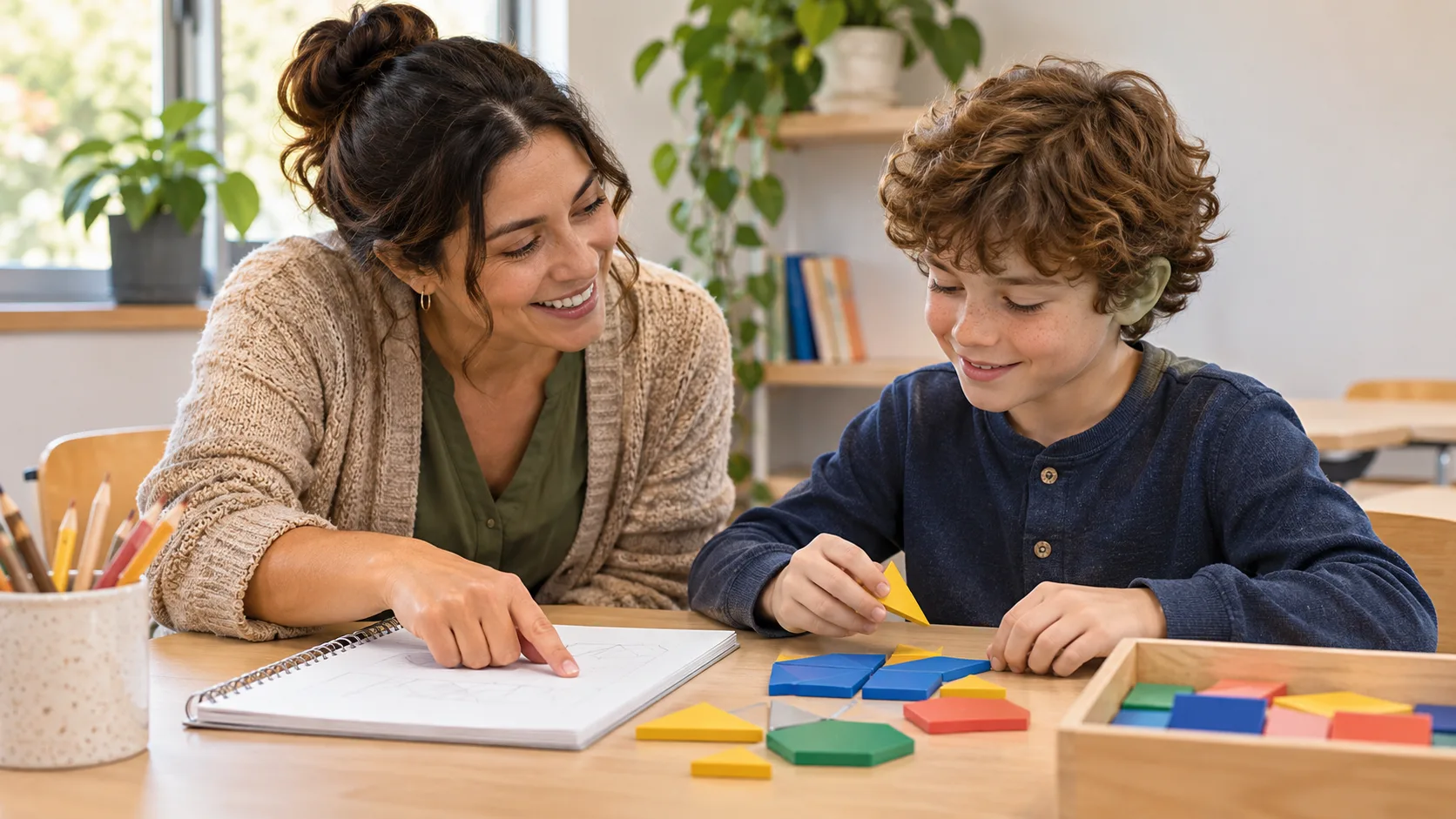
Personalized learning involves making informed choices about instruction and support for a learner. Start with the knowledge or skill being developed, not with a product or a label. A clear goal might be explaining a scientific relationship, comparing evidence in two texts, or using a mathematical method accurately. The goal makes it possible to judge whether an adaptation supports learning rather than simply making an activity different.
Personalization does not require every learner to follow an unrelated curriculum or spend the day alone with software. Teachers can adapt examples, pacing, feedback, support, and ways of participating while keeping important learning expectations visible. The appropriate choices depend on the subject, learner, context, and any applicable educational requirements. A general guide cannot determine an individual child’s assessment or support arrangements.
Use a suitable starting activity to discover current understanding. Ask the learner to explain an idea, work through a small example, or show how they approach a task. Look at the reasoning as well as the final answer. A correct answer produced by guessing and a correct answer supported by a clear explanation can suggest different next steps.
For example, a learner may complete a calculation but be unable to explain why the method applies to a word problem. The next activity could connect the calculation with the situation described. Another learner may understand the relationship but need help reading unfamiliar vocabulary. Those observations support different adaptations. Avoid assigning a permanent ability label based on a single task or assuming that one difficulty explains every subject.
Ask what the task requires beyond the intended learning goal. Dense formatting, unfamiliar instructions, inaccessible technology, or missing background knowledge may obstruct participation. Distinguish the concept being taught from incidental demands where possible. If an activity is intended to assess understanding of an idea, consider whether an unrelated difficulty is preventing the learner from showing that understanding.
CAST’s Universal Design for Learning guidance discusses anticipating learner variability and reducing barriers through flexible design. Use it as a planning resource rather than a promise that one adaptation suits everyone. Ask the learner what is difficult, observe their work, and consult appropriate educational specialists when the question involves individual support or assessment needs.
Choices are useful when they help the learner engage with the intended content. You might offer two relevant examples, a choice of practice questions addressing the same concept, or an appropriate way to plan an explanation. Explain what remains essential. If evidence-based reasoning is the goal, a preferred presentation format should still allow the reasoning and evidence to be assessed.
Avoid confusing preference with a fixed learning style. A learner may enjoy a video but still need to read, discuss, write, and practice according to the task. Ask whether the chosen option improves access or understanding and how you will find out. The most attractive activity is not automatically the most useful one, and an unfamiliar approach may become helpful with suitable instruction and support.
Support might include a worked example, a vocabulary explanation, a planning scaffold, or guided practice. Choose it because an observation suggests a need. Make the connection explicit: this example shows how the method is applied, or this organizer helps separate a claim from its evidence. That explanation helps the learner understand the purpose of the support rather than treating it as an arbitrary extra worksheet.
As the learner becomes more independent, review whether the same support remains necessary. Try a suitable task with less prompting and check what happens. Removing support too quickly can create confusion, while leaving every scaffold unchanged can hide whether independent understanding has developed. Keep the review connected to the learner’s work rather than to a fixed timetable that assumes everyone needs the same amount of assistance.
Feedback should help the learner understand what to do next. A comment such as improve this may leave the actual task unclear. A more useful response could identify that an explanation includes a claim but does not yet connect it with the evidence provided. Ask the learner to make that connection and then review the revised explanation together.
Give time to use the feedback. A personalized plan that collects comments without arranging a revision or another attempt is missing an important step. Ask the learner to describe what changed and why. If the same issue persists, reconsider the explanation, example, or task. Repeating the same instruction more loudly or attaching a stronger judgment does not establish that the underlying learning need has been understood.
A digital tool may help organize practice or present material, but examine what it actually does. Check accessibility, the quality of the content, how progress is measured, and what information is collected. A completion percentage may show that activities were opened or finished without proving that the learner can apply the idea independently. Compare tool reports with suitable examples of the learner’s work.
Keep a concise record of the goal, observed difficulty, adaptation, and result. Collect only information needed for the educational purpose and follow the relevant school or organization’s privacy rules. Families should know whom to contact with questions about a tool or support plan. Do not assume that a more detailed dashboard automatically provides a more accurate or fair account of learning.
Arrange a review point and bring concrete examples. What can the learner now explain or do? Which parts still require help? What did the adaptation reveal? Invite the learner to describe what supported their work and where they remain uncertain. Their experience is valuable information, alongside the teacher’s observation and the requirements of the subject.
Choose the next step from that evidence. You might retain an accessible format, introduce a new example, reduce a prompt, or seek specialist advice about a continuing barrier. Personalized learning is an ongoing instructional process rather than a single quiz that assigns a permanent route. Clear goals, suitable support, useful feedback, and honest checks of understanding keep the approach connected to learning that can be demonstrated.