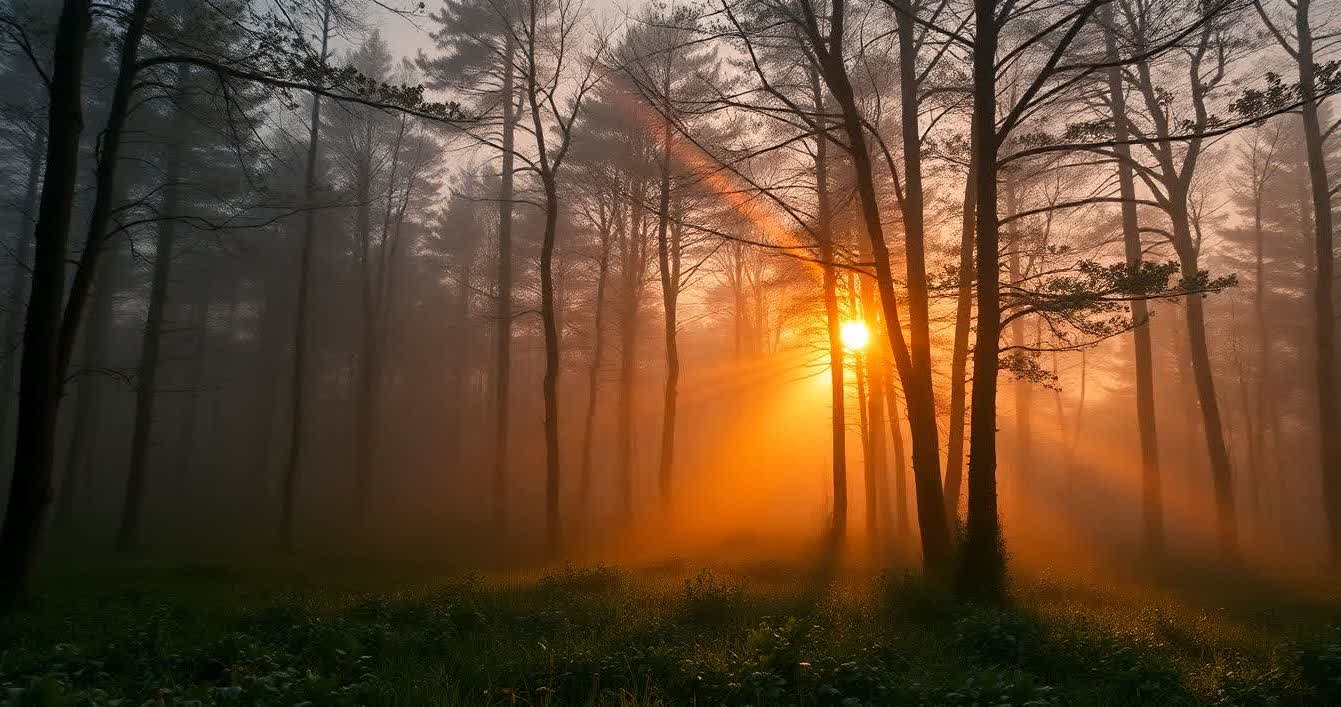
There is a moment — if you have ever been in a landscape at the right time — when the light does something extraordinary. The sun drops low enough behind a ridge that it catches the grass in the foreground and sets every individual blade on fire with golden luminescence. The morning mist in a forest becomes tangible, solid, sculpted by shafts of backlight into something that feels more like a painting than a photograph. A mountain peak catches the last light of evening and glows with an inner warmth that the flat illumination of midday could never produce.
This is what backlighting does. And learning to harness it — to understand when it will occur, how to position yourself to capture it, what camera settings will preserve its magic rather than betray it, and how to compose images that communicate the full emotional weight of what you are seeing — is one of the most transformative skills a landscape photographer can develop.
Backlighting is challenging. It works directly against the most basic photographic instinct — keeping the light source behind you — and the challenges it presents are real: blown highlights, silhouetted foregrounds, lens flare that can either enhance or ruin a composition, and exposure situations that can confuse even sophisticated metering systems. But the rewards for meeting those challenges are equally real: images with a dimension of mood, atmosphere, and visual drama that photographers who always shoot with the light simply cannot achieve.
This guide covers backlit landscape photography comprehensively — the why, the when, the where, the camera settings, the compositional approach, the gear, and the post-processing strategies that together produce the kind of backlit landscape images that stop viewers in their tracks.
Understanding Why Backlighting Transforms Landscapes
The Physics and the Magic
When light comes from behind a subject rather than from in front of it, several physical phenomena combine to produce the visual magic that makes backlit landscapes so compelling.
- Rim lighting and translucency: Light that strikes an object from behind creates a bright outline — a rim of illumination — that separates the subject from its background and gives it a three-dimensional presence that front lighting rarely achieves. For subjects with any translucency — leaves, grass, petals, thin clouds — backlight penetrates the material and illuminates it from within, creating a glowing quality that transforms ordinary vegetation into something luminous and ethereal.
- Atmospheric scattering: The atmosphere is never perfectly transparent. Dust particles, water droplets, pollen, and other suspended matter scatter light in ways that are invisible when the light source is behind the camera but become spectacularly visible when the sun is in or near the frame. These particles scatter light in the direction of the camera, creating the visible light beams, halos, and atmospheric haze that give backlit images their surreal, almost otherworldly quality. Foggy mornings, misty waterfalls, dusty trails, and coastal sea spray are all conditions that amplify this scattering effect.
- Sun flares and starbursts: When the sun is partially obscured by a solid object — a tree branch, a mountain ridge, the edge of a rock formation — it creates flares and, at small apertures, starbursts that can be powerful compositional elements. These effects are impossible with front lighting and add a distinctly cinematic quality to landscape images.
- Emotional resonance: Beyond the physics, backlighting at golden hour produces a warmth of color and a quality of light that human beings respond to at an almost instinctive level. The warm, low-angle light of the hour after sunrise or before sunset is the light we associate with the most beautiful moments of the day — with endings and beginnings, with the particular quality of attention that extraordinary natural light demands.
- Backlit Landscape Photography provides additional exploration of the specific techniques and compositional approaches that produce the most compelling backlit landscape images — with visual examples and detailed guidance for photographers at different skill levels. For anyone developing their backlit landscape practice, this resource is an invaluable companion to the technical guidance in this article.
Timing: When Backlighting Is Available and at Its Best
The Golden Hour Advantage
- The most important timing principle for backlit landscape photography is simple: the lower the sun, the more dramatic the backlighting effects. When the sun is high in the sky at midday, the angle of light is too steep to create the rim lighting, atmospheric haze, and warm color temperature that make backlit landscapes exceptional. The sun must be low — within roughly 20 to 30 degrees of the horizon — to produce the conditions that backlit landscape photography requires.
- This means that backlit landscape shooting is fundamentally golden hour photography. The first hour after sunrise and the last hour before sunset are when the sun's position is low enough to create the effects described above. During this window, the light changes constantly and rapidly — moving through a progression of colors and qualities that can shift the character of an image dramatically in a span of minutes.
- Golden Hour Photography Tips: Master Light for Stunning Photos provides comprehensive guidance on working within the golden hour window — planning for the right light quality, positioning yourself for the specific sun direction you need, and working efficiently during the brief period when conditions are at their peak. For backlit landscape photographers, understanding the full golden hour framework — not just that it exists, but how to plan for and exploit it — is essential.
- The blue hour — the period just before sunrise and just after sunset — can also produce excellent conditions for certain types of backlit images, particularly those that incorporate silhouettes against a colorful sky. The gradation of color in the sky during blue hour, from deep blue at the zenith to warm tones near the horizon, creates a background that sets off silhouetted foreground elements beautifully.
Planning Sun Position
- Because backlighting requires the sun to be behind or near the subject, you need to know where the sun will be in relation to your intended composition at the time you plan to shoot. This is not something you can improvise — if you arrive at a location to find that the sun rises or sets at a 90-degree angle to your intended composition, backlighting opportunities will be limited.
- Several apps and tools are essential for sun position planning:
- Photopills and The Photographer's Ephemeris are the two most widely used tools among serious landscape photographers. Both provide detailed information about sun and moon rise/set directions, elevation angles, and timing at any location on Earth for any date. Photopills includes an augmented reality feature that allows you to visualize the sun's position directly on your phone screen in the field, which is invaluable for scouting and precise positioning.
- Google Maps satellite view allows you to study the landscape orientation and identify potential compositions that will be backlit at specific times and directions.
Camera Settings for Backlit Landscapes: The Technical Foundation
Backlit landscapes are among the most technically challenging exposure situations in photography. The combination of a bright light source near or in the frame and a relatively dark foreground creates extreme dynamic range that can easily exceed what a camera sensor can capture in a single exposure. Mastering the settings that manage this challenge is essential.
Aperture: f/8 to f/16
- The aperture choice in backlit landscape photography serves multiple purposes beyond exposure control.
- Depth of field: Most landscape compositions benefit from front-to-back sharpness — the near foreground elements should be as sharp as the distant background. Apertures in the f/8 to f/11 range provide sufficient depth of field for this in most wide-angle landscape compositions.
- Starburst effects: When the sun is partially hidden behind an object and you want to create the distinctive starburst or sunstar pattern that appears around a point light source, smaller apertures produce more defined and more dramatic ray patterns. f/11 produces a moderate starburst; f/16 produces a more pronounced one with more distinct rays. Experiment with different apertures to find the starburst intensity that suits your compositional intent.
- Lens flare management: The aperture also affects the character of lens flare when the sun is near or in the frame. Smaller apertures tend to produce more organized, geometric flare patterns; larger apertures produce more diffuse, circular flare elements. Neither is inherently better — the choice depends on your creative intent.
- Best Settings for Landscape Photography provides comprehensive guidance on the full range of settings considerations for landscape photography — covering not just aperture but the complete exposure triangle and its interaction with specific landscape conditions. For photographers developing their landscape exposure intuition, this resource provides the foundational framework.
Shutter Speed: Managing Highlights and Motion
- In backlit conditions, shutter speed serves primarily to manage highlight exposure — preventing the bright areas of the image from being completely overexposed. This typically means using faster shutter speeds than you might in other landscape situations.
- Exposure bracketing — shooting multiple frames at different exposure levels and blending them in post-processing — is the standard approach for managing the extreme dynamic range of backlit landscapes. Shoot one exposure correctly exposed for the bright sky and sun area, one correctly exposed for the foreground, and potentially one or two in between. In post-processing, combine these exposures to produce an image with detail in both the highlights and the shadows.
- Modern mirrorless cameras with extensive dynamic range can sometimes capture the full tonal range of a backlit landscape in a single exposure, particularly when shooting RAW files that can be recovered in post-processing. But even with these cameras, bracketing provides insurance against highlight loss in the most extreme backlighting conditions.
- For landscapes with moving elements — grass, water, leaves — shutter speed must also manage motion blur in ways consistent with your creative intent. A faster shutter speed freezes motion; a slower one introduces a blur that can either complement or compromise the image depending on the subject and the composition.
ISO: Keep It Low
- In most golden hour backlighting situations, ambient light is sufficient to shoot at low native ISO values — ISO 100 or 200 on most modern cameras. Keeping ISO low maximizes dynamic range (particularly important in the extreme tonal range of backlit landscapes) and minimizes noise in the shadow areas that typically occupy a significant portion of backlit compositions.
- Exceptions include: very dense fog or forest conditions that significantly reduce ambient light; shooting into a very bright sun before the shadow areas in the foreground have any natural illumination; and situations where fast shutter speeds are needed to freeze motion in low-light conditions.
Metering Modes: Reading the Light Correctly
- Backlit landscapes routinely confuse cameras' automatic metering systems, which are designed to produce a "correct" average exposure across the scene. In backlit conditions, the bright light source in or near the frame dramatically skews the metering calculation, typically causing the camera to underexpose the foreground significantly in its attempt to manage the bright areas.
- Spot metering on the mid-tones of the scene — a gray rock, a patch of grass in the mid-ground — provides an exposure reading that will preserve some highlight detail while retaining foreground detail. This is often the most reliable starting point for manual exposure adjustment.
- Evaluative or matrix metering works reasonably well in situations where the sun is partially blocked and the overall scene brightness is less extreme. In these conditions, evaluative metering often produces a good starting point that requires only minor compensation.
- Exposure compensation — dialing in negative compensation (-1 to -2 stops) when the bright sky is dominating the metering calculation — is a rapid adjustment that can prevent the most severe overexposure of the backlit areas.
- Camera Settings for Backlit Photos addresses the full range of exposure challenges specific to backlit photography — including how to read the histogram for backlighting situations, how to use exposure compensation effectively, and the specific settings adjustments for different types of backlit subjects. For photographers who find exposure in backlit conditions confusing, this resource provides the systematic framework for consistent results.
- Mastering Backlight Photography Settings in 2025 examines the full technical landscape of backlight photography settings in the context of current camera technology — including how to use the advanced metering and dynamic range features of modern mirrorless cameras to manage backlighting challenges more effectively than was possible with previous generations of equipment.
Compositional Strategies for Backlit Landscapes
Technical mastery of exposure is necessary but not sufficient for compelling backlit landscape images. The composition — how you organize the elements of the scene within the frame — determines whether the technical success translates into an emotionally powerful image.
Managing the Sun in the Composition
- One of the fundamental compositional decisions in backlit landscape photography is what to do with the sun itself — whether to include it in the frame, to partially block it, or to keep it just outside the frame while allowing its influence on the scene to dominate the image.
- Sun in the frame: Including the sun directly in the composition creates the most dramatic and the most technically challenging backlighting effects. The sun as an element within the frame immediately creates visual tension — the eye is drawn to the brightest point in the image — and it introduces the highest level of exposure challenge. When including the sun in the frame, position it to interact with compositional elements: align it so that it peeks through a gap in trees, appears at the edge of a mountain ridge, or is centered within an arch or cave opening.
- Partially blocked sun: Positioning the sun so that it is partially hidden behind a solid object — the edge of a tree, a mountain peak, a rock formation — allows you to create starburst effects and dramatic flares while managing the exposure challenge of a fully visible sun. This is often the most compositionally versatile approach, allowing you to include the visual drama of the sun's presence without the full technical challenge of a completely exposed sun in the frame.
- Sun outside the frame: Some of the most beautiful backlit landscape images do not include the sun at all — they capture the atmospheric effects and rim lighting that the off-frame sun creates without the exposure challenge and compositional dominance of the sun itself. The glowing grasses illuminated from behind, the backlit fog drifting through trees, the rim-lit mountain peaks — all can be captured without the sun in the frame, and these images often have a subtler, more meditative quality than compositions that confront the sun directly.
Foreground Elements and Depth
- Backlit landscapes benefit enormously from strong foreground elements — subjects near the camera that interact directly with the backlight and create visual anchors that draw the eye into the composition.
- Translucent foreground subjects — wildflowers, tall grasses, thin leaves, ice crystals — glow brilliantly in backlighting, transforming from ordinary subjects into luminous elements that frame and complement the broader landscape. The combination of a glowing foreground against a backlit sky is one of the most visually powerful compositions in landscape photography.
- How to Use Foreground Elements in Photography examines the full range of strategies for incorporating foreground elements effectively into landscape compositions — how they create depth and visual interest, how to choose foreground subjects that complement the overall scene, and how to position them within the frame for maximum compositional impact. For backlit landscape photography specifically, the guidance on foreground selection and positioning is directly applicable and highly valuable.
- Reflective surfaces — still water, wet rocks, icy ground — can pick up and redirect the backlight in ways that add a second dimension of luminosity to the composition. A backlit landscape reflected in a still mountain lake creates a composition with two light sources — the sky above and its mirror image below — that doubles the visual complexity and impact.
Silhouettes as Compositional Elements
- When the backlight is so intense that preserving foreground detail becomes impossible or undesirable, embrace the silhouette — the graphic, shape-defined representation of a subject that backlight naturally creates.
- Strong silhouettes require strong shapes — subjects whose outlines are immediately recognizable and visually interesting without the detail that normal lighting would reveal. Trees, rock formations, human figures, wildlife, architectural elements, and boat shapes on water all make excellent silhouette subjects. The more distinctive the shape, the more powerful the silhouette.
- Expose for the sky in silhouette compositions — accept that the foreground elements will be rendered as nearly pure black — and focus your attention on the quality of the sky background and the clarity of the silhouetted shapes against it.
Working With Atmospheric Conditions
The most extraordinary backlit landscape images are often those that capture not just the light but the atmosphere through which it travels — the particles, moisture, and conditions that make light visible as a subject in itself.
Fog and Mist
- Morning fog is perhaps the most productive atmospheric condition for backlit landscape photography. Dense fog diffuses the light, reducing the extreme contrast of clear-day backlighting to a more manageable range while creating the conditions for visible light beams — the shafts of golden light that penetrate between trees or over ridgelines and become tangible, sculptural elements in the image.
- Early morning is the optimal time for fog — it forms overnight and typically begins to burn off within an hour or two of sunrise. The window between first light and the fog's dissipation is often remarkably brief, making preparation and positioning before sunrise essential.
- How to Photograph Foggy Landscapes for an Ethereal Look provides detailed guidance on working in foggy conditions — how fog affects exposure, how to position yourself to capture light beams, and the compositional approaches that make the most of fog's visual qualities. For backlit landscape photographers, foggy conditions are among the most productive and most technically interesting situations to work in.
Dust, Pollen, and Sea Spray
- Any condition that introduces particles into the atmosphere creates the potential for visible light scattering in backlit conditions. Dusty trails after a period of dry weather, coastal environments with sea spray, autumn forests with pollen and leaf dust, and desert environments with wind-blown sand all offer opportunities for dramatic atmospheric backlighting effects.
- These conditions are less predictable than fog but can produce images of extraordinary atmosphere and immediacy — the sense that you are watching something ephemeral and unique to a specific moment in time.
Essential Gear for Backlit Landscape Photography
Lenses
- Wide-angle lenses (14-35mm equivalent) are the primary tools for landscape photography generally and backlit landscape photography specifically. Their expansive field of view allows you to include both the dramatic sky and strong foreground elements simultaneously, and their inherent deep depth of field at moderate apertures supports front-to-back sharpness without requiring very small apertures.
- Telephoto lenses (70-200mm and longer) offer different compositional possibilities for backlit landscapes — compressing distance, isolating specific elements within the landscape, and capturing rim lighting on distant subjects with a more intimate, selective framing. Telephoto landscape work requires more precise sun positioning planning but can produce images with a distinctive compression and abstraction.
Filters
- Graduated neutral density (GND) filters are the most important filter category for backlit landscape photography. They reduce the exposure of the sky portion of the image while leaving the foreground exposure unaffected — physically reducing the dynamic range challenge of backlit landscapes without requiring post-processing HDR techniques. Soft-edge GND filters work best for landscapes without a defined straight horizon; hard-edge filters provide more abrupt transitions appropriate for scenes with a clear, straight horizon line.
- Circular polarizing filters reduce reflections and haze, which can be valuable in some backlit situations — particularly coastal and water scenes where surface reflections need to be managed. However, polarizers can also reduce the atmospheric haze and flare that are desirable in backlit landscapes, so their use requires careful judgment.
- The Best Filters for Dramatic Landscape Photography examines the full range of filters relevant to landscape photography — including GND filters, polarizers, neutral density filters for long exposures, and specialized filters — with specific guidance on when each type is most valuable and how to use them effectively. For backlit landscape photographers, the GND filter guidance is particularly directly applicable.
Tripod
- A sturdy tripod is non-negotiable for serious backlit landscape photography. The combination of small apertures (for starbursts), the need for precise composition, and the frequent use of exposure bracketing (which requires identical framing across multiple exposures) all require a stable platform that handheld shooting cannot provide.
Sun Flare and Management
- Lens hoods help prevent unwanted stray light from entering the lens when shooting near the sun. When you want to create dramatic flare, temporarily removing the lens hood allows more light into the lens; when you want to minimize flare and maximize contrast, keeping the hood on or using your hand to shade the front of the lens provides more control.
Post-Processing Backlit Landscapes: Realizing the Full Potential
The images you capture in the field are often the raw material for the final image rather than the final image itself. Backlit landscapes — with their extreme tonal ranges, atmospheric effects, and complex light — typically benefit significantly from considered post-processing.
RAW Processing
- Shooting in RAW format is essential for backlit landscape work. RAW files contain far more tonal information than JPEGs — particularly in the shadow and highlight regions — and this additional information is directly relevant to the recovery of both the dark foreground and the bright sky that characterize most backlit landscape compositions.
- In your RAW processor (Lightroom, Capture One, or similar), the key adjustments for backlit landscapes include:
- Highlight recovery: Pulling the Highlights slider significantly to the left recovers detail in the brightest areas of the image — the sky near the sun, the glowing areas at the edges of backlit subjects.
- Shadow recovery: Pushing the Shadows slider significantly to the right lifts the darkest areas of the image — the shaded foreground — revealing detail that was present in the RAW data but not visible in the unadjusted file.
- Clarity and texture: Adding moderate Clarity and Texture can enhance the three-dimensional quality of atmospheric elements — making fog more tangible, rim lighting more defined, and atmospheric haze more visually interesting.
- Color temperature and tint: Backlit golden hour images typically benefit from slightly warmer color temperature processing that enhances the warmth of the backlight while avoiding the yellow-orange cast that can make excessive warming look artificial.
- Best Photo Editing Apps in 2025: Edit Like a Pro on Mobile or Desktop provides comprehensive guidance on the full range of photo editing tools available to landscape photographers — covering both desktop and mobile options at different price points and with different feature sets. For photographers choosing their editing workflow, this resource provides the comparative analysis that enables an informed choice.
Sun Flare Enhancement and Control
- Natural lens flare in backlit images can range from subtle and atmospheric to distracting and dominant. In post-processing, you can:
- Enhance subtle flare using dodging, painting with light, and graduated adjustment tools to increase the visibility and warmth of lens flare effects that are present but subdued in the original capture.
- Reduce distracting flare through careful cloning, healing, and masking of flare elements that compete with the primary subject rather than complementing it.
- How to Create Beautiful Sun Flare Effects examines both the in-camera techniques and the post-processing approaches for creating and controlling sun flare effects — providing guidance for both the capture phase and the editing phase of the workflow. For backlit landscape photographers who want more control over the flare in their images, this resource covers both dimensions of the challenge.
HDR and Exposure Blending
- When exposure bracketing produces multiple files that capture different parts of the tonal range of a backlit landscape, combining them through HDR processing or manual exposure blending produces images with detail in both the bright sky and the dark foreground that no single exposure could achieve.
- Automated HDR processing — available in Lightroom, Photoshop, and dedicated HDR software — produces reasonable results quickly. Manual exposure blending — using luminosity masks and careful layer blending in Photoshop — produces more natural-looking results in the hands of an experienced editor.
Creative Experiments: Building Your Backlit Landscape Vision
The technical framework in this guide provides the tools for backlit landscape photography. What transforms technical competence into personal vision is practice — deliberate, experimental, reflective practice that develops your eye alongside your technical skill.
How to Shoot High-Contrast Black and White Photography 2025 explores how the dramatic tonal contrast of backlit landscapes translates into black and white — where the graphic qualities of rim lighting, silhouettes, and atmospheric haze become even more powerful when stripped of color. Converting backlit landscape images to black and white is a valuable exercise that develops your awareness of tonal structure and compositional clarity.
Structured practice experiments to develop your backlit landscape skills:
- The fog experiment: Scout a valley, forest, or meadow location known for morning fog. Arrive before sunrise, position yourself with the anticipated sunrise direction behind your subject, and work through the progression from pre-dawn to full golden hour as the fog shifts, thickens, and burns off.
- The starburst experiment: Identify locations where the sun will appear behind a specific edge — a mountain peak, a tree line, an architectural element — at a predictable time. Shoot a series with different apertures from f/8 through f/16, comparing how the starburst quality changes.
- The silhouette experiment: Photograph the same landscape subjects — trees, rock formations, grasses — as silhouettes against different sky conditions at different times during the golden hour, observing how the sky quality and the foreground shapes interact.
- The translucence experiment: Find subjects with significant translucency — flower petals, autumn leaves, ornamental grasses — and photograph them specifically for the quality of backlit translucence, varying your angle relative to the light source.
Conclusion: Light as Your Primary Subject
Backlit landscape photography at its deepest level is about treating light itself as your primary subject — not the mountain, not the forest, not the meadow, but the quality of illumination that transforms each of these into something more than they would otherwise be.
The technical skills in this guide — the settings, the filters, the processing — are the means by which you capture and communicate that light quality. The compositional strategies are the means by which you organize the scene to maximize its impact. But the vision that guides all of these technical and compositional decisions — the developed sensitivity to when and where light is doing something extraordinary — comes only from time in the field, from watching how light behaves under different conditions, and from the continuous practice of attempting to capture what you see and experience.
Go out before sunrise. Stay past sunset. Accept the cold mornings, the wet grass, the early alarm. The light that rewards this commitment is extraordinary — and the images you make in it will reflect that extraordinary quality in ways that no other photographic opportunity quite matches.
Explore Further: