
January 09, 2026
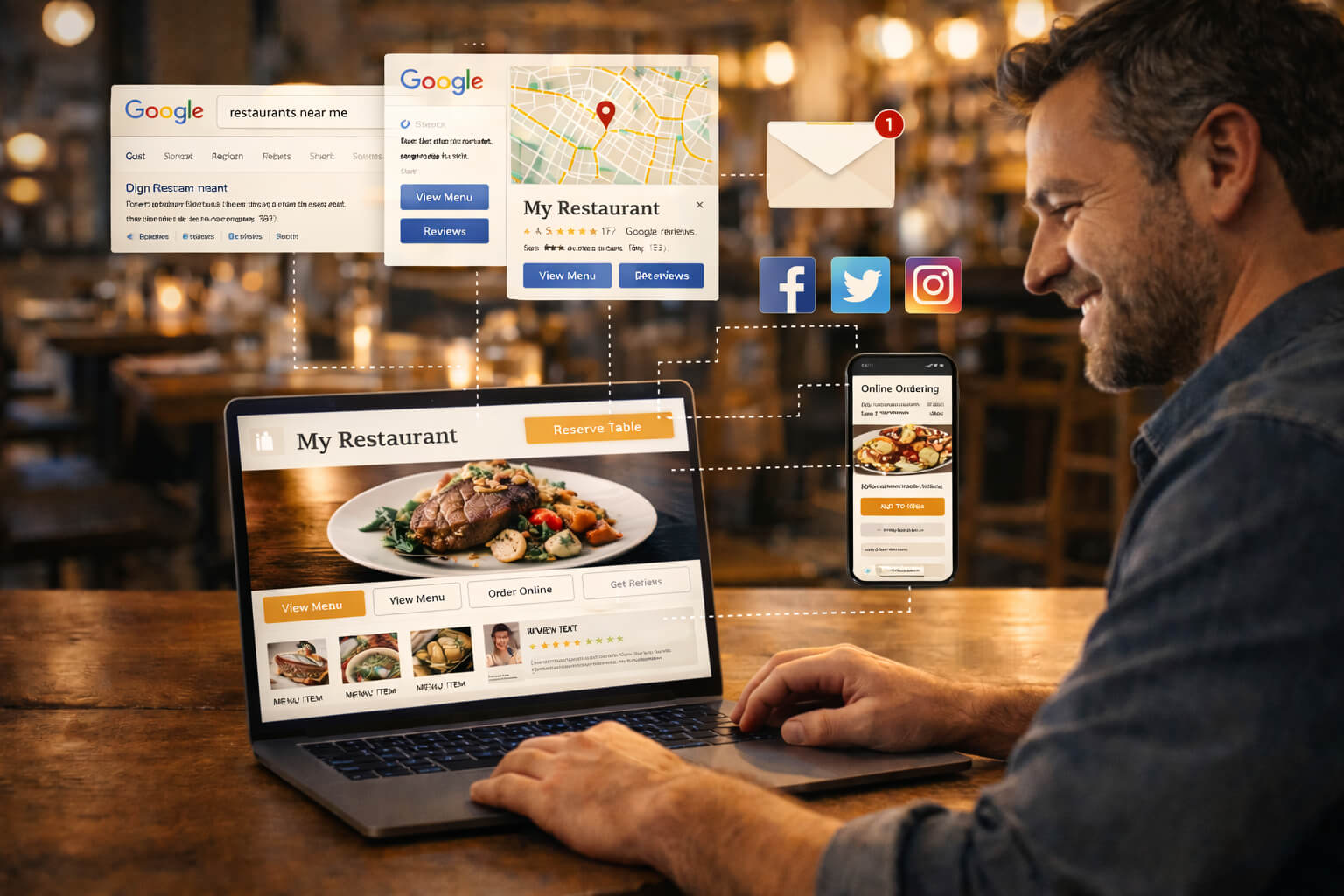
Many restaurant owners still believe that having a digital strategy means staying active on Instagram, signing up for delivery apps, or occasionally running ads. While those tools can be useful, none of them work effectively—or sustainably—without a strong website at the center.
In 2026, your website is no longer just another marketing channel. It is the foundation that connects, supports, and amplifies every digital effort you make. Without it, your strategy becomes fragmented, expensive, and difficult to scale. With it, your marketing becomes more efficient, measurable, and resilient.
Here’s why every successful restaurant’s digital strategy begins with a website.
Every digital touchpoint a diner interacts with eventually needs a destination. Social media posts spark interest, Google search creates intent, email marketing nurtures relationships, and ads accelerate visibility—but all of them must lead somewhere meaningful.
When those channels point only to third-party platforms, restaurants give up control over branding, messaging, and customer experience. A website, on the other hand, centralizes all digital traffic in a space you fully own. It allows you to present your restaurant clearly, guide diners through decisions, and prompt actions such as reservations, calls, or orders.
This hub-and-spoke structure is what makes modern digital strategies work. Instead of scattered efforts, everything connects back to one foundation that compounds results over time.
The Restaurant Marketing Funnel: How Your Website Brings Diners to Your Door
Digital visibility alone does not grow a restaurant. Likes, impressions, and views may feel encouraging, but they do not directly translate into revenue. What matters is conversion—turning interest into bookings, walk-ins, and orders.
A well-built restaurant website is designed to remove friction from decision-making. It answers common questions instantly, presents menus clearly, highlights location and hours, and makes next steps obvious. This structure transforms casual browsers into paying customers.
Restaurants that invest in conversion-focused websites consistently achieve higher returns than those relying on social platforms or delivery apps alone, where attention is fleeting and competition is constant.
The ROI of a Restaurant Website: What Owners Need to Know
In 2026, restaurant discovery is overwhelmingly driven by local, intent-based search. Diners search phrases like “best restaurant near me,” “open now,” or “Italian food in [area]” when they are ready to make a decision.
Google does not rank Instagram profiles or delivery app listings on their own. It ranks websites.
Your website provides Google with essential signals: where you are located, what you offer, when you are open, and how relevant and trustworthy your business is. Without a strong website, even a well-optimized Google Business Profile struggles to perform at its full potential.
Restaurants that treat SEO as a website-first strategy consistently dominate local search results and reduce their reliance on paid traffic.
SEO for Restaurants: How to Get Found Online
How Restaurants Can Attract Local Customers Through SEO
Delivery apps provide reach, but they come at a cost. High commissions, limited branding, restricted access to customer data, and constant competition erode margins and loyalty over time.
A restaurant website restores balance by enabling direct ordering and direct communication. This allows restaurants to improve profitability, build relationships with repeat customers, and maintain control over the guest experience.
In 2026, successful restaurants use delivery apps strategically—but never depend on them entirely. Their website is what gives them leverage and long-term stability.
How to Add Online Ordering to Your Website Without Paying App Fees
Competing With Delivery Apps: Why Direct Ordering Wins
Trust is the deciding factor in dining choices, especially for first-time visitors. Inconsistent social feeds, outdated profiles, or incomplete third-party listings create doubt—even if the food is excellent.
Websites consistently rank as the most trusted digital asset because they offer structure, clarity, and professionalism. Diners expect to find accurate menus, clear pricing cues, real photos, and straightforward ways to take action. A strong website reassures them that the restaurant is legitimate, reliable, and worth their time.
This trust directly influences conversion rates and customer confidence.
Why Diners Trust Websites More Than Social Media Profiles
The Psychology of Trust: Why Every Great Restaurant Has a Website
Advanced digital strategies are impossible without a website.
Email list building, retargeting campaigns, loyalty programs, and customer segmentation all require a controlled environment where data can be collected ethically and used intelligently. Social platforms limit access to this data. Websites enable it.
In 2026, restaurants that build direct relationships through their websites are better positioned to drive repeat visits, increase lifetime value, and reduce marketing costs over time.
How to Use Your Website to Collect Customer Emails and Build Loyalty
Loyalty Programs That Actually Work for Restaurants
The majority of restaurant interactions now happen on mobile devices, often when diners are nearby and ready to decide. A slow, cluttered, or poorly designed mobile website quietly destroys conversions and search rankings.
Mobile-first websites are built for speed, clarity, and ease of action. They load faster, rank better in search, and make it effortless for diners to call, navigate, or book in seconds.
In 2026, mobile optimization is no longer a feature—it is the baseline for digital success.
Mobile-First Websites: Why Restaurants Can’t Ignore Them
Restaurants change. Menus expand, services diversify, and new revenue streams emerge.
Whether launching catering, ghost kitchens, subscriptions, or additional locations, a website provides the flexibility to support growth without starting over. Social profiles are limited by platform constraints. Websites adapt as your business model evolves.
This scalability is what allows restaurants to grow without fragmenting their digital presence.
Ghost Kitchens Explained for Small Restaurant Owners
Why More Restaurants Are Going Subscription-Based
Restaurants that re-center their digital strategy around their website consistently see measurable outcomes. In one example, a restaurant increased bookings by 40% simply by improving its website and online presence—without increasing advertising spend.
The difference was not content volume or social reach. It was clarity, structure, and conversion.
How One Restaurant Increased Bookings by 40% With a New Website
Ads amplify visibility. Social media attracts attention. Delivery apps distribute demand.
But websites convert, retain, and compound value over time.
A digital strategy that does not start with a website is built on rented land. One algorithm change, fee increase, or platform shift can undermine everything.
Restaurants that thrive in 2026 and beyond start with a foundation they own.
Build your strategy on your website—and let everything else work harder for you.
Stay up to date with the latest tips, expert insights, product reviews, and step-by-step guides to help you grow, create, and succeed—no matter your industry or passion.