
December 23, 2025
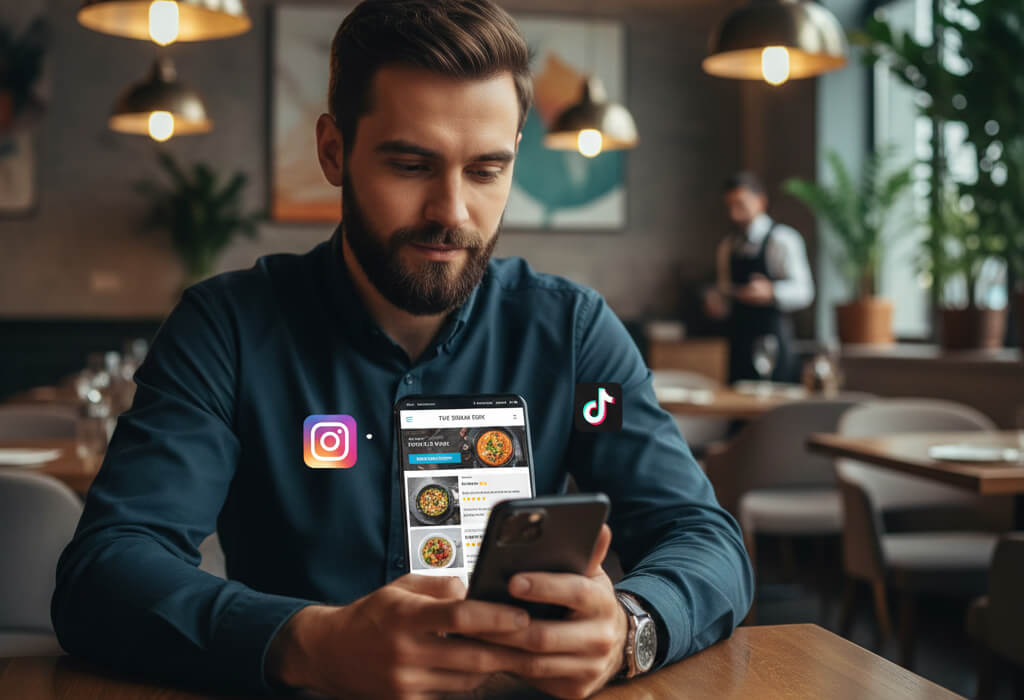
Instagram likes, TikTok views, and viral posts might make your restaurant look popular—but they don’t guarantee diners will actually show up. Social media is designed to capture attention, not convert it into revenue. In contrast, restaurant websites are built to inspire trust, guide decisions, and generate bookings.
In 2025, diners expect clarity, consistency, and control. A well-designed website delivers all three—and social media alone cannot. Here’s why websites are the cornerstone of trust and how restaurants can leverage them to turn online attention into real-world revenue.
Social media excels at getting discovered. Platforms like Instagram, Facebook, and TikTok are engineered for scrolling, exploring, and entertainment. Users may encounter your restaurant in a feed, but they rarely commit there.
When it comes time to make a choice, diners leave social media to:
Social media can create interest, but your website is where decisions happen. Without a website, the funnel breaks, and your restaurant risks losing diners who are ready to act.
A conversion-focused website anchors every marketing channel—social, email, Google Ads, and local search—turning discovery into measurable revenue: The Restaurant Marketing Funnel: How Your Website Brings Diners to Your Door
Anyone can create a social media profile. A website signals professionalism and permanence, which is critical for diners making real-world choices.
A professional website communicates:
Without a website, diners may perceive your business as incomplete, temporary, or unreliable. In fact, research shows that not having a website significantly reduces customer confidence, which can cost bookings and orders: The Cost of Not Having a Website for Your Restaurant
Many restaurants rely on Instagram highlights, pinned posts, or cropped menu photos. While visually appealing, these create friction:
Websites eliminate these issues with:
Restaurants with websites that prioritize menu clarity see better engagement, satisfaction, and bookings: Online Menus: Why They Matter More Than Printed Ones
On social media, your content sits alongside competitors’ posts, algorithm-driven ads, and unpredictable comments. Your restaurant’s story can easily be diluted or misrepresented.
Websites allow you to:
A well-structured website ensures diners see exactly what you want them to see—building trust and making the decision to visit easier: Restaurant Branding 101: Why Your Online Identity Matters
Diners are more likely to trust restaurants that are easy to understand. Social media often lacks structure, leading to uncertainty. Websites clarify key information, including:
This clarity also improves local SEO, helping Google show your restaurant to nearby diners who are ready to act: Why Every Restaurant Needs a Website in 2025—and How to Launch One Fast
While social media profiles can be discovered organically, they rarely rank well in local search results. Websites, when properly optimized, dominate local SEO:
Restaurants that invest in SEO-focused websites consistently appear higher in search results than social-only competitors:
Social media comments are often chaotic, unstructured, and unverified. On websites, reviews are:
Structured reviews not only boost trust, but they also improve SEO and conversion rates, helping diners act confidently: The Restaurant Reputation Playbook: How to Win Diners’ Trust Online
Trust alone does not grow revenue. A website that combines credibility, clarity, and navigation guides diners to:
Social media rarely converts attention into action as efficiently. Restaurants that prioritize websites over feeds consistently capture more revenue per visitor: How to Turn Website Visitors Into Paying Diners
Restaurants upgrading from social-only presence to full websites report dramatic results. For example:
One restaurant’s experience proves the power of a website optimized for clarity, trust, and action: How One Restaurant Increased Bookings 40% With a New Website
Social media platforms are ephemeral. Algorithms change, trends fade, and reach is unpredictable.
Diners, however, consistently trust businesses that offer:
Your website provides all three, consistently and predictably.
Social media creates awareness, but your website converts that awareness into revenue. In 2025, the restaurants that win will be those that use social media for attention and websites for trust and action.
Because when it’s time to decide where to eat, clarity and credibility always win.
Stay up to date with the latest tips, expert insights, product reviews, and step-by-step guides to help you grow, create, and succeed—no matter your industry or passion.