
December 24, 2025
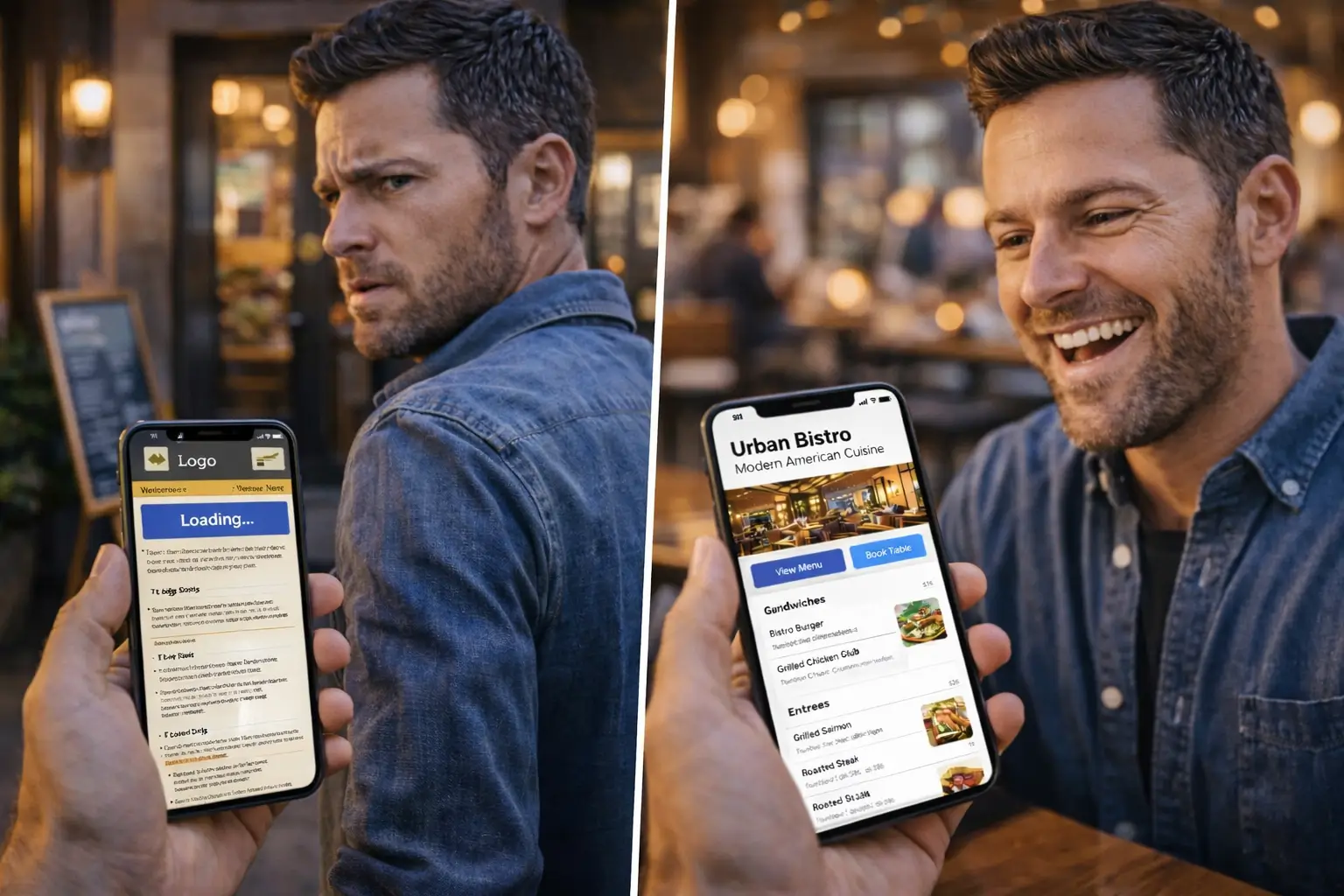
You can have incredible food, impeccable service, and loyal regulars—but if your website is outdated, confusing, or slow, diners will assume your restaurant is average before they even step inside.
This is the harsh reality of modern dining. In 2025, your website isn’t just a marketing tool—it’s a perception engine. Every pixel, every image, every click shapes how diners perceive your brand. A poorly designed website can quietly erase all the effort and investment you’ve put into your food, service, and ambiance.
For most diners, your website is their first point of contact with your restaurant—not the host, not the menu, not even the food itself.
Imagine a diner searching for a place to eat nearby. They open your website and immediately notice:
Within seconds, the diner forms a judgment: “If this website is messy, what does that say about the food or service?”
The truth is, the cost of a poor website is invisible but enormous. Potential customers may leave without ever calling or visiting—leaving your restaurant’s hard work unnoticed.
Discover the hidden cost of not having a proper website
Humans are wired to make quick judgments based on visual cues. A messy or outdated website triggers subconscious assumptions:
Even if your food is exceptional, a bad website can downgrade your restaurant in the diner’s mind. It’s a subtle but powerful effect: the diner assumes “average” before tasting anything.
Strong, professional branding—through consistent design, high-quality photography, and clear messaging—prevents this perception gap. Your online presence can accurately reflect the quality and personality of your restaurant, giving diners confidence before they even step through the door.
Learn how strong branding protects your restaurant’s reputation
Your menu is the most visited page on your website, and it’s also the most commonly broken.
Common problems that frustrate diners:
In today’s world, diners check the menu first—sometimes before even reading reviews. A confusing or inaccessible menu creates immediate frustration, and many diners leave the site—and your restaurant—without a second thought.
An online menu is more than a list of dishes; it’s your first opportunity to show portion sizes, quality, pricing, and style. Broken menus directly lead to lost revenue.
Why online menus matter more than printed ones
Speed matters—not just for SEO, but for perception. A slow-loading website conveys unprofessionalism, even if your food is top-notch.
Google also penalizes slow sites, reducing your visibility in search results. That means fewer diners even see your restaurant when searching online.
A fast, responsive website keeps high-intent diners engaged, making it easier for them to make a reservation, order online, or visit in person. In short: speed converts interest into action.
Why mobile-first, fast websites are crucial for restaurants
User experience (UX) shapes first impressions in seconds. If diners can’t quickly find:
…they assume your restaurant is poorly managed.
Good UX builds trust and confidence. Clear navigation, fast-loading pages, and obvious call-to-action buttons guide visitors from browsing to booking without frustration, giving them the reassurance that your restaurant is professional, reliable, and worth visiting.
How UX drives diner trust and bookings
In highly competitive areas, diners often choose the restaurant that feels more polished online, even if the food is objectively worse.
Independent restaurants are now outperforming large chains simply by investing in better websites. A modern, visually appealing website communicates quality, professionalism, and attention to detail—giving diners a reason to choose you over the competition.
Competing against chains with a smarter website
Google prioritizes restaurants that provide a good online experience. Weak websites can hurt your visibility in multiple ways:
Even if diners are searching nearby, a poorly designed website can cause your restaurant to disappear from their results, keeping them from discovering you entirely.
Why restaurants disappear from Google Maps and how websites affect rankings
The good news? You don’t always need a complete redesign to see major results. High-impact fixes can dramatically improve perception and conversions:
Even small updates can make a huge difference. Restaurants that implemented these changes have reported up to 40% more bookings, proving that perception matters as much as the food itself.
See how small website improvements lead to big gains
Your restaurant might be exceptional—but diners can’t taste that through a bad website.
Your website should:
A well-designed website is not optional—it’s essential for turning interest into bookings, walk-ins, and loyalty.
Great food deserves a great first impression.
Don’t let a poor website make your restaurant look average.
Stay up to date with the latest tips, expert insights, product reviews, and step-by-step guides to help you grow, create, and succeed—no matter your industry or passion.