
December 23, 2025
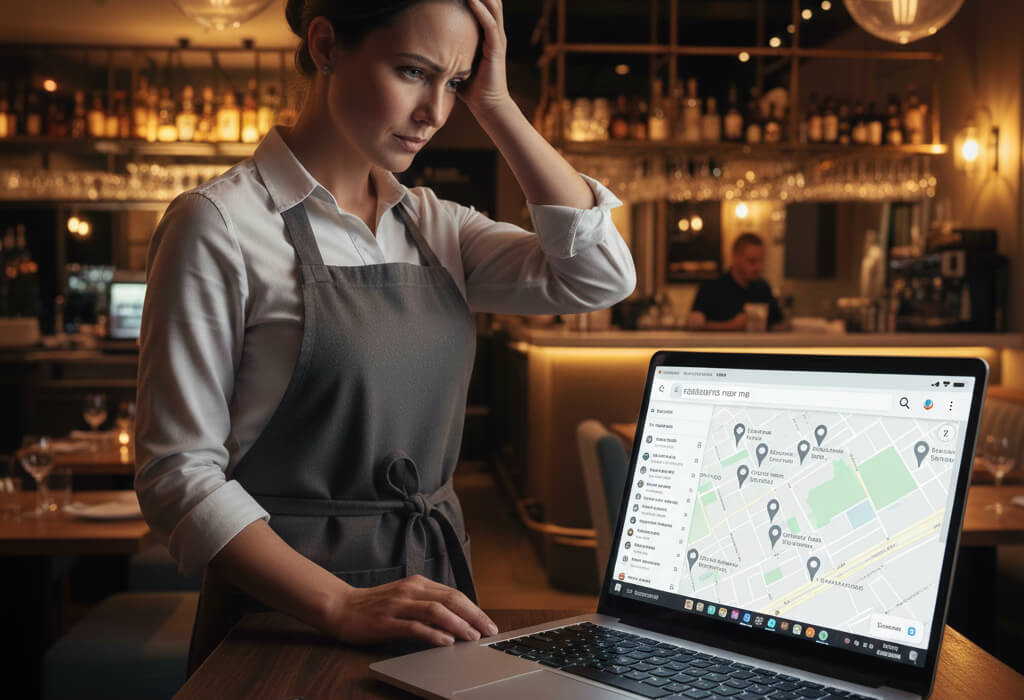
If your restaurant isn’t showing up on Google Maps, you’re losing customers every single day — often without realizing it. When diners search “restaurants near me” or “best food nearby,” Google Maps is usually the first interface they interact with. These searches come from people who are nearby, hungry, and ready to decide within minutes.
When your restaurant doesn’t appear, it’s not random. Google Maps visibility is driven by clear signals: relevance, trust, proximity, and experience. If those signals are weak or missing, Google simply chooses someone else.
The good news? Most visibility problems are structural, not permanent. Below are the 7 most common reasons restaurants don’t appear on Google Maps — and how to fix them.
Google Business Profile (GBP) is the foundation of Maps visibility. If your profile is incomplete, outdated, or poorly categorized, Google struggles to understand what your restaurant is and when it should show you.
Many restaurants create a profile once and never revisit it. That’s a mistake. Google treats GBP as a living data source, not a static listing.
Common optimization issues include:
An under-optimized profile signals neglect. Google is less likely to recommend a business that doesn’t maintain its own information.
If you’re unsure what Google actually evaluates inside your profile, this guide explains what every restaurant owner should know about Google Business Profile: What every restaurant owner should know about google business profile.
A common misconception is that Google Maps rankings depend only on your GBP. In reality, your website is one of the strongest supporting signals.
Google cross-checks your website to confirm:
If your website barely mentions your city, hides your address, or lacks local context, Google has less confidence associating you with nearby searches.
Restaurants without strong websites often struggle because Google has no place to verify intent or quality. This is why many owners don’t realize the long-term cost of not having a proper website at all: The cost of not having a website for your restaurant.
To strengthen Maps visibility, your website should clearly include:
Google doesn’t rely on one source — it compares data across the entire web. When your restaurant’s name, address, or phone number appears differently across platforms, it creates uncertainty.
Even small inconsistencies matter:
When Google encounters conflicting data, it becomes cautious. And cautious businesses don’t rank well on Maps.
Consistency builds authority. Restaurants that take control of their online identity send a strong trust signal: Restaurant Branding 101: Why Your Online Identity Matters
The more consistent your information is, the easier it is for Google to confidently show your restaurant to nearby users.
Reviews are one of the strongest Google Maps ranking factors — not just for social proof, but for algorithmic confidence.
Google looks at:
A restaurant with frequent, recent reviews will often outrank a competitor with a higher rating but no recent activity. Silence suggests stagnation.
Ignoring reviews hurts visibility in two ways:
This article explains exactly how reviews impact restaurant SEO and how to handle them strategically: How Reviews Impact Restaurant SEO and What to Do About It
Reviews tell Google that people choose you — and that matters.
“Near me” searches rely heavily on contextual relevance, not just physical distance. Google evaluates whether your restaurant clearly communicates where it is and who it serves.
If your website and profile don’t mention:
…Google may skip you in favor of restaurants that are more explicit, even if they’re slightly farther away.
Near-me optimization includes:
This in-depth breakdown explains how to win near-me searches consistently: How to Optimize Your Website for “Near Me” Searches
Near-me searches aren’t about luck — they’re about clarity.
Here’s what many restaurant owners don’t realize: Google Maps rankings are influenced by what happens after the click.
If users click your listing and:
Google interprets that as a poor experience — and reduces visibility over time.
A slow or outdated website doesn’t just lose conversions. It actively suppresses your Maps presence.
Avoiding these issues can dramatically improve both rankings and revenue: The most common restaurant website mistakes and how to fix them
Google wants to send users to businesses that won’t frustrate them.
Google Maps doesn’t rank based on food quality — it ranks based on digital readiness.
Chains and digitally savvy independents invest heavily in:
The result? They dominate Maps even when smaller restaurants have better food.
The good news: independent restaurants can absolutely compete — and often win — by building a stronger website and Local SEO foundation: How to compete against chains with a-better website
Execution beats size in Google Maps.
Restaurants that act strategically often see noticeable improvements within weeks. The highest-impact steps are:
Many restaurants have already proven that stronger websites lead to better Maps visibility and more bookings: How one restaurant increased bookings 40 with a new website.
If your restaurant doesn’t appear on Google Maps, it’s not bad luck — it’s missing signals.
Google rewards restaurants that are:
Fix these seven issues, and Google Maps can become one of your most powerful customer acquisition channels, bringing hungry diners straight to your door — without ads or app commissions.
If customers can’t find you on the map, they’ll eat somewhere else.
Make sure that place isn’t your competitor.
Stay up to date with the latest tips, expert insights, product reviews, and step-by-step guides to help you grow, create, and succeed—no matter your industry or passion.