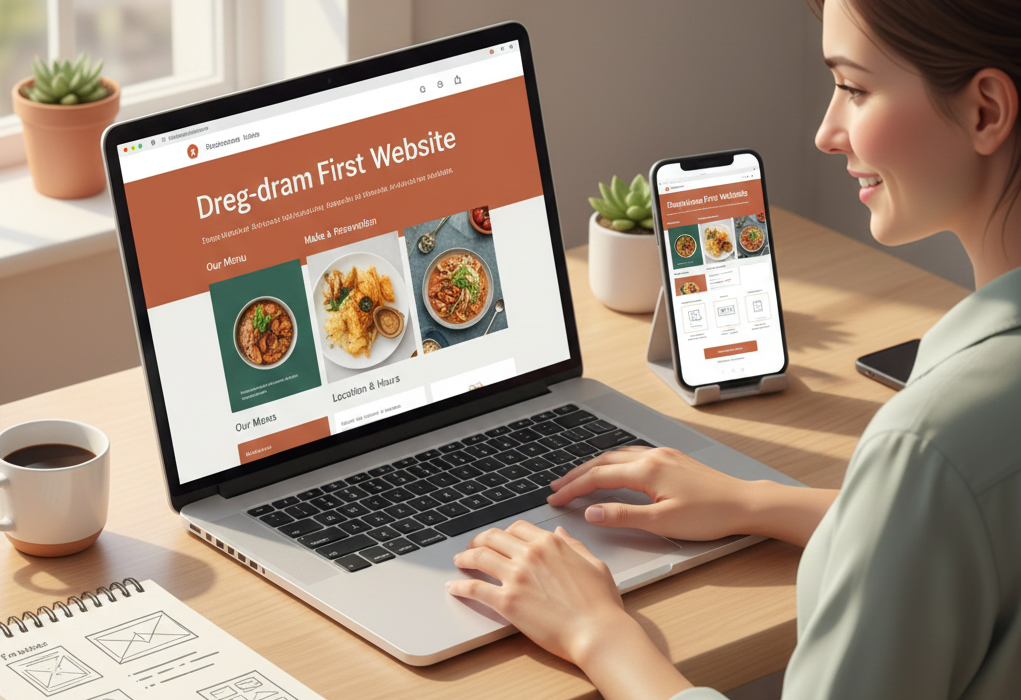
Building your first restaurant website might seem overwhelming, but with the right approach, it can be an exciting, manageable task. You don’t need to invest heavily in expensive tech, hire a huge team, or spend months perfecting your site. What you really need is clarity, structure, and a focus on what’s most important for your restaurant’s success.
This step-by-step guide will help you build a professional, functional, and user-friendly restaurant website—one that not only looks great but also brings in customers and drives growth.
Step 1: Define the Goal of Your Website
Before you dive into designing or adding content, take a moment to clearly define what you want your website to achieve. Understanding the purpose of your website will ensure that you stay focused on what matters most to your business.
For restaurants, typical goals include:
- Getting more walk-ins: You want your site to encourage people who are nearby to visit your restaurant.
- Driving reservations: Online bookings can be a huge convenience for diners and a valuable tool for you to manage table turnover.
- Increasing direct orders: Especially for restaurants offering delivery or pickup, a website can serve as a direct ordering platform that avoids third-party app fees.
- Building long-term customer trust: Your website is often the first place diners learn about your restaurant, so it’s essential to establish trust right away.
Why it’s important:
- Your website is part of your marketing funnel. It’s not just about getting people to your site, but guiding them through the process—from learning about your restaurant to taking the next step (making a reservation, placing an order, or just visiting in person). A clear goal keeps you focused on action rather than just aesthetics.
Learn more about how your website fits into the marketing funnel.
Step 2: Choose the Right Pages (Keep It Simple)
While it’s tempting to create a complex website with many pages, especially if you want to highlight every little aspect of your restaurant, simplicity is key. Your goal is to provide essential information to your diners without overwhelming them.
The basic pages that should be on your restaurant’s website include:
- Home: The first impression. It should immediately communicate who you are and what you offer.
- Menu: Easily accessible and clear, so diners know exactly what to expect.
- About: This page should tell your restaurant’s story, mission, and values, establishing a connection with your audience.
- Contact / Location: Make it easy for customers to find and get in touch with you.
Bonus pages to consider:
- Online Ordering: If applicable, for customers who prefer to place their orders directly from the website.
- Blog: Share recipes, news, and updates that engage your customers and boost SEO.
Why it matters:
- By focusing on the basics, you ensure that visitors can easily find what they’re looking for without unnecessary distractions.
See a detailed checklist of what diners expect from a restaurant website.
Step 3: Make Your Menu Easy to Find and Read
Your menu is the most important page on your site. It’s where visitors make their decision on whether to dine with you, and it needs to be easy to find, easy to read, and easy to navigate.
Key considerations:
- Easy access: Visitors should be able to find your menu in one click, ideally from the homepage and every other page on the site.
- Mobile-friendly: Since many diners will access your site from their phones, ensure your menu displays well on mobile devices.
- Clearly priced: Customers want transparency. Display prices clearly and avoid clutter.
- Up-to-date: Keeping your menu fresh and accurate is critical. If you change dishes or prices, update your website right away.
Why this matters:
- A complicated or hidden menu is a fast way to lose potential customers. When menus are hard to find or read, people tend to bounce from the site without making a decision.
Discover why online menus are more important than printed ones.
Step 4: Design Mobile-First (Non-Negotiable)
A mobile-first design isn’t optional anymore; it’s essential. Over half of all web traffic comes from mobile devices, and many people searching for restaurants are doing so while they’re nearby or on the go.
Mobile-first design includes:
- Responsive layout: Your website should adapt to fit any screen size without losing functionality.
- Fast loading speed: Mobile users are less likely to wait around for a slow-loading website. Ensure it loads quickly to avoid losing potential customers.
- Intuitive navigation: Keep your site easy to use, with clear buttons and a simple structure.
Why it matters:
- Google now prioritizes mobile-friendly websites in search rankings. If your website isn’t optimized for mobile, you’re likely to fall behind competitors who are mobile-ready.
Learn why mobile-first websites are crucial for restaurants.
Step 5: Add Clear Location and Contact Details
Your website needs to provide visitors with all the essential contact and location information they might need, such as:
- Address: Make it easy to find you with a physical address and a Google Map integration.
- Phone number: Provide a direct line to your restaurant in case visitors want to make inquiries.
- Opening hours: List your operating hours clearly—this is often one of the first things people look for.
- Reservation/Contact Form: Make it easy for people to ask questions or make bookings.
Why it matters:
- Local SEO depends heavily on your location details. Clear, visible contact info makes it easier for diners to find you—and helps improve your ranking on search engines and Google Maps.
Learn more about attracting local customers through SEO.
Step 6: Build Trust With Photos and Reviews
Trust is what turns a casual website visitor into a loyal customer. Quality visuals and positive customer reviews are your tools to build that trust.
What to include:
- High-quality food photos: Great food photography can sell your dishes better than any description.
- Interior photos: Give potential customers a glimpse of your restaurant’s ambiance.
- Real customer reviews: Add a testimonial section or pull in reviews from trusted sites like Google or Yelp. Positive social proof can convince diners that your restaurant is worth visiting.
Why it matters:
- Studies show that authentic food photos and customer reviews can significantly impact a customer’s decision-making process. If they see images of delicious food and hear positive feedback, they’re more likely to take action.
Discover how food photography can improve your restaurant’s website.
Step 7: Optimize for Google From Day One
Search engine optimization (SEO) ensures your website is discoverable by potential customers searching for restaurants online. Without it, your restaurant risks being buried in search results.
Basic SEO practices for restaurants:
- Location-based keywords: Use terms like “best Italian restaurant in [city name]” throughout your site.
- Optimized page titles and meta descriptions: Each page should have a unique title and description that helps search engines understand the content.
- Fast loading speed: Google rewards fast websites with better rankings.
Why it matters:
- Without good SEO, your website could get lost in the noise. Optimizing from the start can help attract customers organically through Google and other search engines.
Get tips on SEO for restaurants.
Step 8: Enable Bookings or Direct Ordering
A restaurant website should be more than just an informational tool—it should help convert interest into action. Make it easy for diners to book a table or place an order directly from your site.
Key features to add:
- Online reservations: Make it simple for customers to book a table without picking up the phone.
- Call-to-action buttons: Use clear, compelling CTAs like "Book Now" or "Order Online."
- Direct online ordering: If your restaurant offers delivery or pickup, set up an easy-to-use ordering system to avoid third-party fees.
Why it matters:
- When your website provides an easy way to make reservations or order food, you’re not only improving convenience but also increasing your restaurant’s revenue.
Read about adding online ordering to your restaurant website.
Step 9: Avoid Common First-Time Website Mistakes
Avoid common pitfalls that can undermine the effectiveness of your website. These small but critical mistakes can turn customers away:
- Slow load times: A delay in loading time can cause visitors to leave before your site even opens.
- Outdated menus: Don’t leave your menu unchanged for months—update it regularly.
- No clear calls-to-action (CTAs): Make sure it’s clear what visitors should do next (book a table, call, order food).
Why it matters:
- These small mistakes can have a big impact on your website’s performance. Slow load times, for example, can make users frustrated, leading them to leave your site before even considering dining at your restaurant. Outdated menus make it difficult for potential customers to trust that your website is well-maintained. And if your CTAs aren’t obvious or compelling, users might not know what to do next—whether it's to make a reservation, order food, or just get in touch.
Pro Tip: Regularly test your website’s performance, update content, and keep your calls-to-action fresh to avoid these pitfalls.
Check out common restaurant website mistakes and how to fix them.
Step 10: Launch Fast, Then Improve
Don’t let perfectionism hold you back from launching your site. Your first website doesn’t need to be perfect; it just needs to go live so you can start benefiting from it.
The strategy:
- Launch quickly: Get your website up and running, even if it's a basic version. You can always refine it later.
- Track results: After your site is live, keep track of how it’s performing. Look at metrics like user traffic, time spent on your site, and conversion rates (like how many people are booking reservations or placing orders).
- Make improvements: Use insights from your website data to continuously improve the user experience.
Why it matters:
- Launching quickly allows you to start seeing real-world results right away. The faster your site is live, the sooner you can refine it and make improvements based on actual user behavior. Waiting for the "perfect" website will only delay growth.
Real-life example: A restaurant that launched their website quickly saw a 40% increase in bookings after optimizing the site with a few minor changes.
Learn how one restaurant increased bookings by 40% with a new website.
Final Thoughts: Your First Website Is Your Strongest Asset
Your restaurant website is far more than just a digital brochure—it’s a critical asset that plays a huge role in driving traffic, building trust, and generating revenue.
When you build your website with clarity and purpose, it can become one of your strongest marketing tools and a reliable foundation for growth. It’s not about having a perfect site from day one—it's about getting started with a solid, functional website that you can improve over time.
A few key takeaways:
- Start simple: Focus on the core pages and features that will most benefit your business.
- Launch fast, then optimize: Don’t wait for perfection—get your site live and start improving it based on feedback and data.
- Keep it mobile-friendly: With more and more diners using their phones, ensure that your site is easy to use on any device.
- Focus on conversion: Make it easy for diners to book, order, and engage with your restaurant online.
With these steps, you’ll create a website that represents your brand, attracts customers, and helps your restaurant thrive in the digital age.
Start simple. Launch fast. Grow smarter.
Additional Resources: