
December 23, 2025
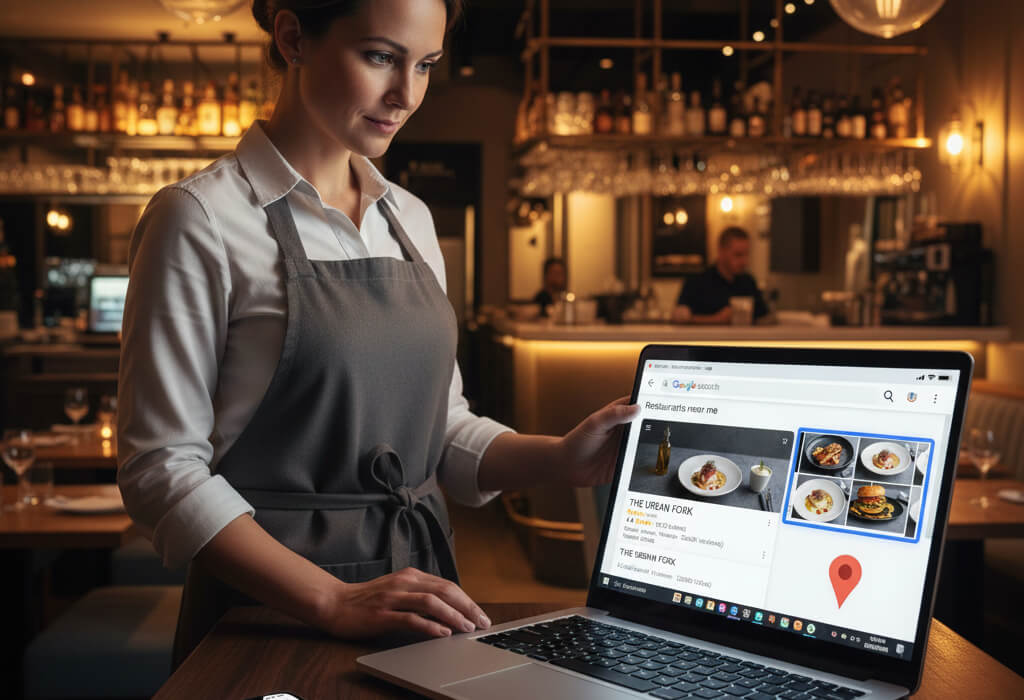
The way diners discover restaurants has fundamentally changed. Word of mouth still matters, but today it’s amplified — and often replaced — by a search bar.
When someone searches “best café near me”, “family restaurant in [city]”, or “late-night food nearby”, they aren’t browsing. They’re deciding. If your restaurant doesn’t appear in those moments, you’re invisible to customers who are ready to eat now.
This is where Local SEO for restaurants becomes a powerful, often underestimated growth engine.
Local SEO isn’t about chasing vanity rankings. It’s about owning your neighborhood online, attracting high-intent diners, increasing direct revenue, and reducing dependence on delivery apps and paid ads. At the center of all of this is one asset many restaurants overlook: their website.
More than 80% of restaurant searches have local intent, meaning Google assumes the user wants options nearby, open now, and easy to access. In response, Google prioritizes restaurants that send clear local signals — accurate information, strong websites, relevant content, and active engagement.
Local SEO works because it aligns perfectly with diner behavior:
Restaurants that invest in Local SEO don’t just get more visibility — they get better customers. These diners are more likely to visit in person, order directly, and return.
That’s why improving website quality and local presence can directly impact revenue. One restaurant increased bookings by 40% simply by upgrading its website and strengthening local visibility, proving that SEO isn’t abstract — it’s measurable.
Many restaurant owners believe Local SEO starts and ends with Google Business Profile. In reality, Google treats your website as the primary source of truth.
Your website tells Google:
If your website is slow, outdated, or confusing, it weakens every other local signal — including your GBP listing.
A strong restaurant website should:
Google evaluates these elements together to determine whether your restaurant deserves to rank locally. This is why website quality is directly tied to visibility.
If you’re unsure what Google expects, this guide explains how to build a restaurant website that actually ranks.
“Near me” searches are some of the highest-converting queries in the restaurant industry. When someone searches “pizza near me” or “best biryani nearby”, they’re not researching — they’re ready to choose.
Google relies on multiple signals to decide which restaurants appear:
Optimizing for near-me searches means aligning your website with how people actually search. Instead of generic descriptions, your content should clearly connect your cuisine, location, and availability.
This step-by-step breakdown explains how restaurants win near-me searches consistently.
Your Google Business Profile is often the first thing diners see — photos, reviews, hours, and directions. But the decision usually happens after one more step: the website click.
Google cross-references your GBP with your website to verify accuracy and trust. When both are aligned, your restaurant becomes more credible in Google’s eyes.
A well-optimized combination includes:
Restaurants that treat GBP and their website as a single ecosystem rank higher and convert better.
If you’re not sure what matters most, this guide covers what every restaurant owner should know about Google Business Profile.
Reviews influence both where you rank and whether people click.
Google evaluates:
A restaurant with ongoing reviews and thoughtful responses often outperforms one with a higher rating but no activity. Engagement signals reliability.
Displaying reviews on your website reinforces trust and helps convert search traffic into real diners. This is why reviews play a critical role in Local SEO.
Learn how reviews affect restaurant SEO — and how to manage them properly.
One of the most overlooked benefits of Local SEO is direct revenue control.
When customers find your restaurant through organic search and land on your website, they’re far more likely to:
This reduces commission fees, increases margins, and strengthens customer relationships.
Many restaurants now integrate online ordering directly into their websites, keeping full ownership of the customer experience:
Local SEO brings the customer to you — not to a marketplace.
Most local restaurant searches happen on mobile phones, often minutes before a decision is made. Google knows this — and ranks accordingly.
A mobile-first restaurant website should:
Poor mobile experiences increase bounce rates, which hurts both rankings and conversions.
Local SEO isn’t just technical — it’s relational.
When your website includes content tied to your neighborhood, city, and community, Google better understands your relevance. More importantly, diners feel a stronger connection.
Effective local content includes:
Restaurants that lean into local storytelling grow faster because they feel familiar, not generic:
Many restaurants unknowingly hurt their Local SEO by:
These issues confuse both Google and users, leading to lost rankings and lost revenue.
Avoiding these mistakes is often the fastest way to improve local visibility.
Traffic alone doesn’t grow a restaurant — conversions do.
A well-optimized local website guides visitors to:
Local SEO brings the right people. Your website turns them into customers.
Here’s how top restaurants convert traffic into real revenue.
Search is evolving — but local intent isn’t going anywhere.
As AI search, digital menus, and delivery platforms expand, restaurants with strong Local SEO will:
A future-ready restaurant invests in its website and local visibility now:
Local SEO doesn’t shout.
It works quietly — bringing hungry customers to your door when they’re ready to eat.
For restaurants, a strong website paired with Local SEO isn’t a marketing upgrade — it’s a survival strategy.
Stay up to date with the latest tips, expert insights, product reviews, and step-by-step guides to help you grow, create, and succeed—no matter your industry or passion.