
October 03, 2025
Reviewed and updated November 23, 2026.
A community partnership gives a restaurant and a nearby organization a specific project to run together. It might be a book-club supper, a local producer tasting, or food for a neighborhood event. The value depends on the audience, the workload, and whether both sides can deliver what they promise.
Start with a partner whose activities fit your location and capacity. A nearby bookshop could host a small discussion dinner on a quiet evening. A sports club may need collection meals after practice. These are planning examples, not accounts of results achieved by real businesses.
Ask what each partner wants to accomplish and what guests need. “Serve a seated group of 20 on Tuesday” is easier to plan than “reach the whole neighborhood.” Check the space, service time, and staff availability before announcing anything.
Put operational responsibilities in writing even when the partners know each other. Resolve any fundraising, licensing, or contractual questions with the appropriate people before advertising an arrangement that depends on them. Do not imply an endorsement or charitable contribution that has not been agreed.
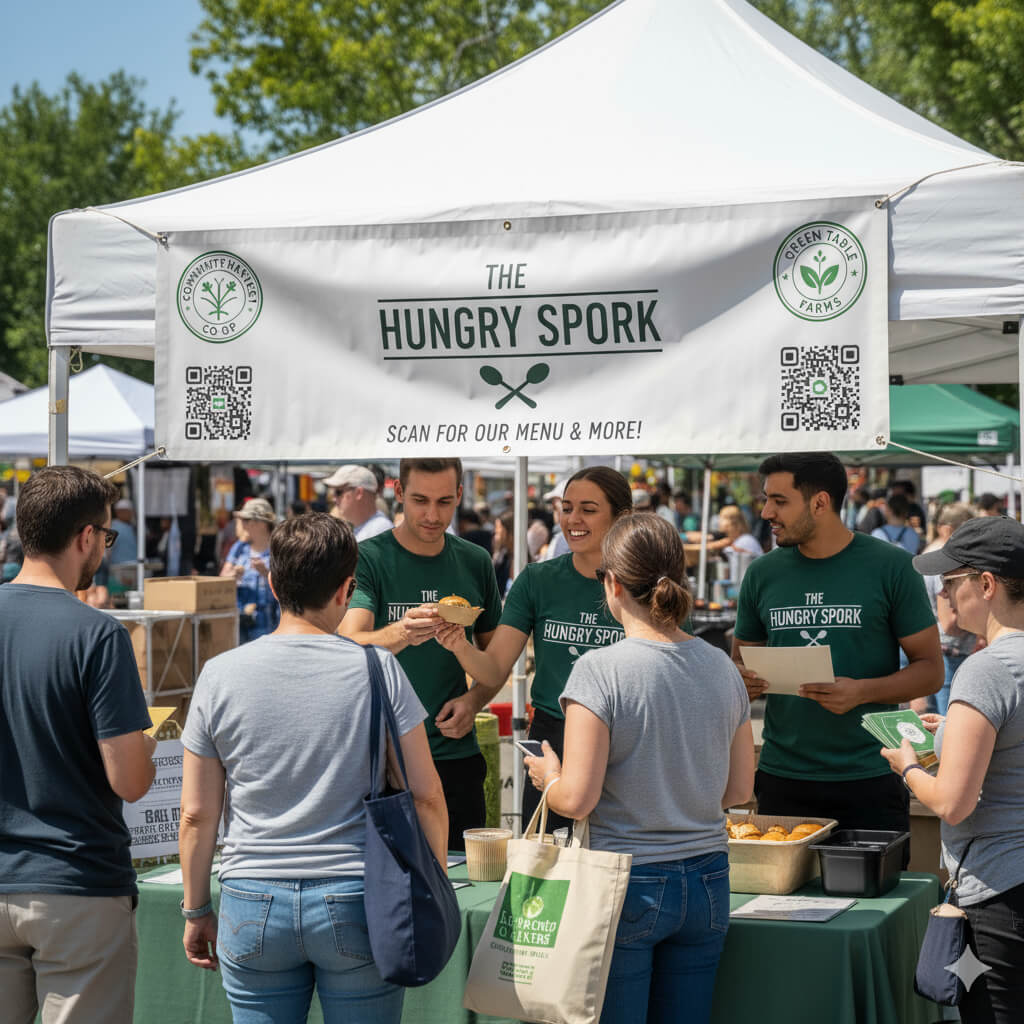
Give partners a common page with the date, address, menu or offer, capacity, booking route, and contact details. Name the participating organizations only with their approval. Use actual photos with permission, or clearly label an illustrative image. Update the page promptly if plans change.
Share the same factual information in each partner’s email or social post. A voluntary mailing-list signup should explain who will send messages; a reservation is not permission to pass someone’s contact details to another business. Keep event administration and future marketing choices separate.
If analytics is configured, tagged partner links can help identify referred visits. Google’s campaign URL guidance explains the source, medium, and campaign parameters. Those visits do not prove attendance or purchases. Reconcile reservations with attendance through the booking process you actually use.
For a small pilot, record the agreed costs, staff time, attendance, food waste, and guest feedback. As a hypothetical example, 18 attendees against a capacity of 20 tells you about turnout; it does not tell you how many are new customers or whether the event was profitable. Ask those questions separately.
Meet after the event while the details are fresh. Note what worked for guests, what created extra work, and what each partner would change. Repeat only if the activity fits both organizations’ goals and normal service. A small, reliable collaboration can be more useful to maintain than a broad offer the team cannot support.
Stay up to date with the latest tips, expert insights, product reviews, and step-by-step guides to help you grow, create, and succeed—no matter your industry or passion.


