
January 12, 2026
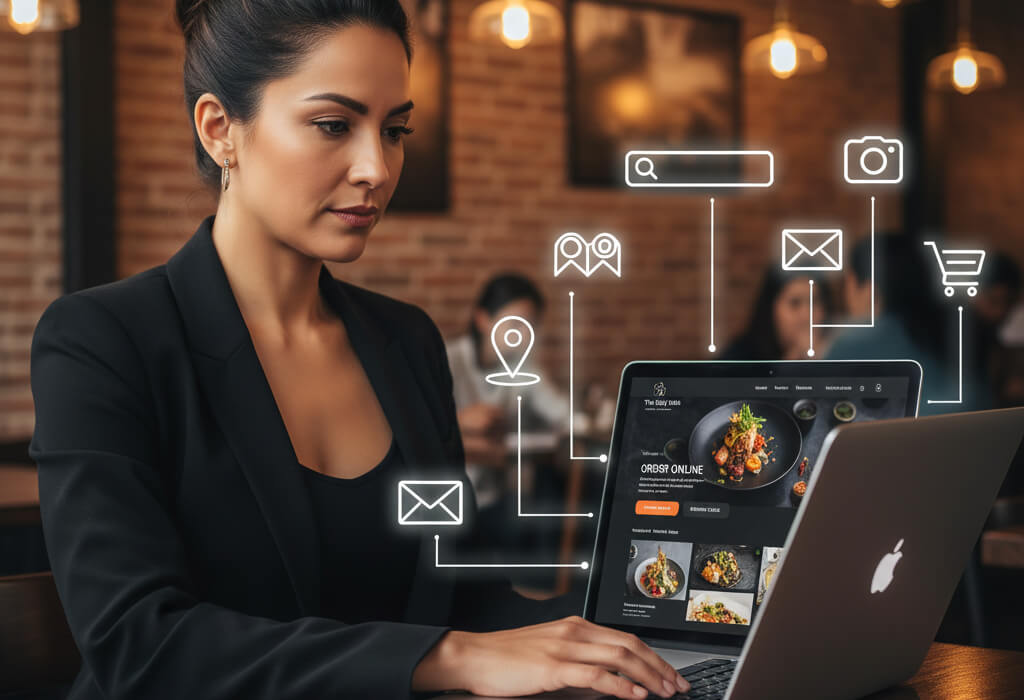
Restaurant marketing in 2026 has fundamentally shifted from scattered promotion to strategic digital ownership. What worked even three years ago—posting daily on Instagram, relying on delivery apps, or “just having a Facebook page”—is no longer enough to sustain growth.
Today’s diners are digitally mature. They research before they choose. They compare before they commit. And they expect restaurants to provide clear, fast, and trustworthy online experiences before they ever step through the door.
The restaurants winning in 2026 aren’t doing more marketing.
They’re doing smarter digital marketing, built around one asset they fully control:
Their website.
This guide explains how restaurant digital marketing works in 2026, why websites sit at the center of every successful strategy, and how owners can turn digital attention into real revenue.
Consumer behavior has evolved rapidly, and restaurant marketing has had to adapt.
In 2026, diners search with clear intent. They aren’t casually browsing—they’re actively looking for a place to eat right now or very soon. Searches like “best tacos near me” or “family-friendly restaurant open tonight” indicate immediate buying intent. If your restaurant doesn’t appear—or appears untrustworthy—you’re instantly eliminated.
Mobile has also become the default decision-making device. Diners expect menus that load instantly, booking systems that work without friction, and clear directions in a single tap. Even small points of confusion—missing prices, outdated hours, slow pages—cause potential customers to abandon and choose a competitor.
At the same time, diners are actively avoiding third-party friction. They’re tired of being bounced between apps, dealing with hidden fees, or finding outdated information on aggregator platforms. Restaurants with a clean, authoritative website feel safer and more professional.
Restaurants without a strong website are paying a hidden cost every day: The Cost of Not Having a Website for Your Restaurant
In 2026, a restaurant website is no longer just an online menu—it is the central conversion engine of your business.
Every digital channel you use ultimately sends traffic somewhere. If that “somewhere” is a third-party app, a cluttered social profile, or a broken link, the customer journey breaks. When all traffic leads to a well-designed website, you control the experience from first impression to final action.
A strong restaurant website:
Restaurants that invest in websites don’t just look better—they make better marketing decisions because they can track what works and what doesn’t: The ROI of a Restaurant Website: What Owners Need to Know
Local SEO remains the most reliable digital growth channel for restaurants because it captures diners at the exact moment they’re ready to choose.
Unlike social media, which interrupts people, local search responds to intent. When someone searches for food nearby, Google’s job is to recommend the best possible option. Your job is to make sure your restaurant clearly qualifies.
In 2026, local SEO is about more than keywords. Google evaluates the overall quality of your digital presence. This includes how well your website answers local queries, how fast it loads on mobile, how frequently customers leave reviews, and how consistently your business information appears online.
Restaurants that invest in location-specific pages, clear menus, and consistent branding across platforms dominate their neighborhoods over time—without ongoing ad spend.
Learn how top restaurants do it:
Google Business Profile is often the first impression a diner has of your restaurant. But it’s not designed to close the deal—it’s designed to send users somewhere else.
That “somewhere else” must be your website.
In 2026, Google increasingly favors restaurants whose Business Profiles link to high-quality websites. Listings connected to slow, outdated, or confusing websites see lower engagement—even if their location is strong.
A well-optimized website reinforces everything Google is trying to validate: legitimacy, relevance, and trustworthiness. Together, your GBP and website function as a single visibility engine that attracts, reassures, and converts.
Every restaurant owner should understand how these two assets work together:
Social platforms like Instagram and TikTok remain powerful for visibility, but they are no longer reliable sales channels on their own.
Algorithms change constantly, organic reach is unpredictable, and followers don’t equal customers. The smartest restaurants treat social media as a top-of-funnel tool, not a revenue engine.
In 2026, social content should spark curiosity and emotion—showing food, atmosphere, staff, and stories—while consistently pushing viewers toward a controlled environment: your website.
When social traffic lands on a well-designed site, curiosity turns into action. Without that bridge, attention is wasted.
Why social-only strategies stall growth:
Delivery apps are no longer growth platforms—they are distribution platforms with a cost.
In 2026, restaurants that rely heavily on delivery apps sacrifice margin, branding, and customer data. The customer belongs to the app, not to the restaurant.
Direct online ordering through your website flips that dynamic. You control pricing, presentation, promotions, and follow-up marketing. Over time, direct customers are more profitable and more loyal.
Winning restaurants use delivery apps as discovery tools, then actively migrate repeat customers to direct ordering.
How to reclaim control:
As social platforms become pay-to-play, email has quietly re-emerged as one of the most powerful restaurant marketing tools.
Email allows restaurants to communicate directly with customers—no algorithms, no reach limitations, no intermediaries. In 2026, restaurants use email for announcements, promotions, loyalty incentives, and reminders that drive repeat visits.
The website plays a critical role here. It’s where email lists are built, segmented, and nurtured.
How restaurants use email to build long-term loyalty:
Online reviews are no longer just social proof—they are a core ranking signal.
Google uses reviews to evaluate popularity, relevance, and trust. Diners use reviews to decide where to eat before ever visiting a website.
In 2026, successful restaurants treat reputation management as an ongoing process. They actively request reviews, respond thoughtfully, and use feedback to improve both operations and marketing.
Why reviews directly impact visibility and revenue:
Paid advertising in 2026 is more competitive than ever. Clicks are expensive, and wasted traffic costs real money.
The difference between profitable ads and unprofitable ones is almost always the landing experience. Ads work best when they send users to pages built specifically to convert—not generic homepages or third-party listings.
Restaurants that retarget website visitors and promote seasonal offers through optimized pages see far higher ROI.
How to use paid ads strategically:
Diners make decisions emotionally before they rationalize them.
In a crowded digital landscape, professional photography, cohesive branding, and clear storytelling are what separate memorable restaurants from forgettable ones.
A strong brand doesn’t just attract customers—it sets expectations and builds loyalty before the first visit.
Why visuals drive choice:
Traffic alone doesn’t grow a restaurant. What matters is what visitors do next.
Conversion-optimized websites guide diners toward clear actions—booking tables, ordering food, or visiting the location. Small improvements in layout, messaging, and calls-to-action can produce significant revenue gains.
How restaurants turn visitors into customers:
The future of restaurant marketing belongs to businesses that own their digital foundation.
Platforms will change. Algorithms will evolve. Fees will increase. Restaurants that control their website, data, and customer relationships remain resilient through every shift.
Why future-proofing starts online:
Restaurants that align their website, SEO, and digital strategy see measurable results.
One restaurant increased bookings by 40% simply by upgrading their website experience and conversion flow: How One Restaurant Increased Bookings by 40% With a New Website
✔ Own your website
✔ Control your customer journey
✔ Build trust digitally
✔ Reduce reliance on third parties
Restaurants that follow this approach don’t just survive — they scale with confidence.
Digital marketing will continue to change.
Owning your online presence never goes out of style.
Stay up to date with the latest tips, expert insights, product reviews, and step-by-step guides to help you grow, create, and succeed—no matter your industry or passion.