
January 08, 2026
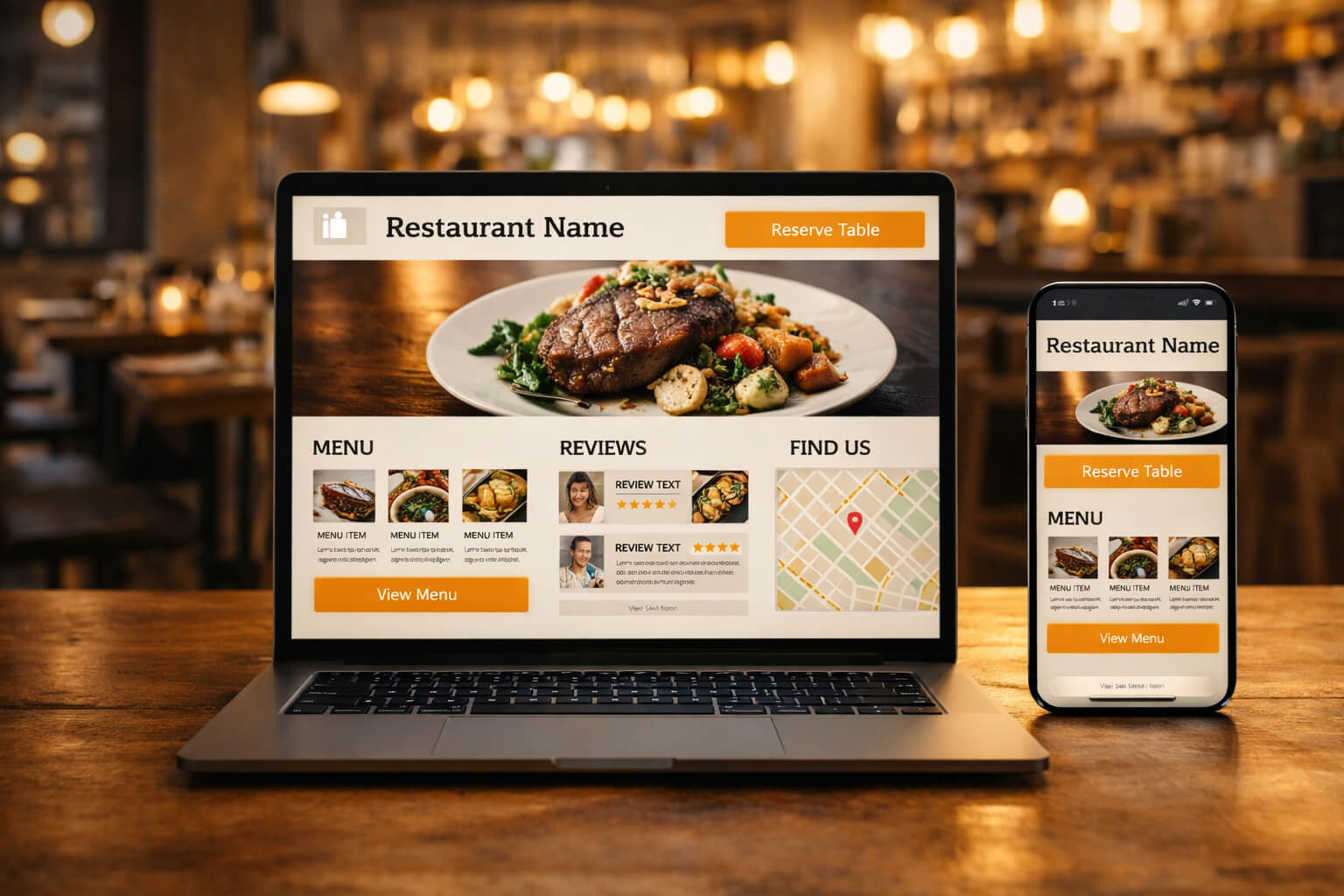
A restaurant website should never be evaluated by how modern it looks or how many visual effects it uses. In practice, those factors have little correlation with whether a website actually brings customers into a restaurant. What determines performance is whether the site reduces uncertainty, answers questions in the right order, and guides visitors toward a clear next step.
A high-performing restaurant website functions as a decision-support system. It exists to help diners move from curiosity to confidence. Every element of the site should be designed around that progression. When that progression is interrupted—by confusion, missing information, or poor usability—potential customers quietly leave and choose a different restaurant.
The sections below explain, in detail, the structural elements that consistently appear on restaurant websites that perform well in 2026.
The hero section is not primarily a branding element. It is a context-setting element. When a diner lands on a restaurant website, they arrive with limited patience and an incomplete understanding of what the restaurant offers. The hero section must resolve that uncertainty immediately.
A well-constructed hero section explains the type of restaurant, the general offering, and the location without requiring the visitor to scroll or search. It also establishes direction by clearly indicating what the visitor should do next. Without this direction, visitors hesitate, and hesitation reduces conversion.
High-performing hero sections rely on descriptive language rather than clever wording. They pair visuals with clear information so that visitors can orient themselves quickly. Calls to action such as viewing the menu or booking a table are effective only when the surrounding context makes those actions feel logical rather than forced.
Restaurants that improved hero clarity typically saw improvements in engagement because visitors were no longer required to infer basic details: How One Restaurant Increased Bookings 40% With a New Website
For most restaurant websites, the menu page receives more attention than any other page. This is because diners use the menu to evaluate suitability, pricing, and personal preference. If the menu experience introduces friction, momentum is lost.
Effective menu presentation prioritizes readability and speed. Text-based menus that load quickly and adapt to mobile screens outperform image-heavy or PDF-based menus. Diners need to scan options easily, compare prices, and understand offerings without zooming, scrolling horizontally, or waiting for files to load.
Menus that are difficult to access or outdated introduce doubt. That doubt often leads diners to leave the site entirely. This is why restaurants that treat menus as a central usability feature consistently outperform those that treat menus as secondary content.
The shift toward digital-first menus reflects this reality:
In 2026, most diners encounter restaurant websites on mobile devices, often while making time-sensitive decisions. Mobile usability therefore directly influences whether a restaurant is perceived as organized and reliable.
Mobile-first design is not simply about resizing content. It involves structuring information so that essential actions—such as calling, navigating, or booking—are immediately accessible. Navigation must be simple enough to operate with one hand, and load times must be optimized for cellular networks rather than desktop connections.
When a website performs poorly on mobile, diners rarely attribute the issue to technology. Instead, they subconsciously associate friction with the restaurant itself. This is why mobile usability has a direct impact on conversion rates.
The importance of mobile-first design is well documented: Mobile-First Websites: Why Restaurants Can’t Ignore Them
A restaurant website must support discovery, not just presentation. Local SEO allows search engines to understand where a restaurant is located, what it offers, and when it is relevant to a user’s search.
This requires structured, location-aware content. Page titles, headings, and on-page copy should naturally reference the restaurant’s location and service area. Embedded maps and consistent business information reinforce credibility and accuracy.
Without these elements, even well-designed websites struggle to appear in high-intent local searches. Visibility then becomes dependent on paid ads or third-party platforms, which increases costs and reduces control.
Restaurants that invest in SEO-friendly site structure benefit from steady, compounding traffic:
Trust is rarely built through explicit persuasion. Instead, it emerges from consistency, transparency, and familiarity. A restaurant website should quietly reinforce trust at multiple points without overwhelming the visitor.
Elements such as customer reviews, ratings, awards, and clear contact information help diners validate their choice. When these signals are absent or hidden, visitors are forced to rely on assumptions, which often leads to abandonment.
Integrating trust elements directly into the website experience keeps visitors engaged and reduces the need for external verification. This integration also improves search visibility, as reviews and structured data contribute to credibility signals.
The relationship between trust, reviews, and performance is well established:
The Restaurant Reputation Playbook: How to Win Diners’ Trust Online
How Reviews Impact Restaurant SEO (And What to Do About It)
Visuals on a restaurant website serve a functional purpose. They help diners imagine the experience and assess whether it aligns with their expectations. When used correctly, images reduce uncertainty rather than distract from information.
Effective photography focuses on authenticity and clarity. Overly stylized images may attract attention but can also raise skepticism. Diners respond better to visuals that accurately represent the food, space, and atmosphere.
Visual content also influences engagement metrics such as time on site and scroll depth, which indirectly affect search visibility and conversion potential.
The psychological impact of food photography is well documented: The Science of Food Photography for Restaurant Websites
A restaurant website should not require visitors to decide what to do next. Clear conversion paths ensure that once interest is established, action feels natural.
This involves placing calls to action where visitors expect them and repeating them at logical intervals. These actions should be specific and aligned with visitor intent, such as booking a table or requesting directions.
When conversion paths are unclear, visitors may leave despite positive intent. This is one of the most common reasons otherwise attractive websites underperform.
How conversion-focused structure improves results: How to Turn Website Visitors Into Paying Diners
Reliance on third-party platforms introduces long-term costs and reduces ownership of customer relationships. A high-performing restaurant website supports direct bookings and ordering wherever possible.
Direct channels provide better margins and allow restaurants to collect valuable customer data. Over time, this enables more effective marketing and stronger repeat business.
While third-party platforms remain useful for exposure, websites that prioritize direct interactions create more sustainable growth.
The financial impact of direct ordering is significant:
Brand consistency reduces cognitive load. When visual and tonal elements remain consistent across a website, visitors feel more confident in their understanding of the restaurant.
Inconsistent branding forces visitors to re-evaluate their assumptions, which introduces friction. Consistency, by contrast, reinforces familiarity and supports long-term recognition.
Over time, this familiarity contributes to repeat visits and brand loyalty.
Why branding consistency matters: Restaurant Branding 101: Why Your Online Identity Matters
A restaurant website should be built with change in mind. Menus evolve, promotions rotate, and marketing strategies shift. Websites that are difficult to update quickly become outdated and ineffective.
Structural flexibility allows restaurants to respond to seasonal demand, update information promptly, and expand content without rebuilding from scratch. This adaptability is increasingly important as search behavior and platforms continue to evolve.
Future-ready websites maintain relevance over time:
A high-performing restaurant website is not defined by design trends or technical complexity. It is defined by how effectively it reduces uncertainty, builds confidence, and supports decision-making.
When each component is designed with intention and connected to the diner’s journey, the website becomes a functional asset rather than a passive presence.
Performance is not accidental. It is engineered.
Stay up to date with the latest tips, expert insights, product reviews, and step-by-step guides to help you grow, create, and succeed—no matter your industry or passion.