
July 31, 2025
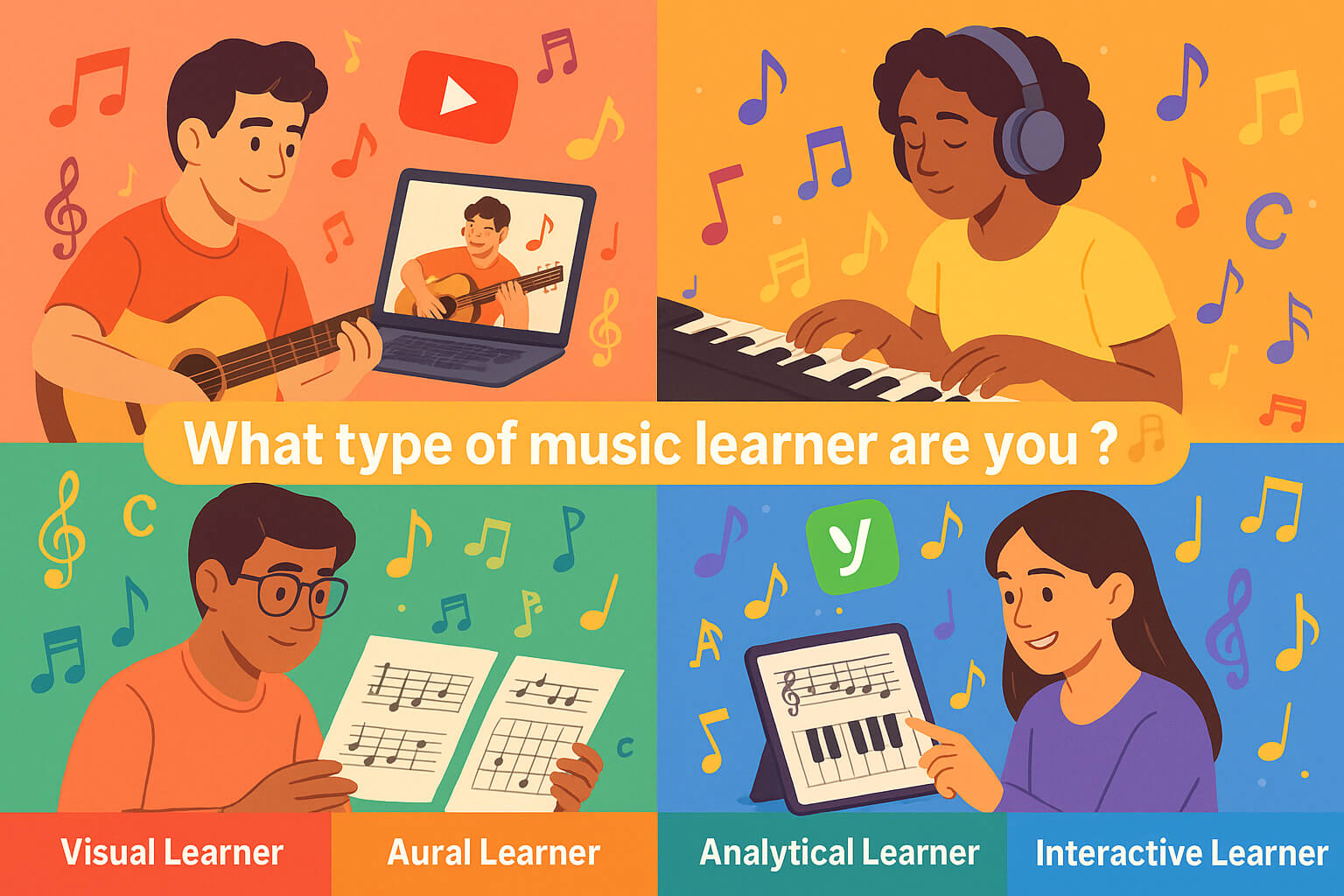
Learning music isn’t one-size-fits-all. While some people excel by watching tutorials, others need to feel the rhythm or decode the theory before they can fully engage. If you've ever struggled with lessons that didn’t quite “click,” it might not be you—it might just be the wrong learning style.
This fun, easy quiz will help you uncover how your brain learns music best, and guide you to the tools, platforms, and practice methods that match your unique style.
Answer each question honestly and jot down whether you choose A, B, C, or D. Your dominant letter reveals your style!
Knowing your music learning style isn’t just insightful—it’s practical. Once you understand how you learn best, you can:
Here’s a curated list of free tools and downloads to match every learning style:
No two musicians are the same—and that’s the beauty of it. Whether you’re a visual learner, an aural explorer, a theory enthusiast, or an interactive app lover, there’s no wrong way to learn music. What matters most is finding the approach that resonates with you.
Ready to play smarter, not harder? 🎸🎹
A quiz can help you notice which activities you enjoy, but it should not restrict the ways you learn. A preference for watching demonstrations does not mean you must avoid listening, reading, or trying a movement yourself. Use the result to choose an inviting starting activity, then check whether that activity helps you perform the specific musical task.
For example, if you like diagrams, study a chord shape and then put the diagram aside long enough to try the change. Listen to the result and compare it with a reference. The diagram, movement, and listening all contribute to understanding the same task. The useful question is what information you still need, rather than which permanent category describes you.
Choose a short pattern that is new but manageable. Work with a written or visual explanation, then attempt it without the resource. On another session, use a demonstration or an audio reference for the same kind of task. Record what each approach clarified and where you still hesitated. Keep the exercise and conditions similar enough to make the comparison meaningful.
Do not judge an approach only by how easy it felt while the instructions were visible. Check what you can recall, explain, and perform afterward. An attractive video may feel clear yet leave the sequence uncertain; a simple written cue may help you restart quickly. Both observations can guide how you combine resources in future practice.
A balanced routine might begin with an explanation, continue with a demonstration, and finish with your own attempt and review. Change the order when a different task calls for it. Learning a rhythm may begin with listening and counting, while finding a note may begin with a keyboard diagram. The routine should serve the material rather than reproduce a quiz label.
If an activity remains confusing, write down the exact point of difficulty before switching resources. Ask for another explanation of that point or seek feedback on your attempt. Repeatedly taking preference quizzes will not reveal whether a particular note, rhythm, movement, or instruction is causing the problem. A concrete observation gives you a better next step.
After a week, ask: which combination of resources helped me start independently and notice mistakes? Keep the useful pieces and change the parts that did not help. Your preferences may vary with the instrument, topic, and experience you bring to the session.
Stay up to date with the latest tips, expert insights, product reviews, and step-by-step guides to help you grow, create, and succeed—no matter your industry or passion.


