
August 18, 2025
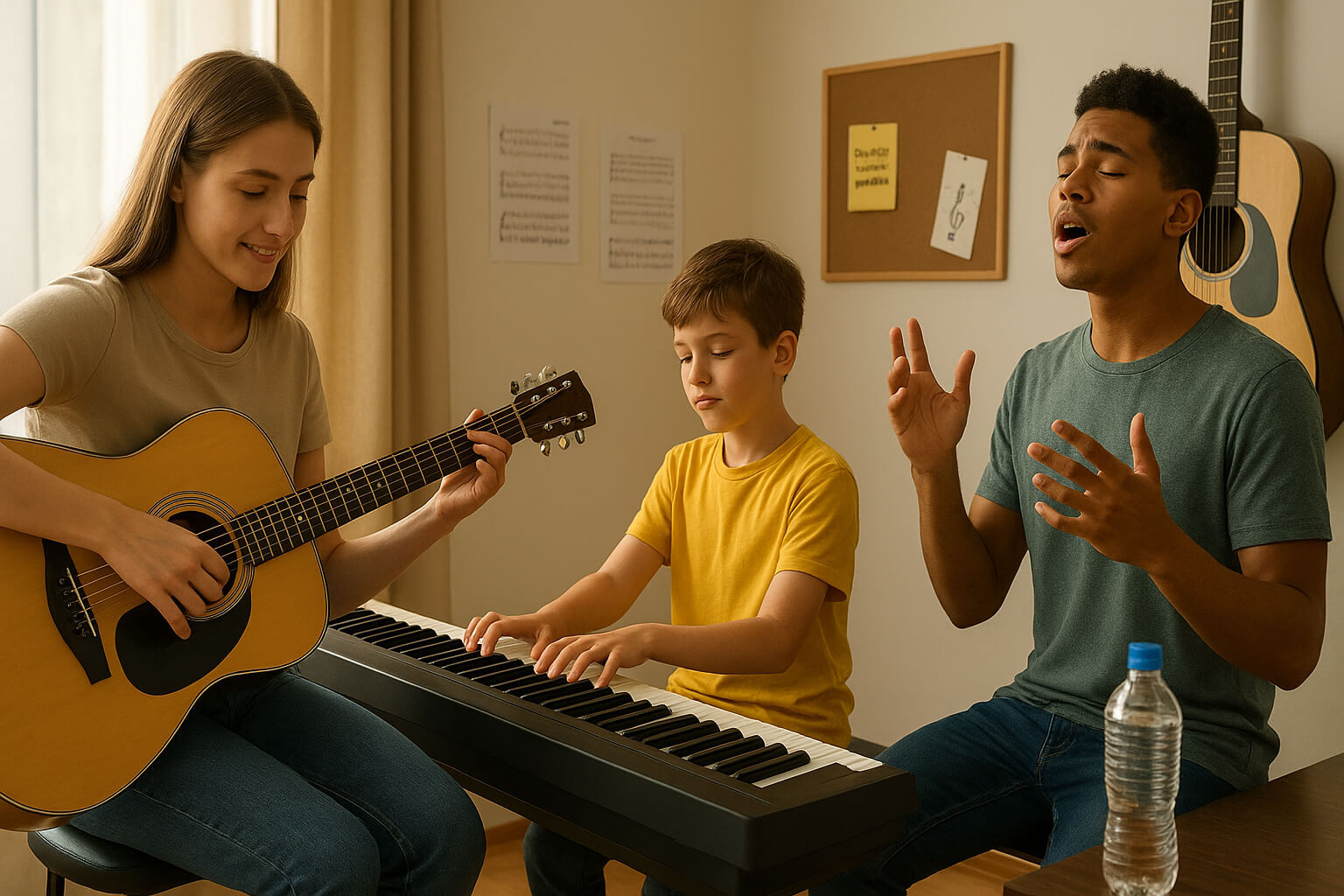
When you first pick up an instrument, it’s tempting to dive straight into your favorite songs. But just like athletes stretch before competing, musicians need structured warm-up routines to prepare the body and mind. These simple exercises improve performance, reduce tension, and prevent injuries over time—especially for beginners.
Skipping warm-ups is like sprinting without stretching—possible, but risky. Without preparation, tension, fatigue, and bad habits can build up. A consistent warm-up routine:
According to this RocketPages article on the psychological benefits of playing an instrument, warming up can also sharpen your concentration and lower performance anxiety.
Before you even touch your instrument, spend 1–2 minutes checking posture and breathing.
Proper alignment is crucial. Refer to this guide on posture and ergonomics for musicians to help prevent repetitive strain and fatigue.
Examples:
Now you’re ready to ease into your instrument with basic techniques. This isn’t about speed—it’s about accuracy and control.
Every musician needs a strong internal clock. Begin with clapping exercises or tapping out rhythms with a metronome.
Try:
Dive deeper into timing with this must-read: Why Understanding Rhythm Is Crucial.
Tools to try:
Just as warm-ups ease you in, cool-downs ease you out.
Cool-down ideas:
Ending your session with intention reduces tension and helps you retain what you practiced.
Warm-ups aren’t just for professionals—they’re essential for every beginner. A solid 10–15 minutes is all it takes to:
Related reading: Seven-Day Beginner Piano Practice Plan; this guide to effective practice.
Want more expert help? Check out:
A warm-up should help you move from arriving at the instrument to a manageable version of the work you plan to do. Decide what comes next in the session, then choose a simple preparation task related to it. Avoid turning preparation into an exhausting collection of exercises before you begin the main material.
For example, if the session concerns a short chord sequence, review familiar shapes and an easy transition. If the task concerns rhythm, begin with a pattern you already understand. Follow instrument-specific guidance from a qualified teacher. There is no single sequence that suits every instrument, person, and practice task, so keep the routine responsive to what you are preparing to play.
Choose an exercise simple enough that you can notice how it feels and sounds. This is a different job from learning difficult new material. A familiar passage gives you fewer decisions to manage while you establish a comfortable pace and check the instrument setup.
Listen for consistency rather than speed. If the exercise is unclear or unreliable, simplify it. You might use a smaller range of notes, an easier chord pair, or a slower version of the pattern specified in your lesson. Write down the version that worked so that you can return to it. Preparation becomes more useful when you can repeat it without a long search for instructions.
After the familiar task, identify one movement or pattern that appears in the material you want to practice. Work on a small, manageable version of it, then try the corresponding passage. This makes the transition into the main session deliberate instead of treating warm-up and practice as unrelated lists.
Keep the comparison specific. Did the opening feel easier to begin? Could you maintain the chosen pulse through the first transition? Use observations like these to choose the next action. Do not assume that completing a warm-up guarantees a particular technical or health outcome. Its practical role is to prepare you for the musical task in a way you can understand and adjust.
On a shorter practice day, reduce the scope rather than rushing through every exercise. Keep one familiar task and one clear transition into the material you will study. A small routine that fits the session is easier to maintain than an elaborate sequence you regularly abandon.
On a longer day, avoid adding exercises merely to fill time. Use the extra space to listen, rest between attempts, and check your understanding. Follow your teacher’s instrument-specific advice about preparation and breaks. Stop if playing causes pain and seek appropriate guidance rather than trying to push through it. A routine should support the session, not become a test of endurance.
After several sessions, compare your notes. Look for whether the routine makes it easier to begin the main task and whether any step regularly causes confusion or discomfort. Remove unnecessary complexity and ask for feedback when you cannot explain the purpose of an exercise.
Keep a short version of the routine written beside your practice plan. Include the familiar exercise, the relevant transition, and the point at which you move into the main material. Update it when the material changes. The useful outcome is a clear, repeatable preparation process tied to your instrument and current work, rather than a fixed list you follow indefinitely without review.
Stay up to date with the latest tips, expert insights, product reviews, and step-by-step guides to help you grow, create, and succeed—no matter your industry or passion.


