
August 01, 2025
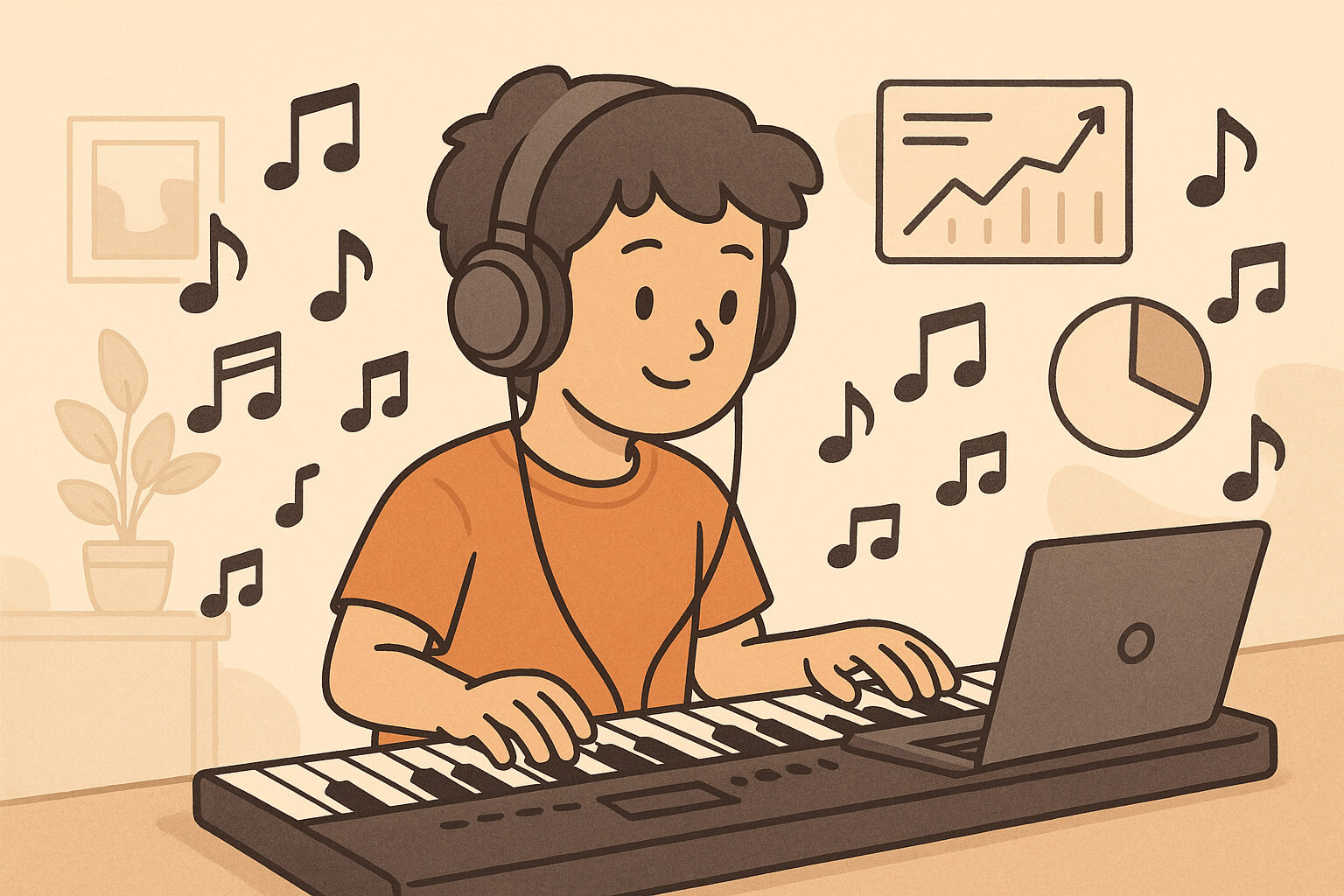
Learning music from scratch can feel overwhelming at first—but don’t worry. With curiosity, commitment, and the right tools, you can build musical skills entirely on your own. Whether you want to strum a guitar, compose electronic beats, or read sheet music, this expanded guide will help you create a roadmap tailored to your goals.
Music theory is like the grammar of music. You don’t need to master it all at once, but understanding the basics will help you recognize patterns, read music, and create your own songs.
Pro Tip: Don’t memorize everything—apply it to the songs you’re learning or writing.
Choosing the right starting tool is crucial. Commit to one instrument or digital tool for at least 3 months before switching.
Mindset Tip: Think of your instrument as your partner—grow with it!
Without a teacher, you need structure. Create your own curriculum using free online lessons, books, or playlists to progress in a logical order.
Tip: Keep a practice journal to track progress and goals.
The key to building musical skill is consistent, mindful practice, not cramming long sessions once a week.
Motivation Tip: Celebrate each breakthrough—your first clear chord, a song you can play start to finish, or singing on pitch.
Ear training sharpens your musical instincts. You'll better understand what you hear and improve your improvisation and transcription skills.
Pro Tip: Try transcribing melodies by ear before using sheet music—this builds a strong connection between sound and note.
Once you have basic skills, start playing with real music. This builds timing, groove, and musicality in ways theory alone can't.
Challenge: Play a melody or solo with just 3 notes. Creativity > complexity.
Music takes time. Progress is not always linear, and you’ll hit plateaus. Don’t quit during these moments—keep going.
Mindset Reminder: Every musician started as a beginner. The only difference is they kept going.
You don’t need a music degree to become a musician. With the internet, persistence, and your own curiosity, you can go as far as you want.
Start small. Stick with it. Celebrate each step.
Whether you want to play covers, compose originals, or produce beats—you’re already on the path.
Choose one instrument or musical activity and a clear introductory sequence. Define a first task such as following a short pulse, finding a few notes, or playing a simple pattern. Locate the explanation and reference before practice begins. This gives your available time a purpose and reduces the temptation to replace practice with browsing.
Attempt the task, pause, and identify what you noticed. Separate an unclear instruction from an uncertain movement or sound. Look for the explanation that answers that specific question, and keep the rest of the lesson sequence stable where practical.
End with the exercise location, one observation, and the next starting point. At a later session, try the task without following the reference, then check it. Use short recordings where helpful and ask for specific feedback when uncertainty persists. Independent study needs a way to notice and resolve questions, rather than an expectation that a beginner should understand everything from the first demonstration.
Keep the first reference and your own notes easy to find, so returning to practice does not require repeating the search for a starting lesson.
Stay up to date with the latest tips, expert insights, product reviews, and step-by-step guides to help you grow, create, and succeed—no matter your industry or passion.


