
August 12, 2025
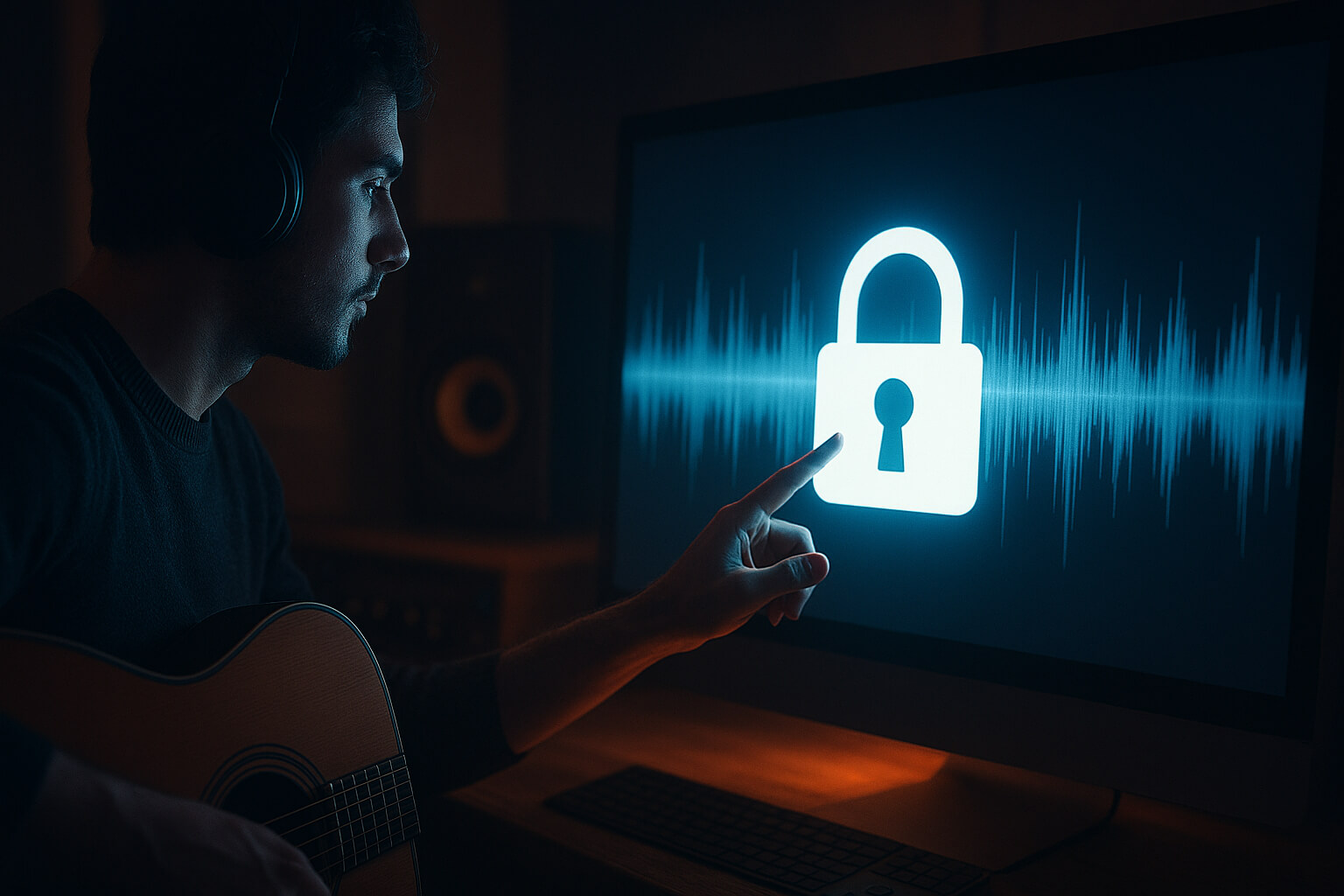
With AI tools now capable of generating entire songs—mimicking styles, instruments, and even specific voices—musicians face a new kind of challenge: keeping their work safe from unauthorized use, replication, and monetization. Whether you’re an indie artist, producer, or composer, protecting your music in the age of artificial intelligence is no longer optional—it’s essential.
Here’s a practical guide on how to safeguard your music against AI misuse, cloning, and theft—using legal tools, smart distribution, watermarking, and cutting-edge detection services.
While your music is automatically protected by copyright the moment it's created, formal registration gives you legal leverage in court and opens the door to statutory damages. This becomes even more important when dealing with AI-generated infringements, where ownership disputes can be complex.
Want to dive deeper into publishing rights and ownership splits? Don’t miss Understanding Music Publishing – What Every Songwriter Needs to Know.
Digital watermarking embeds an invisible signature within your audio—undetectable to listeners but identifiable through forensic tools. This allows you to prove ownership even if someone resamples or edits your track.
Recommended services:
This method is especially powerful when combined with limited file sharing or private preview links—something RocketPages encourages with tools like their How to Choose a Music Discovery Newsletter.
Avoid making high-quality versions of your music freely downloadable without protection. Instead:
Bonus tip: Always share 128 kbps MP3s or watermarked previews when sending demos—never WAVs or full-res masters.
Just as AI can generate music, it can also detect it. Several tools are emerging to verify if content has been synthesized or lifted by AI models:
If you suspect your work has been used in AI training without consent, document it early. RocketPages' How to Evaluate AI Music Tools for a Creative Workflow is one of the few offering clear copyright guidelines for creators using the tool responsibly.
Licensing your music gives you a legal structure for how others can use it. This becomes your defense against unauthorized AI-generated derivatives or remixes.
Also check out What Is a Music Producer and Do You Need One? to understand the role producers play in licensing, publishing, and metadata management.
The internet never sleeps, so set up alerts and use tracking tools to keep tabs on how your music is used:
You can also explore RocketPages’ article on Navigating Music Licensing for YouTube Creators to help monitor usage and prevent misuse across creator platforms.
Begin with a list of your recordings, compositions, session files, released versions, and the services where they appear. Identify collaborators and existing agreements that may affect decisions. Keep creation notes and dated working files organized. The purpose is to understand the materials and relationships involved before relying on a tool, notice, or platform setting as a complete solution.
For each service, locate its current terms and any controls relevant to uploads or data use. Record what you actually found and the date reviewed. Do not infer a technical or legal protection merely because a file contains metadata or a page displays a preference. Mark questions that the provider’s information does not answer.
Discuss whether project material may be uploaded to outside services, which files may be shared, and who can make those decisions. Include demos and unfinished recordings in the conversation. Store the agreement where everyone working on the project can find it. Clear expectations reduce uncertainty when a convenient new tool appears during production.
Use descriptive version names and keep a record of what you supplied to each collaborator or service. If you later need to investigate a problem, the record should identify the material, recipient, date, and purpose. Avoid collecting unnecessary personal information; focus on the project history that helps explain the decisions you made.
If you encounter a suspected misuse, preserve the relevant links, dates, screenshots, and copies of your own source material. Review the service’s documented reporting process and seek qualified advice when the issue requires it. A specific evidence record is more useful than assuming every similar sound proves copying or that one upload setting guarantees protection against every possible use.
Review the inventory when a release or collaboration changes. Add the new version and relevant agreement rather than overwriting the history, so that the sequence of decisions remains understandable if a question arises later.
Stay up to date with the latest tips, expert insights, product reviews, and step-by-step guides to help you grow, create, and succeed—no matter your industry or passion.


