
August 13, 2025
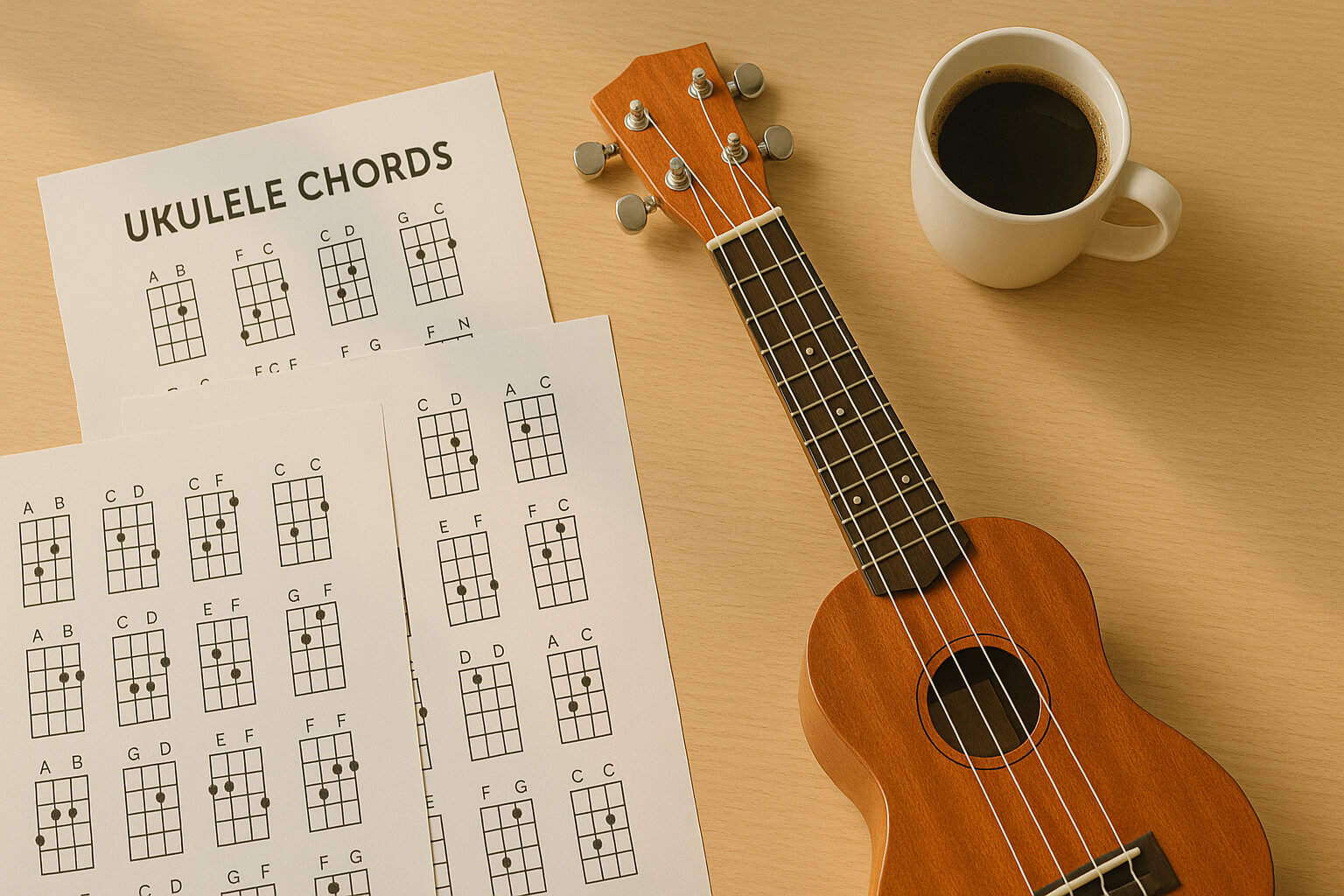
Learning the ukulele can be one of the most rewarding musical journeys—accessible, fun, and perfect for all ages. But to truly accelerate your progress, it helps to have reliable chord sheets that are accurate, printable, and easy to follow. Thankfully, there are a number of excellent platforms that provide free ukulele chord sheets online—no subscriptions, no paywalls.
Whether you're a total beginner or looking to expand your repertoire, this guide covers the top free sources, tips for using chord sheets effectively, and bonus resources to improve your practice and technique.
Ukulele chord sheets offer a visual map of finger placements for chords, typically laid out in diagrams with song lyrics and chord names above each line. These resources are especially helpful for:
Many chord sheets now come paired with interactive features—like transposition tools, audio playback, and alternate voicings—that make the learning experience more dynamic. These go hand-in-hand with foundational theory covered in this resource on how to read notes, rhythms, and music symbols effectively.
Chord sheets are just one part of learning—add these free and affordable tools to maximize your progress:
To make the most of these free resources:
If you want to go beyond just chord sheets, here are some 100% free tools and downloads to power up your ukulele playing:
Before using a chord sheet, look for its tuning, chord names, diagram orientation, and any explanation of symbols. Compare those details with your instrument and current lesson. A familiar song title does not establish that two sheets use the same key or arrangement. Mark the version you chose so that practice notes refer to a specific sheet.
Read one diagram slowly before playing the whole song. Identify the strings, the fret positions, and any open or muted string marks. Then compare the sound you produce with the intended chord in your learning material. If a symbol is unexplained, resolve it before treating the diagram as a complete instruction. Small reading uncertainties can become repeated playing habits.
Write down the chord order for a short section and identify the change that interrupts the pulse. Work on that pair separately, using a simple rhythm from your lesson. When the movement becomes more familiar, put it back into the section. This connects the diagram to the musical timing instead of making chord shapes an isolated memorization exercise.
If a sheet includes an alternative fingering, compare the movement into and out of that shape rather than judging only how it feels by itself. A useful fingering must work in context. Keep a note about which version you practiced, especially when moving between resources that show different options for the same chord.
Keep a few sheets that match your current goals and record their source links. Add notes on the chord pair, section, and rhythm you are practicing. A smaller collection that you revisit is easier to use than a large download folder with no clear starting point. Separate personal annotations from the original so you can return to the source when needed.
Before printing or sharing a sheet, check the source’s relevant instructions rather than assuming that online availability settles every use. When a sheet is hard to read, incomplete, or inconsistent with your lesson, choose a clearer resource or ask an instructor. The purpose of the sheet is to support playing and listening, not to make you guess at essential information.
Try one chord, one change, and one short section before adding the sheet to your regular routine. Note any unclear symbols and the exact place you want to revisit. This small test reveals whether the resource is usable at your present level.
Stay up to date with the latest tips, expert insights, product reviews, and step-by-step guides to help you grow, create, and succeed—no matter your industry or passion.


