
July 30, 2025
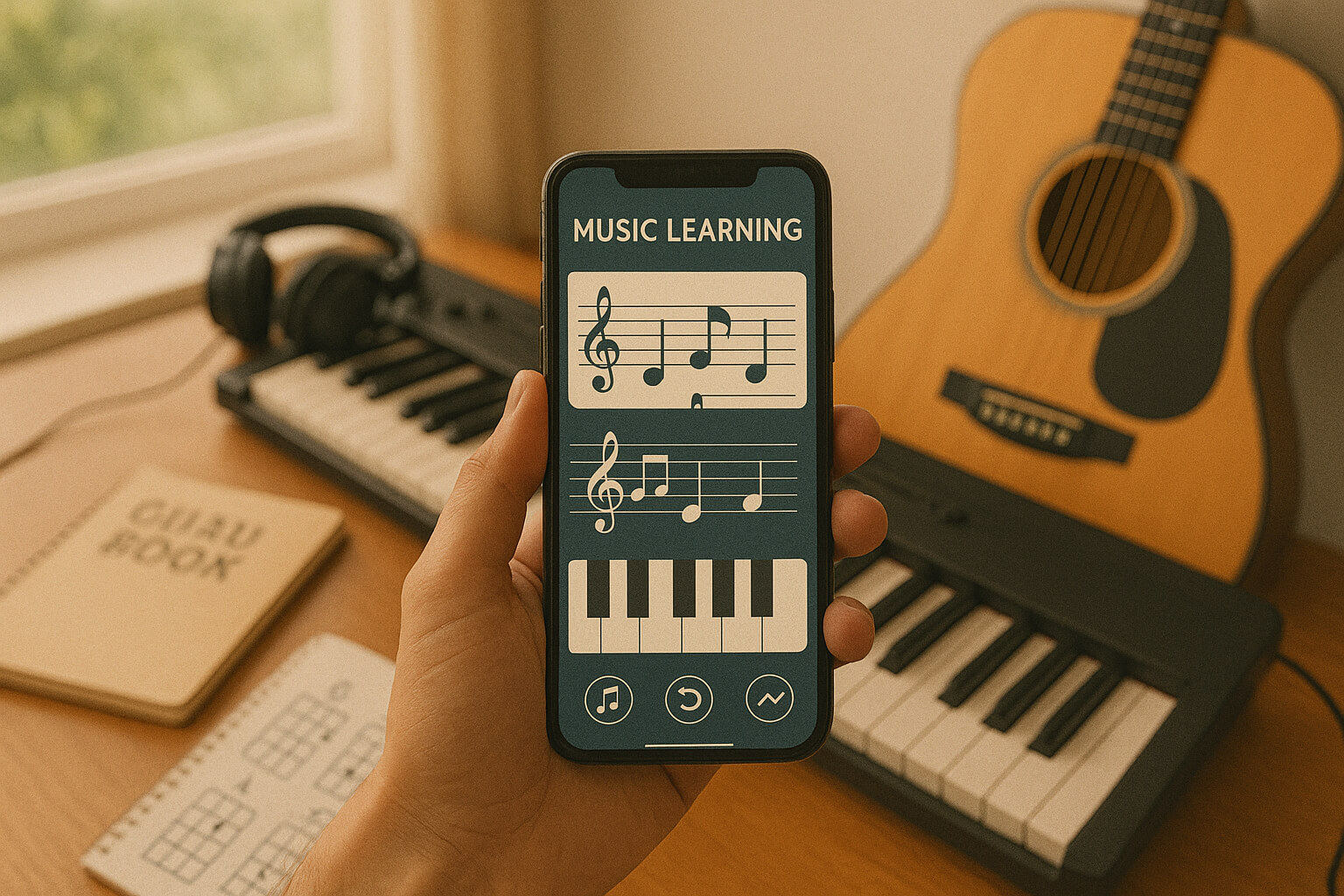
Master Music for Free in 2025 — No Studio, No Stress.
In 2025, you don’t need to sign up for pricey lessons or sit through boring lectures to become a musician.All you need is a keyboard, a guitar, a phone, and a plan.Music learning has evolved into a self-paced, interactive adventure—and you’re the hero of this story.
Here’s how you can unlock your musical potential for zero cost, using free apps, downloadable packs, and creative tools used by thousands of aspiring musicians across the globe.
Imagine this: In just one week, you can go from blank keys to playing real melodies. The Free 7-Day Piano Challenge isn’t about long lessons—it’s about:
Related reading: Seven-Day Beginner Piano Practice Plan.
No boring scales. No endless theory before you get to the fun stuff.
This Free Beginner Chords eBook hands you:
Pair this with an app like JustinGuitar for interactive play-along sessions, and you’ll feel like you’re in a private lesson—except you control the pace. Beginner Guitar Chord Practice Checklist
Music theory isn’t about memorizing dry facts. It’s about understanding the “why” behind every note you play. Apps like Tenuto and Theory Lessons turn theory into:
It’s like turning music theory into a puzzle game where every solved level boosts your creative power. Unlock Music Reading — The Beginner’s Guide to Sheet Music Mastery
The difference between a player and an artist? The ear. Apps like Perfect Ear will:
Ear training is like giving your brain the “musician’s sixth sense.” Once you feel it, you’ll never go back. Free Ear Training Exercises — Listen, Recognize, Play
Even if you’ve never touched a DAW, you can now compose studio-quality music. AI music generators let you:
Related reading: How to Evaluate AI Music Tools for a Creative Workflow.
Practicing to a metronome? Boring. Practicing to real music? That’s where the magic happens. Download packs of:
These backing tracks give you the band feel, without needing a band.
Progress isn’t always linear. But with the right tweaks, you can:
Learn how pros adjust their routines, reset their focus, and keep the momentum alive—even on “off” days. Read: Overcoming Plateaus — The Artist’s Survival Guide
Want results? Structure beats willpower. Here’s a weekly flow to keep you learning, playing, and improving:
Repeat. Adjust. Improve. You’re now the boss of your music education.
Music learning in 2025 isn’t locked in a studio. It’s a DIY adventure powered by apps, eBooks, AI, and community resources. From structured micro-lessons to AI-powered compositions, everything you need is within reach—literally in your pocket. No excuses. No subscriptions. Just you, your instrument, and a world of free tools designed to turn your curiosity into creative power.
Select a narrow goal before comparing learning apps: recognizing a note, reading a short rhythm, finding a chord, or following an introductory instrument exercise. Use the same goal with each candidate. This makes the comparison about learning rather than the number of badges, screens, or exercises displayed in the app.
Check the current access conditions and device requirements with the provider. A historical recommendation may describe an earlier version or a different free offering. Note what you can actually use without payment and whether the exercise requires equipment or permissions you have not prepared. Try the complete activity before planning a routine around it.
After an exercise, close or pause the app and try an equivalent task independently. Count the rhythm, identify the notes, or play the short pattern without following the display. This helps you see whether the app activity supports the musical skill you intended to practice rather than only familiarity with its interface.
Write down a specific difficulty. If you can answer a screen prompt but cannot find the note on your instrument, add an instrument-based exercise. If the instruction itself is unclear, use official help or another reliable explanation. Keep the app as one part of the practice plan rather than assuming its progress indicator describes every aspect of your musicianship.
Use the app for several manageable sessions and record the task, one observation, and the next step. Ask whether you can start easily, understand feedback, and connect the activity to music you want to make. Keep the tool when those answers support your goal; revise the routine when they do not.
For example, pair a note-identification activity with finding those same notes on your instrument. Record which part was easy and which needed another explanation, then use that observation to choose the next exercise.
Stay up to date with the latest tips, expert insights, product reviews, and step-by-step guides to help you grow, create, and succeed—no matter your industry or passion.


