
January 14, 2026
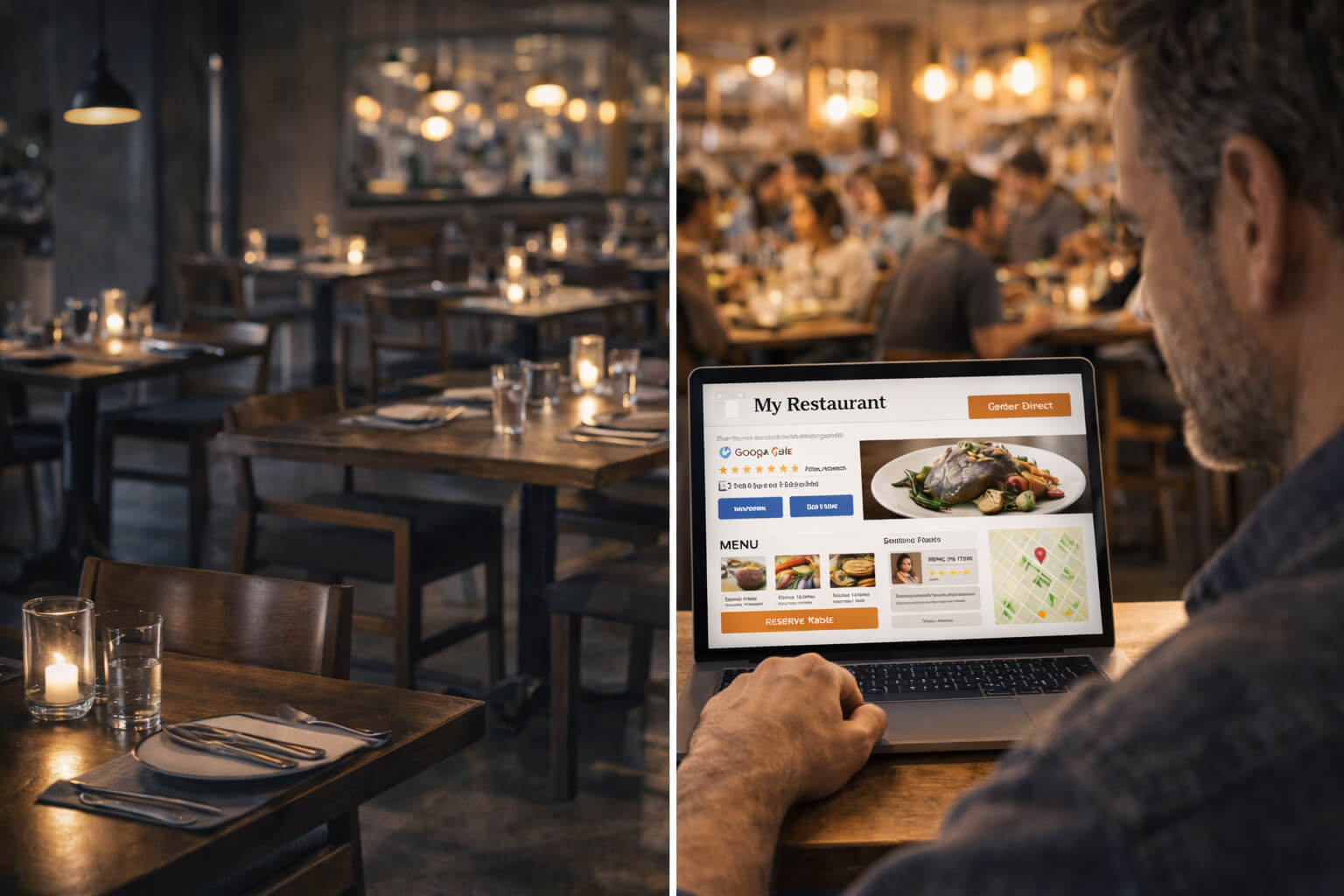
In 2026, diners often decide where to eat long before they ever experience a restaurant’s interior. While beautiful décor can enhance the dining experience once guests arrive, it rarely plays a role in whether they choose your restaurant in the first place.
Today’s dining decisions are made digitally. Before a guest ever sees your lighting, furniture, or wall finishes, they encounter your restaurant through search results, menus, photos, and reviews online. This shift has fundamentally changed where restaurants should invest if their goal is to attract more diners and increase revenue.
Restaurants that spend heavily on interior upgrades while neglecting their website are unknowingly losing customers to competitors with simpler spaces—but far stronger online experiences. In a world where attention is scarce and decisions are made quickly, a smart website consistently outperforms fancy décor when it comes to discovery, bookings, and long-term growth.
The first interaction a diner has with your restaurant is almost never your front door. It is a Google search result.
Before choosing where to eat, diners routinely search for nearby options, compare menus, scan photos, read reviews, and check hours. This entire evaluation happens online, often within a few minutes. During this window, your website—not your dining room—is doing the selling.
If a website loads slowly, feels outdated, lacks clear menus, or makes booking difficult, diners rarely wait for clarification. They simply return to search results and choose the next option. At that point, even the most stunning interior design becomes irrelevant, because the diner never reaches it.
The financial impact of weak digital first impressions is explained in detail in The Cost of Not Having a Website for Your Restaurant, which shows how lost visibility quietly compounds into lost revenue.
Décor influences perception only after a diner has already committed to visiting. Websites, on the other hand, influence the decision itself.
A well-structured website guides diners through the exact questions they ask when choosing a restaurant. It clarifies what kind of food you serve, what the experience will feel like, how much it costs, and how easy it is to take the next step. This clarity reduces uncertainty and builds confidence, which directly increases bookings and walk-ins.
A conversion-focused website consistently outperforms aesthetics alone because it addresses decision psychology, not just visual appeal. This process is outlined in How to Turn Website Visitors Into Paying Diners, which explains how small improvements in clarity and structure translate into measurable revenue gains.
While ambience matters to the dining experience, clarity matters far more at the decision stage. When diners are choosing between multiple options, they are primarily trying to eliminate uncertainty.
They want to know what dishes are offered, what prices look like, whether the restaurant fits their dietary needs, how far it is, and whether it is open at the time they plan to visit. A smart website answers these questions immediately and without friction.
Décor cannot communicate this information. A website can—and must. This is why digital menus have become one of the most influential decision-making tools for restaurants. Their growing importance is explained in Online Menus: Why They Matter More Than Printed Ones, which shows how usability and accessibility now outweigh presentation alone.
Interior design impacts only the diners physically present in the restaurant. A website, by contrast, works continuously and at scale.
A smart website operates twenty-four hours a day, appearing in search results, supporting advertising campaigns, capturing customer data, and driving bookings while the dining room is empty. It can attract new diners, re-engage past guests, and support long-term marketing efforts without additional staffing or physical expansion.
Décor enhances the experience for one table at a time. Websites influence thousands of potential diners simultaneously. This scalability is why websites function as the foundation of modern restaurant marketing, as explained in The Restaurant Marketing Funnel: How Your Website Brings Diners to Your Door.
In 2026, visibility is often the deciding factor. When diners search for “restaurant near me” or “best food nearby,” Google determines which options they see first. That ranking has nothing to do with décor and everything to do with digital presence.
Restaurants with SEO-optimized websites consistently attract more traffic, even if their interiors are modest. Meanwhile, beautifully designed spaces with weak online visibility remain undiscovered by many potential customers.
This competitive advantage is detailed in SEO for Restaurants: How to Get Found Online and expanded further in How Restaurants Can Attract Local Customers Through SEO. These resources show how search visibility directly translates into foot traffic and bookings.
Interior upgrades do not reduce delivery app commissions, nor do they give restaurants more control over customer relationships. Websites do.
By enabling direct reservations and online ordering, restaurants can bypass costly intermediaries, retain customer data, and control the full brand experience. Over time, this reduces reliance on platforms that charge high fees and limit ownership of customer relationships.
The financial and strategic benefits of this shift are explored in Cut the Middleman: Future-Proof Your Restaurant With Direct Website Inquiries and Competing With Delivery Apps: Why Direct Ordering Wins.
Most diners interact with your restaurant through a smartphone before they ever visit. If that experience is frustrating, slow, or confusing, they may never progress further.
Mobile usability now determines whether menus are read, bookings are completed, and directions are followed. Marble floors, custom lighting, and designer furniture have no impact if diners abandon the site before taking action.
This is why mobile-first design has become essential rather than optional, as explained in Mobile-First Websites: Why Restaurants Can’t Ignore Them.
Trust is built gradually, and in 2026, it begins online. Diners look for consistent branding, clear information, reviews, and professional presentation before committing to a visit.
A smart website reduces perceived risk by answering questions clearly and presenting the restaurant as credible and established. Décor reinforces trust once diners arrive—but it rarely creates it.
The role of online presence in building trust is explored in Restaurant Branding 101: Why Your Online Identity Matters and The Restaurant Reputation Playbook: How to Win Diners’ Trust Online.
The impact of website improvements is not theoretical. Restaurants that prioritize clarity, speed, and usability consistently see higher conversion rates.
One documented example in How One Restaurant Increased Bookings 40% With a New Website demonstrates that meaningful growth can occur without changing décor at all—simply by improving the digital experience.
Interior design elevates the dining experience once guests arrive. Websites determine whether they arrive at all.
In 2026, the most successful restaurants invest first in the systems that generate visibility, confidence, and conversion. Décor can be upgraded later. Lost digital opportunities, however, compound daily.
If diners cannot find you, understand you, or trust you online, they will never experience your space—no matter how beautiful it is.
Smart websites fill tables. Fancy décor fills photos.
Stay up to date with the latest tips, expert insights, product reviews, and step-by-step guides to help you grow, create, and succeed—no matter your industry or passion.