
January 14, 2026
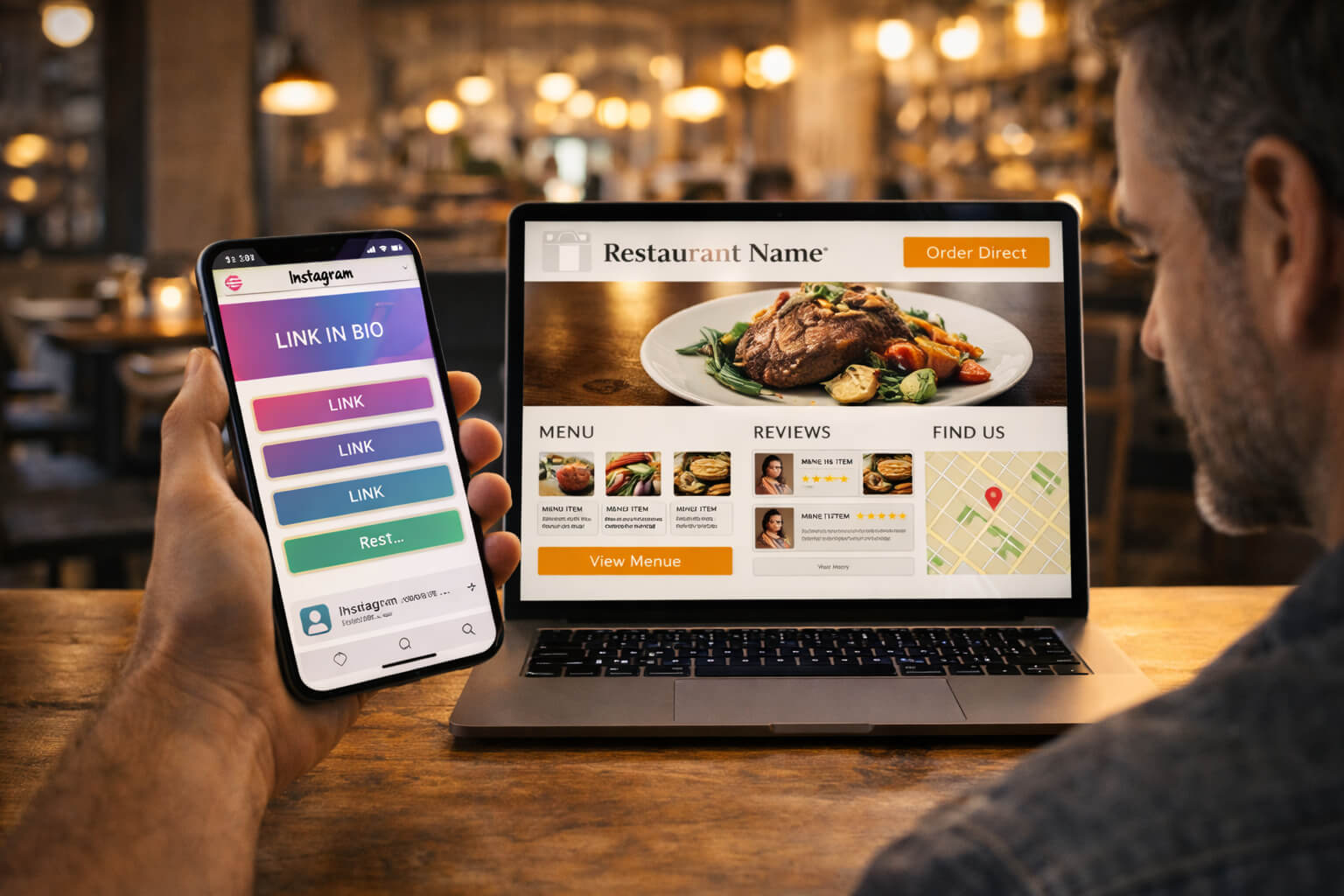
For much of the last decade, “link in bio” became the default digital strategy for restaurants using Instagram and TikTok. Platforms limited outbound links, and link-in-bio tools offered a simple workaround: publish content on social media, point followers to a single link, and trust that motivated diners would figure out the rest.
That approach worked when social media feeds were less crowded, competition was lower, and diners were more willing to explore. However, the digital behavior of diners has evolved significantly. In 2026, customers are no longer browsing casually when they decide where to eat. They are moving quickly, comparing options in real time, and choosing restaurants that remove friction from the decision-making process.
A single, generic link-in-bio page can no longer support that journey. Restaurants that rely on it as their primary digital destination are unknowingly placing obstacles between themselves and potential customers—obstacles that result in fewer bookings, lower order volumes, and missed opportunities for repeat business.
Social media platforms are designed for discovery and entertainment. Their algorithms reward visually engaging, fast-paced content that keeps users scrolling, not content that helps users make informed decisions. While a beautifully shot dish or viral video may spark interest, it does not answer the practical questions diners ask when they are ready to commit.
When a diner moves from inspiration to intent, they typically want to understand the full experience. They look for a complete menu, pricing transparency, operating hours, location details, reviews, and an easy way to book a table or place an order. Social platforms fragment this information across bios, highlights, comments, and third-party tools, forcing diners to piece together answers on their own.
This is why a restaurant website sits at the center of the marketing ecosystem. It provides structure, clarity, and reassurance at the exact moment a diner is deciding. As explained in The Restaurant Marketing Funnel: How Your Website Brings Diners to Your Door, social media should feed interest into a destination that is built specifically to convert that interest into real-world visits and orders.
Link-in-bio tools were never designed to replace a restaurant website. They were designed to compensate for platform limitations. As a result, they tend to be visually generic, slow to load, and structurally shallow. Most present a list of buttons with minimal context, leaving diners to guess which link leads to the information they need.
Each additional step in this process increases the likelihood that a diner abandons the journey entirely. When someone is hungry or making a group decision, even small delays or confusion can push them toward a competitor with clearer information.
A dedicated restaurant website eliminates this friction by consolidating everything into a single, intuitive experience. The long-term cost of relying on social profiles instead of owning a website is detailed in The Cost of Not Having a Website for Your Restaurant, where missed conversions and lost visibility compound over time.
When diners know they want to eat out, they rarely start on Instagram. Instead, they turn to Google with intent-driven searches such as “best restaurant near me” or “Thai food in [city].” These searches represent the most valuable traffic a restaurant can receive because the user is actively seeking a solution.
Search engines prioritize websites that are structured, optimized, and locally relevant. Social profiles and link-in-bio pages are not built to compete in this environment. Restaurants without a proper website simply do not appear in many of the searches that drive consistent foot traffic.
This is why restaurants that invest in SEO-focused websites gain a sustainable advantage, as outlined in SEO for Restaurants: How to Get Found Online and How Restaurants Can Attract Local Customers Through SEO. Unlike social posts, which disappear quickly, search-optimized pages continue to deliver results over time.
A restaurant’s menu is one of the most influential factors in a diner’s decision. Yet on social platforms, menus are often reduced to screenshots, PDFs, or highlight reels that are difficult to read, slow to load, and impossible to keep up to date.
Web-based menus allow restaurants to present items clearly, organize sections logically, and update prices or availability instantly. They also allow space to explain dishes, highlight dietary options, and set expectations—something a social post simply cannot do effectively.
The importance of this shift is explored in Online Menus: Why They Matter More Than Printed Ones, which shows how digital menus have become central to both discovery and conversion.
In an environment where anyone can post attractive food photos, diners rely on deeper signals of legitimacy. A professional website communicates that a restaurant is established, consistent, and attentive to detail. It reassures diners that the experience they see online will match what they encounter in person.
Websites also allow restaurants to present their brand story, values, and personality in a controlled way. This level of trust-building is difficult to achieve through a feed that changes daily and is influenced by algorithms.
This relationship between branding, trust, and conversion is discussed in Why Every Restaurant Needs a Website in 2025 (And How to Launch One Fast) and Restaurant Branding 101: Why Your Online Identity Matters.
One of the biggest limitations of social media is that it creates a rented audience. Restaurants do not control who sees their content, nor do they own the relationship with followers. Link-in-bio tools rarely help restaurants collect meaningful customer data or understand behavior.
A website, by contrast, enables email capture, loyalty sign-ups, and behavioral insights that support long-term growth. Over time, this transforms one-time visitors into repeat customers. Practical strategies for doing this are outlined in How to Use Your Website to Collect Customer Emails and Build Loyalty and Loyalty Programs That Actually Work for Restaurants.
Routing customers from social media to third-party delivery apps increases costs and reduces control. High commissions erode margins, and customer data remains with the platform—not the restaurant.
By integrating ordering directly into their website, restaurants protect profitability and build direct relationships with their customers. The strategic importance of this shift is explained in Why Small Restaurants Must Invest in Online Ordering and Competing With Delivery Apps: Why Direct Ordering Wins.
The most effective restaurant marketing strategies in 2026 clearly separate roles. Social media attracts attention and creates awareness, while the website handles conversion, trust, and retention.
When social traffic is directed to a website built for decision-making, it becomes measurable revenue rather than passive engagement. This process is detailed in How to Turn Website Visitors Into Paying Diners.
Restaurants that move away from social-only approaches consistently see stronger outcomes. One example documented in How One Restaurant Increased Bookings 40% With a New Website demonstrates how improved structure, speed, and clarity directly translate into higher bookings.
In 2026, relying on a single link-in-bio page is no longer a viable approach to restaurant marketing. It oversimplifies a complex decision process and leaves too much to chance.
Restaurants that succeed are those that invest in websites they own, optimize for search, guide customers clearly, and build long-term relationships. Social media remains valuable—but only when it leads diners to a destination designed to convert attention into action.
A great website does not replace social media.
It completes it.
Stay up to date with the latest tips, expert insights, product reviews, and step-by-step guides to help you grow, create, and succeed—no matter your industry or passion.