
January 05, 2026
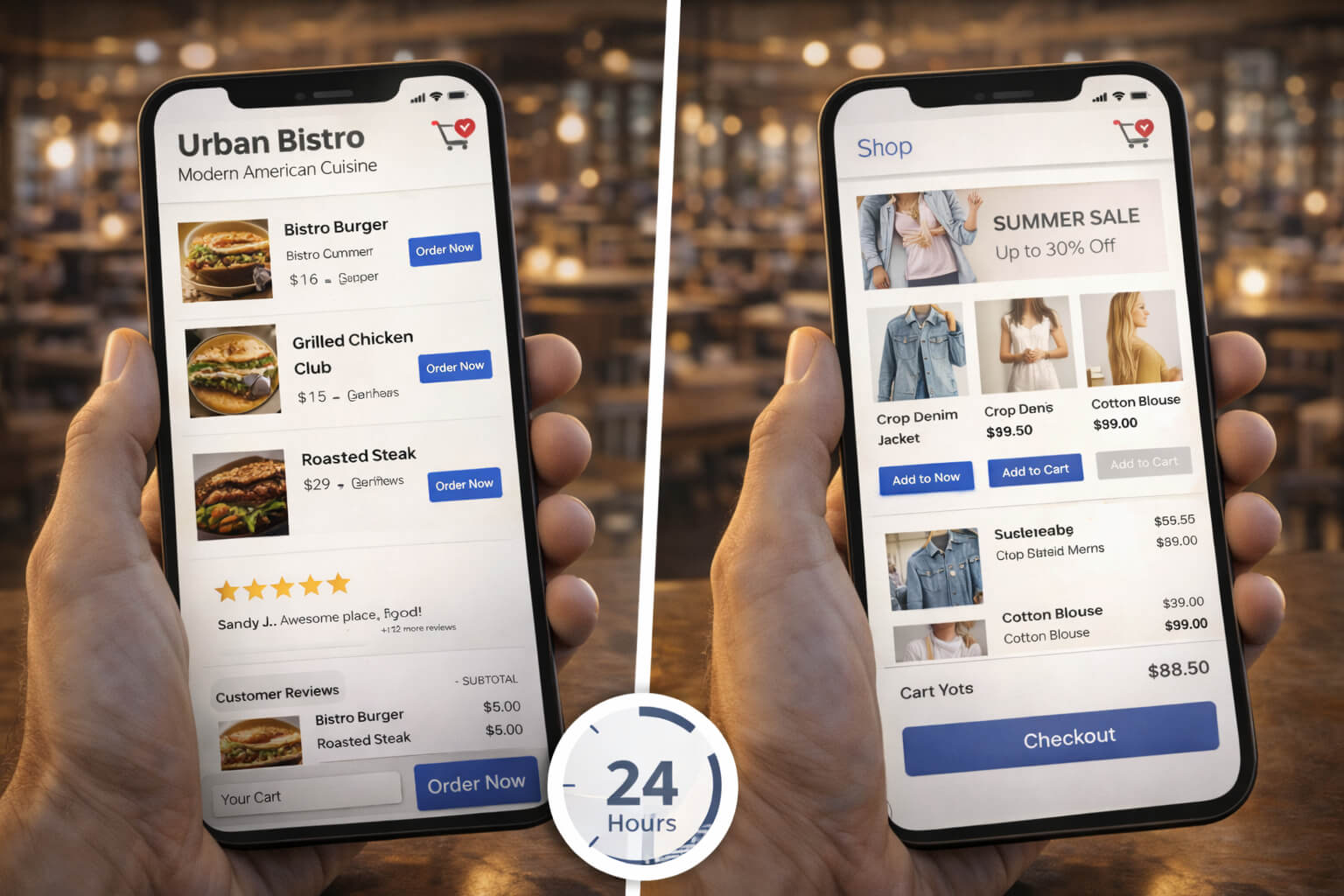
Restaurants don’t just sell food anymore—they sell convenience, confidence, and experience.
In 2025, the most successful restaurants think less like traditional hospitality businesses and more like e-commerce brands. They optimize every touchpoint, remove friction, and create systems that guide customers from discovery to purchase.
That mindset shift is the difference between struggling for attention and building predictable, scalable growth.
Here’s why thinking like an e-commerce brand is no longer optional for restaurants—and how your website becomes the engine behind it all.
Before ordering or visiting, diners:
Sound familiar? That’s exactly how online shoppers behave.
Restaurants that understand this shift design their websites like e-commerce funnels. Every click, scroll, and page guides diners toward a decision.
Learn more about applying a marketing funnel approach to restaurants: The Restaurant Marketing Funnel: How Your Website Brings Diners to Your Door
E-commerce brands treat their website as the business. Restaurants must do the same.
A modern restaurant website:
Ignoring your website is like running a store with the lights off: you exist, but no one sees you.
The Cost of Not Having a Website for Your Restaurant
E-commerce brands obsess over product pages. Restaurants should obsess over menus in the same way.
High-performing menus:
Online menus outperform printed and social menus because they allow diners to make confident, fast decisions—no ambiguity, no friction.
Third-party delivery apps are like marketplaces—think Amazon or Etsy. They connect you to customers but take fees and control.
Restaurants that invest in direct website ordering:
Here’s how restaurants can add online ordering without paying massive app fees:
Just like e-commerce, restaurants convert more when they reduce doubt and uncertainty.
Trust signals include:
Websites build trust far better than social media feeds or apps. While social posts inspire, a website reassures.
E-commerce brands track every click, scroll, and purchase. Restaurants should do the same.
Your website can reveal:
Using this data turns guessing into strategic decisions, helping you optimize menus, pricing, and marketing.
Using Customer Data to Make Smarter Menu Decisions
Top e-commerce brands don’t rely on one-time buyers—they nurture repeat purchases. Restaurants can too.
A smart website can:
This transforms social media “likes” into actual customers and repeat revenue.
E-commerce brands spend heavily on search visibility. For restaurants, local SEO plays the same role.
An optimized website ensures your restaurant:
Without local SEO, even a beautiful website is invisible to the diners searching for you online.
Restaurants that adopted an e-commerce mindset see measurable results. One example: a restaurant that upgraded its website and online systems increased bookings by 40%.
How One Restaurant Increased Bookings 40% with a New Website
This proves that investing in your digital experience pays off faster than almost any other marketing tactic.
Food brings people in—but systems keep them coming back.
Restaurants winning in 2025 think beyond tables and kitchens. They focus on:
Think like an e-commerce brand. Build like a digital-first restaurant.
The result: predictable growth, higher margins, and loyal customers who choose your restaurant every time.
If you want, I can also create a combined version of this article + the Gen Z-focused one, so it’s a single, definitive 2025 guide for restaurant digital strategy.
Stay up to date with the latest tips, expert insights, product reviews, and step-by-step guides to help you grow, create, and succeed—no matter your industry or passion.