
January 08, 2026
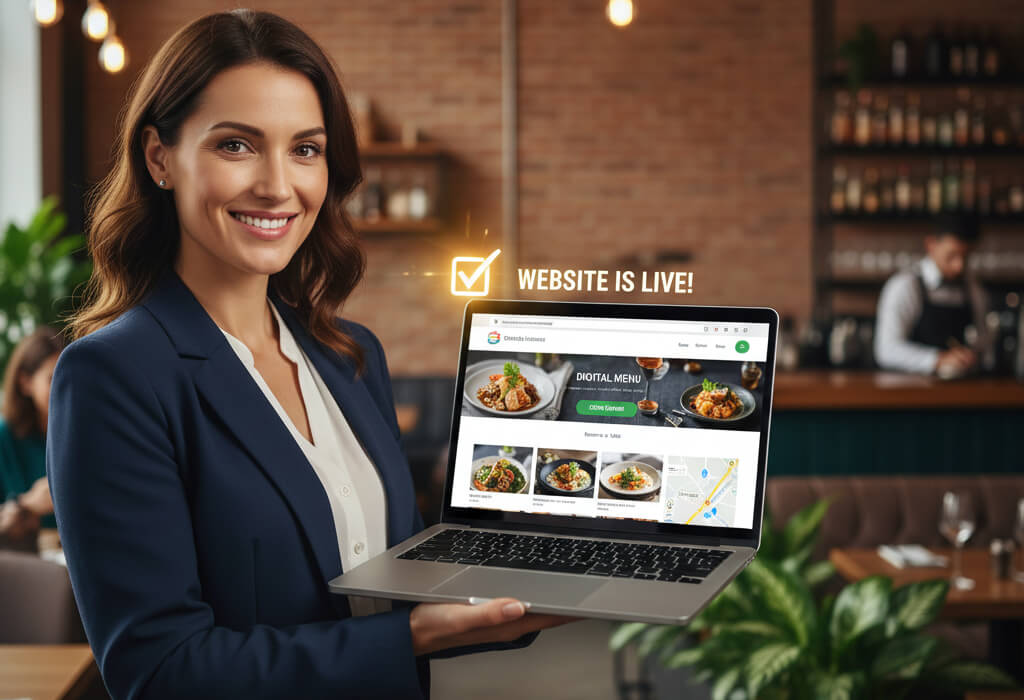
(And Why Not Having One Is Now a Serious Liability)
In 2026, not having a website is no longer just a missed opportunity—it’s an active disadvantage.
Diners don’t wonder whether a restaurant has a website anymore.
They assume it does.
When they can’t find one, confidence drops instantly.
Social media and delivery apps may create visibility, but your website is the only digital platform you truly own—and ownership matters more in 2026 than it ever has.
Here’s why every restaurant needs a website now, and how to build one quickly, clearly, and without unnecessary cost.
In 2026, trust is binary.
Either a restaurant feels established and reliable—or it doesn’t.
When diners search for a restaurant and can’t find an official website, they immediately ask:
AI-driven search engines also rely heavily on official websites to confirm legitimacy.
Without one, restaurants:
Here’s a breakdown of the real financial impact of not having a restaurant website: The Cost of Not Having a Website for Your Restaurant
Restaurant discovery in 2026 is dominated by:
When someone searches:
Google prioritizes restaurants with:
A website is no longer just for humans—it’s how algorithms understand your business.
Restaurants with SEO-ready websites consistently attract high-intent, nearby diners:
Social media still helps discovery—but it no longer drives decisions.
In 2026, diners use Instagram, TikTok, and short-form video to notice restaurants.
They use websites to choose them.
Before committing, diners leave social platforms to:
Social platforms:
That’s why diners still trust official websites more than any social profile: Why Diners Trust Websites More Than Social Media Profiles
In 2026, every marketing channel funnels into one system: your website.
A modern restaurant website:
Without a website, marketing efforts fragment.
With one, growth compounds.
Here’s how websites anchor the entire restaurant marketing funnel: The Restaurant Marketing Funnel: How Your Website Brings Diners to Your Door
Delivery app commissions continue to pressure margins.
Restaurants that thrive in 2026:
Direct orders mean:
Even simple ordering systems now outperform app-only strategies:
In 2026, more pages don’t mean better performance.
The highest-converting restaurant websites focus on certainty and speed:
Anything that slows decision-making reduces conversions.
This checklist reflects what diners and search engines expect today: The Ultimate Restaurant Website Checklist: From Menus to Mobile UX
Building a website no longer requires long timelines or large budgets.
The fastest, most effective approach in 2026:
Speed to market matters because:
This guide explains how restaurants launch fast without technical friction: Why Every Restaurant Needs a Website (And How to Launch One Fast)
Even in 2026, many restaurants lose customers due to preventable errors:
Fixing these often leads to immediate improvements in bookings and walk-ins: The Most Common Restaurant Website Mistakes (And How to Fix Them)
Restaurants that upgraded their website experience saw results quickly.
One restaurant increased bookings by 40% after launching a clearer, faster site: How One Restaurant Increased Bookings by 40% With a New Website
In 2026, websites remain one of the highest-ROI investments a restaurant can make.
Algorithms will change.
Platforms will evolve.
Trends will fade.
But one truth remains:
Your website is the only digital asset you fully control.
If your restaurant doesn’t have a website in 2026, you’re invisible where it matters most.
If you do, improving it may be your fastest growth lever.
Build it fast.
Build it clearly.
Let it work while you run the restaurant.
Stay up to date with the latest tips, expert insights, product reviews, and step-by-step guides to help you grow, create, and succeed—no matter your industry or passion.