
January 12, 2026
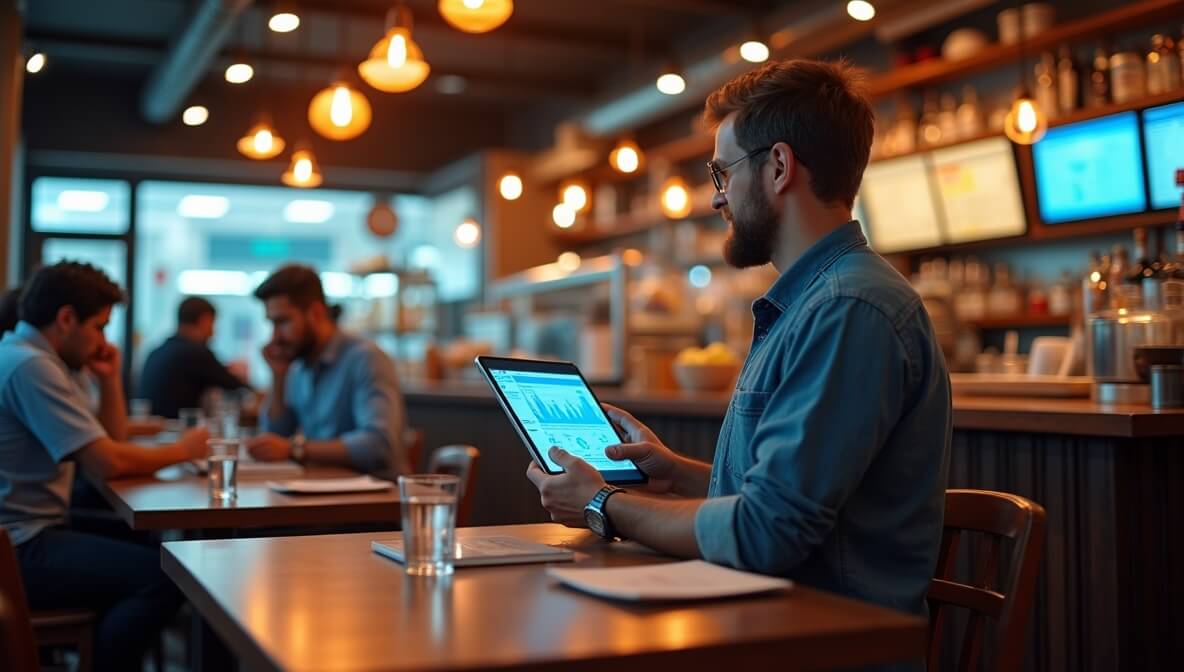
The fastest-growing restaurants in 2026 aren’t always the ones with the most locations, the biggest ad budgets, or decades of brand recognition. They’re the restaurants that made a deliberate strategic shift early: they went digital-first.
Digital-first restaurants design their operations, marketing, and customer experience around their own online presence, with the website acting as the central system—not an afterthought and not a dependency on third-party platforms.
This shift isn’t about replacing hospitality with technology. It’s about using digital systems to remove friction, build trust before the first visit, and create scalable growth that doesn’t erode margins.
As platform costs rise, algorithms become less predictable, and customer expectations increase, the gap between digital-first restaurants and everyone else is widening rapidly.
Here’s why digital-first restaurants are pulling ahead—and why this advantage is accelerating in 2026.
A digital-first restaurant doesn’t simply “have a website” or “post on social media.” It makes digital systems the foundation of decision-making and customer interaction.
Digital-first restaurants prioritize:
In practice, this means the website becomes the center of gravity for the entire business. Every channel—Google, Maps, social media, ads, email, loyalty—feeds into it, and every conversion flows through it.
Restaurants that understand this stop treating digital as marketing and start treating it as infrastructure.
Why more owners are rethinking their online foundation: How to Future-Proof Your Restaurant With a Strong Online Presence
Despite the rise of social platforms, discovery in 2026 still begins with Google Search and Google Maps. When diners are hungry and ready to act, they search with intent—often using location-based queries like “near me,” “open now,” or specific cuisine terms.
Digital-first restaurants win here because they invest in SEO-first websites that Google understands and trusts.
They ensure that:
This consistency sends strong signals to search engines and removes doubt for diners.
Restaurants that invest early in SEO don’t just get more traffic—they get higher-intent traffic, which converts into bookings, orders, and walk-ins.
Why SEO-first websites outperform:
Third-party delivery and booking platforms grow by taking a percentage of every transaction. Over time, those fees compound into a significant tax on growth.
Digital-first restaurants actively redirect demand to their own website, where they control:
Driving traffic directly to the website allows restaurants to improve margins without raising menu prices. It also reduces reliance on platforms that can change terms overnight.
The result is more predictable revenue and stronger long-term economics.
Why direct ordering is now non-negotiable:
Third-party platforms own access to the customer. Digital-first restaurants don’t give that away.
By converting website visitors into known customers, digital-first operators can:
This transforms marketing from constant acquisition into relationship management. Over time, retention compounds faster than acquisition, lowering overall marketing costs.
The restaurants growing fastest in 2026 aren’t just getting more customers—they’re keeping them longer.
How websites power relationship ownership:
In 2026, diners have zero tolerance for friction. A slow site, confusing navigation, or buried information leads to immediate abandonment.
Digital-first restaurants obsess over experience details:
These optimizations aren’t cosmetic—they directly influence whether someone walks through the door or chooses the competitor down the street.
Google reinforces this behavior by ranking mobile experience and page speed as core signals.
Why UX now equals revenue:
Printed menus break every time a restaurant grows, pivots, or raises prices. Digital-first restaurants avoid this bottleneck by building menu systems that scale.
They use:
This reduces operational costs, minimizes errors, and improves the guest experience across locations and channels.
Smart menu infrastructure also supports SEO and ordering—turning a static menu into a growth asset.
Why digital systems outperform paper:
In 2026, diners form opinions long before they arrive. Your website is often the first real interaction with your brand.
Digital-first restaurants use their websites to:
This trust shortens decision cycles and increases conversion rates. When diners feel confident before arriving, they’re more likely to book, order, and return.
Why trust drives growth:
Guesswork doesn’t scale. Digital-first restaurants replace intuition with insight.
By routing all campaigns through their website, they can:
The website becomes the analytics backbone for every marketing decision, making growth more predictable and repeatable.
How data replaces guesswork:
Restaurants that invested early in their website and digital experience are already seeing outsized results. In one case, a single website upgrade led to a 40% increase in bookings, without increasing ad spend.
This isn’t an isolated result—it’s the compounding effect of better visibility, trust, and conversion.
See how it happened: How One Restaurant Increased Bookings by 40% With a New Website
Digital-first isn’t a trend. It’s a structural advantage.
Restaurants that:
…are growing faster, operating more profitably, and building businesses that last.
In 2026, the real question isn’t “Should we go digital-first?”
It’s “How much growth are we giving up by staying platform-dependent?”
The fastest-growing restaurants aren’t louder.
They’re smarter.
Stay up to date with the latest tips, expert insights, product reviews, and step-by-step guides to help you grow, create, and succeed—no matter your industry or passion.