
January 08, 2026
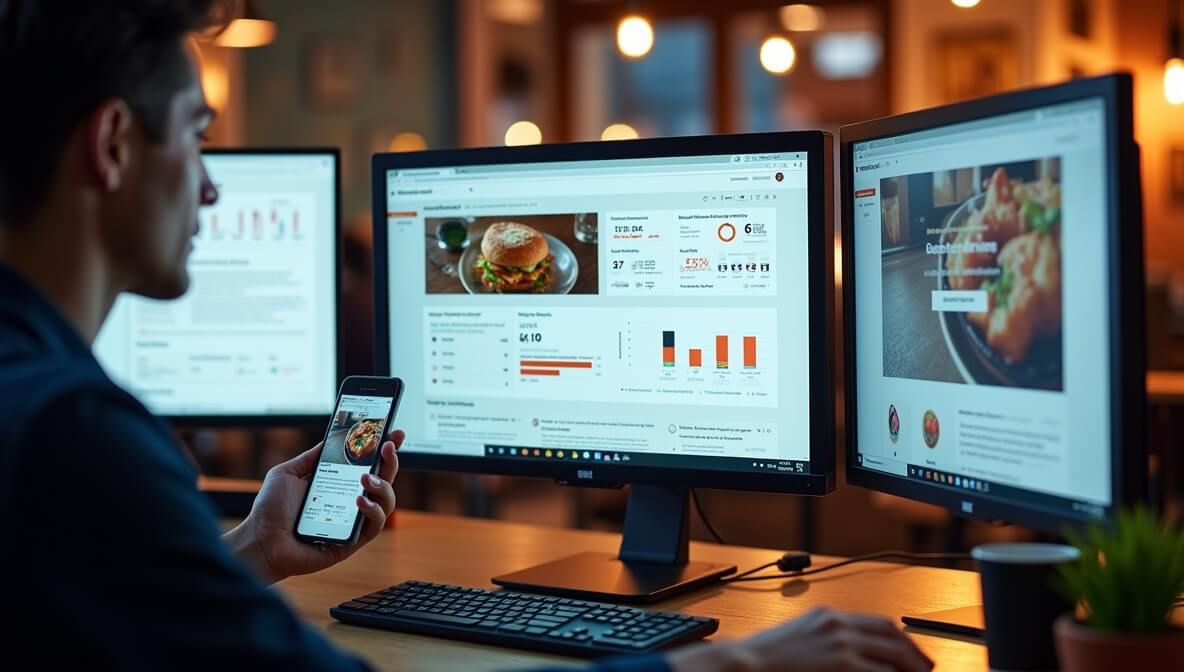
After building 100 restaurant websites, one reality became unavoidable in 2026:
Restaurants don’t lose customers because their food isn’t good.
They lose customers because their digital experience breaks trust before the first visit.
In 2026, diners move faster, expect certainty instantly, and trust systems—not slogans.
Across cuisines, cities, and restaurant sizes, the same performance patterns repeated. Some restaurants quietly doubled bookings and direct orders. Others looked modern, had social followers, and still struggled.
The difference wasn’t trends.
It wasn’t aesthetics.
It was fundamentals aligned with how people actually choose restaurants today.
Here’s what consistently worked—updated for how diners behave in 2026.
In 2026, attention spans are shorter and competition is denser.
Your website now has 3–5 seconds to answer:
Websites that tried to “tell a story” before answering basics lost conversions.
High-performing 2026 restaurant websites:
Design trends change yearly.
User expectations don’t.
This is why restaurants that followed proven clarity frameworks consistently outperformed: The Ultimate Restaurant Website Checklist: From Menus to Mobile UX
By 2026, mobile isn’t 70% of traffic—it’s the default experience.
Most diners:
Top-performing mobile sites shared these traits:
Restaurants that ignored mobile UX didn’t just lose traffic—they lost high-intent traffic.
Mobile-first is now survival: Mobile-First Websites: Why Restaurants Can’t Ignore Them
In 2026, the menu page remains the most visited page—but expectations are higher.
Winning menus:
PDF menus are now a conversion killer and an SEO liability.
Smart menus guide decisions:
Digital menus now outperform printed menus in speed, cost, and revenue impact:
Google in 2026 rewards confidence and consistency, not keyword stuffing.
High-performing restaurants:
Local SEO winners shared:
Social media creates visibility.
Local SEO creates revenue.
That’s why SEO-first websites consistently outperformed social-only strategies:
By 2026, diners don’t “click around” to check trust.
They scan.
Restaurants that embedded reviews directly into:
Converted significantly better.
Structured reviews:
Sending visitors away to third-party platforms introduces friction and doubt.
Trust must be immediate and internal:
Highly edited photos now trigger skepticism.
Top-converting websites used:
Why?
Because diners trust real experiences more than stylized visuals.
Photography that feels honest converts better than photography that looks staged: The Science of Food Photography for Restaurant Websites
Commission-heavy delivery apps are no longer tolerated by high-margin restaurants.
The most successful restaurants:
Direct ordering means:
In 2026, ownership beats exposure:
In 2026, optimization beats redesign.
Restaurants saw major gains from:
Most wins came from small, data-driven changes—not full rebuilds.
Momentum compounds:
In 2026, consistency isn’t just visual—it’s algorithmic.
Restaurants with aligned branding across:
Were trusted more—by both humans and machines.
Inconsistency creates hesitation.
Consistency creates confidence.
Brand clarity accelerates choice: Restaurant Branding 101: Why Your Online Identity Matters
The biggest shift we observed?
High-growth restaurants stopped treating their website as a brochure and started treating it as infrastructure.
Winning websites:
Static sites don’t grow restaurants.
Systems do.
That’s why these websites consistently delivered returns:
After 100 restaurant websites—and a rapidly evolving digital landscape—the conclusion is undeniable:
The restaurants that win don’t chase trends.
They master fundamentals adapted to modern behavior.
Clarity.
Trust.
Action.
When those align, growth becomes predictable.
Because in 2026, the best restaurant website isn’t the most creative one.
It’s the one that removes doubt—and fills tables.
Stay up to date with the latest tips, expert insights, product reviews, and step-by-step guides to help you grow, create, and succeed—no matter your industry or passion.