
December 25, 2025
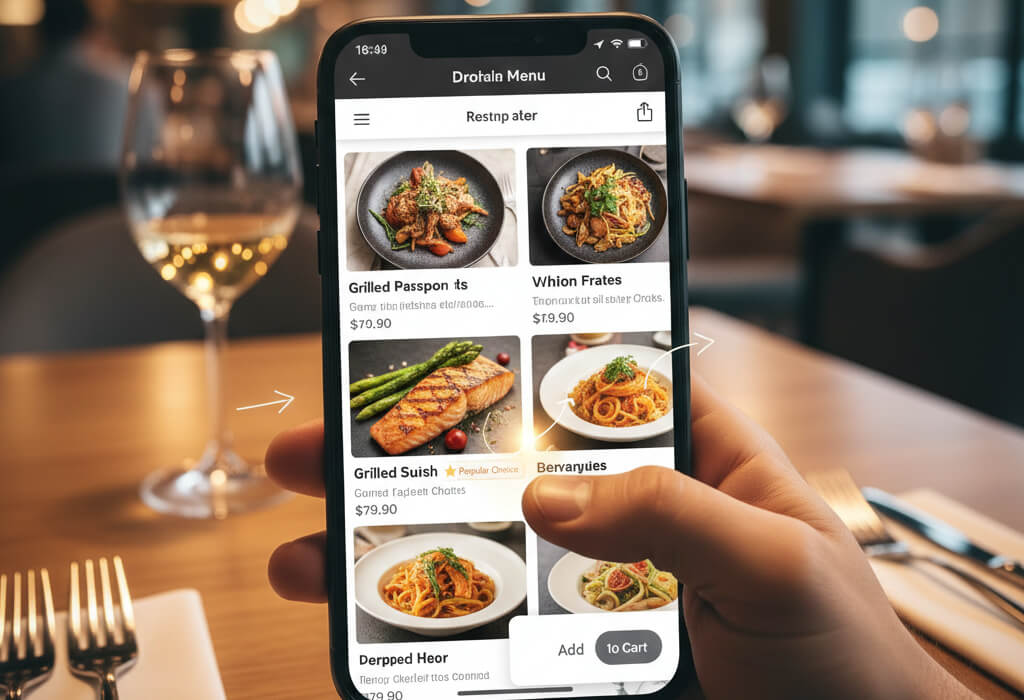
Online menus don’t just inform diners—they actively influence behavior.
Restaurants that treat their menus as a strategic sales tool, rather than a static list of dishes, consistently see measurable results: higher foot traffic, larger average order values, more direct bookings, and fewer abandoned visits. This is not based on opinion or trends—it is grounded in psychology, user behavior, and performance data.
In the digital-first dining journey, your menu is often the first meaningful interaction a diner has with your restaurant. How it looks, how it’s structured, and how easy it is to understand directly affects whether someone chooses to visit, order, or move on.
Below is the science behind why online menus drive real revenue, and why every restaurant should treat their menu as a core revenue engine—not an afterthought.
Human decision-making is driven primarily by visuals. The brain processes visual information dramatically faster than written text, which means diners begin forming opinions about your restaurant almost instantly when viewing an online menu.
A well-structured menu with clear hierarchy, intentional spacing, and high-quality imagery immediately signals quality, care, and professionalism. Before a diner reads a single description, they have already formed assumptions about freshness, value, and overall experience.
Visual presentation influences appetite, emotional response, and perceived taste. This is why poorly formatted menus—dense text, inconsistent fonts, cluttered layouts—can suppress desire even when the food itself is excellent.
The psychological foundation behind how food visuals affect appetite and intent is explored here: The Science of Food Photography for Restaurant Websites
Your menu doesn’t just present options—it frames how desirable those options feel.
Every decision requires mental effort. When diners encounter a confusing or overwhelming menu, they experience cognitive fatigue, which increases the likelihood of hesitation or abandonment.
Effective online menus are designed to reduce this mental load by making decisions feel simple and intuitive. They do this by organizing items into logical categories, using consistent formatting, and guiding attention toward key offerings.
Clear menus help diners quickly understand:
When decision-making feels easy, people are more likely to act. This is why clarity directly correlates with higher conversion rates and more completed bookings or visits.
The relationship between clarity and conversion is explained in detail here: How to Turn Website Visitors Into Paying Diners
Menus that respect the diner’s mental energy consistently outperform those that overwhelm it.
Pricing is one of the strongest emotional triggers in decision-making. When prices are hidden, inconsistent, or unclear, diners experience anxiety—even if the food itself is appealing.
Transparent pricing communicates honesty and confidence. It reassures diners that there will be no surprises and that the restaurant respects their ability to choose freely.
From a psychological standpoint, clear pricing:
Online menus outperform printed menus and social-media-based menus because they can be updated instantly and presented clearly, reducing confusion and mistrust.
Why transparent online menus consistently outperform other formats: Online Menus: Why They Matter More Than Printed Ones
When diners feel safe about pricing, they are far more likely to proceed.
Many diners review menus before deciding where to eat. This pre-visit exposure significantly changes behavior once they arrive.
Diners who preview menus often:
This readiness benefits both guests and restaurants. Guests feel more comfortable, and restaurants experience smoother operations, faster table turnover, and fewer abandoned visits.
Digital menus play a crucial role in shaping this pre-arrival intent and improving operational efficiency: How Digital Menus Improve Guest Experience and Save Costs
By the time diners walk in, the sale has already begun.
The majority of menu views now happen on mobile devices, often during high-intent moments such as local searches, travel, or last-minute dining decisions.
A mobile-optimized menu ensures that diners can:
Poor mobile experiences lead to immediate exits, even if the restaurant itself is excellent. Diners interpret slow or broken mobile menus as a sign of neglect or disorganization.
Mobile optimization is no longer a technical detail—it is a trust and revenue factor: Mobile-First Websites: Why Restaurants Can’t Ignore Them
Restaurants that prioritize mobile menus capture diners at the exact moment intent is highest.
Online menus are not only conversion tools—they are discovery assets.
Search engines can read and understand structured menu content, allowing restaurants to appear in searches for specific dishes, cuisines, and local dining intent. This means menus help restaurants rank for queries beyond just their name.
Properly structured menus improve visibility for:
This makes menus a powerful organic acquisition channel, not just a post-click experience.
How menus support SEO and local discovery:
Menus help diners find you before they even know your name.
Behavioral economics shows that how choices are presented strongly influences what people choose. Menu design can subtly guide diners toward higher-margin items without feeling manipulative.
Strategic placement, visual emphasis, and descriptive framing can increase perceived value and steer attention toward signature dishes. This changes purchasing behavior without changing prices.
Restaurants that update and restructure their menus often see measurable improvements in revenue and booking behavior. In one case, improved website clarity—including menu presentation—led to a 40% increase in bookings: How One Restaurant Increased Bookings by 40% With a New Website
Menus shape not only what diners order—but how much they spend.
When online menus are integrated with direct ordering systems, they become a powerful alternative to third-party delivery platforms.
Direct menu-based ordering:
Restaurants that rely solely on third-party apps sacrifice both control and long-term value. Menus connected to direct ordering restore ownership of the customer journey.
Why direct ordering through menus consistently wins:
Your menu can be the gateway to independence.
A well-maintained online menu communicates discipline, transparency, and respect for the customer. It shows that the restaurant cares about accuracy, presentation, and guest experience.
Menus often influence trust more than social media posts because they are practical, informative, and immediately relevant to the diner’s decision.
This connection between menus and brand trust is part of a broader identity strategy.
When diners trust your menu, they trust your operation.
Your menu works even when your staff isn’t present.
It persuades, reassures, and guides decisions around the clock.
Every photo, description, price, and layout choice shapes how diners feel—and whether they take action.
Online menus do far more than describe food.
They influence behavior, build trust, and generate revenue.
If your menu isn’t actively working for you online, it’s quietly working against your sales.
Stay up to date with the latest tips, expert insights, product reviews, and step-by-step guides to help you grow, create, and succeed—no matter your industry or passion.