
January 12, 2026
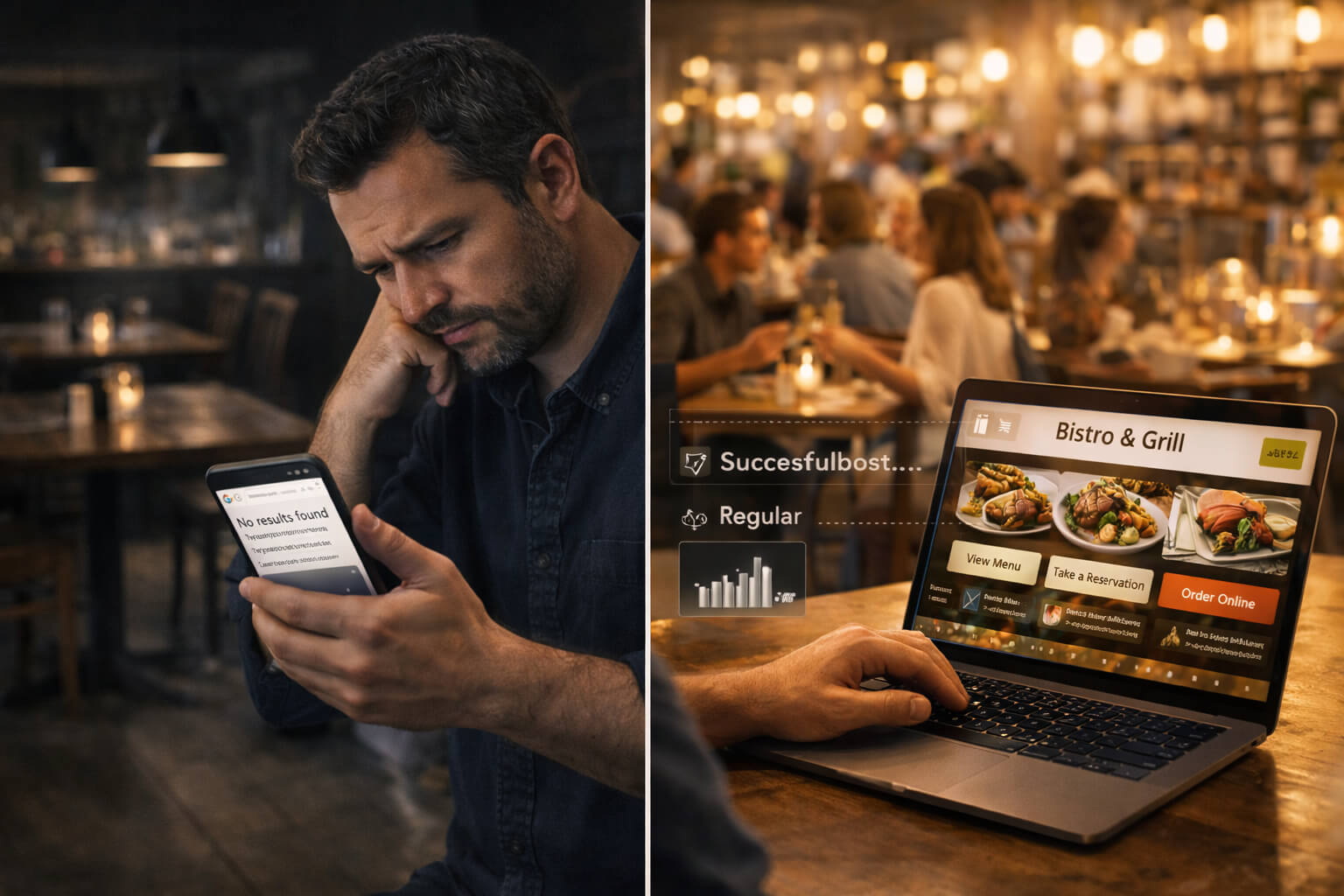
In 2026, not having a website is no longer a neutral business decision—it’s a silent liability.
Many restaurant owners still believe that skipping a website saves money. On the surface, it might feel that way. There’s no upfront design cost, no hosting fee, no maintenance invoice. But in reality, the absence of a website creates ongoing, compounding losses that rarely show up clearly on a profit-and-loss statement.
These costs hide in places that are harder to measure but impossible to ignore over time:
In today’s restaurant landscape, a website isn’t just marketing—it’s infrastructure. Without it, you’re operating with structural disadvantages your competitors don’t have.
Let’s break down the real, hidden costs of not having a restaurant website in 2026—and why they add up faster than most owners realize.
Modern diners don’t browse restaurants casually—they search with intent.
Queries like:
are made when people are ready to decide. Google prioritizes businesses that provide clear, structured, and reliable information—and a website is the strongest signal you can give.
Without a website, Google has limited context about:
Even if you have a Google Business Profile, the absence of a website dramatically weakens your ability to rank consistently. Over time, competitors with optimized websites absorb demand that should have been yours.
Restaurants that invest in SEO-ready websites don’t just get more traffic—they get high-intent local traffic that converts into real customers:
Hidden cost: customers who were actively looking—but never saw you.
Without a website, third-party platforms don’t support your business—they become your business.
Google listings, Yelp pages, Instagram profiles, and delivery apps take center stage by default. That creates serious trade-offs:
You’re essentially paying ongoing “rent” to platforms that can change algorithms, fees, or visibility rules at any time.
Restaurants with websites reverse this power dynamic. They use platforms for discovery, but convert customers on their own property, where they control the experience and economics.
Why cutting out the middleman matters:
Hidden cost: paying platform fees forever instead of building equity in your own brand.
In 2026, the absence of a website sends a subtle but powerful signal: uncertainty.
Diners associate websites with:
Social media profiles are fragmented by nature. Posts are chronological, inconsistent, and often incomplete. They don’t answer practical questions clearly, and they don’t inspire the same confidence as a well-structured website.
When diners compare two similar restaurants—and only one has a professional website—the choice is often subconscious but decisive.
Why websites outperform social profiles in trust: Why Diners Trust Websites More Than Social Media Profiles
Hidden cost: losing customers not because of food or service—but because of perception.
Websites turn intent into action.
They provide clear paths to:
Without a website, every customer journey leaks value. Diners are forced into friction—jumping between apps, scrolling through comments, or choosing a competitor with clearer options.
Direct booking and ordering systems dramatically improve margins because they:
Restaurants that add direct ordering and reservations often see ROI almost immediately:
Hidden cost: losing profit on every single transaction.
Google Maps is one of the most powerful drivers of local foot traffic—but it doesn’t operate in isolation.
Your website feeds Google critical signals:
Restaurants without websites consistently struggle to appear prominently on Maps, even with a claimed Google Business Profile. Over time, better-optimized competitors dominate visibility—especially for “near me” and “open now” searches.
Why Maps success depends on your website:
Hidden cost: nearby diners walking past your door to find someone else.
Without a website, your brand is shaped by fragments:
A website gives you narrative control. It lets you define:
Without that control, your restaurant becomes generic—or worse, misrepresented.
Why owning your online identity matters: Restaurant Branding 101: Why Your Online Identity Matters
Hidden cost: being forgettable in a competitive market.
Growth doesn’t come from one-time visits—it comes from repeat customers.
Websites allow restaurants to:
Third-party platforms don’t share this data. Every new customer becomes a one-off transaction instead of a long-term relationship.
Restaurants that own their audience grow more steadily and spend less on acquisition over time:
Hidden cost: having to re-earn attention every single time.
Modern restaurant websites are no longer static pages. In 2026, they integrate with:
Restaurants without websites are locked out of these efficiencies. They operate slower, update manually, and miss opportunities to optimize both marketing and operations.
Why the future is website-driven:
Hidden cost: falling behind while competitors scale smarter.
When restaurants finally invest in a proper website, the impact is often immediate. In one case, a single upgrade led to a 40% increase in bookings—without increasing ad spend.
That growth didn’t come from gimmicks. It came from clarity, trust, and better conversion: How One Restaurant Increased Bookings by 40% With a New Website
In 2026, the real question isn’t:
“Can I afford a website?”
It’s:
“How much is not having one costing me every single month?”
Lost visibility. | Lost trust. | Lost margins. | Lost growth.
A restaurant website is no longer a luxury—it’s the foundation of modern success.
If your restaurant doesn’t exist online, it barely exists at all.
Stay up to date with the latest tips, expert insights, product reviews, and step-by-step guides to help you grow, create, and succeed—no matter your industry or passion.