
AI tools for beginners for retail stores in 2026

April 14, 2026

By RocketPages

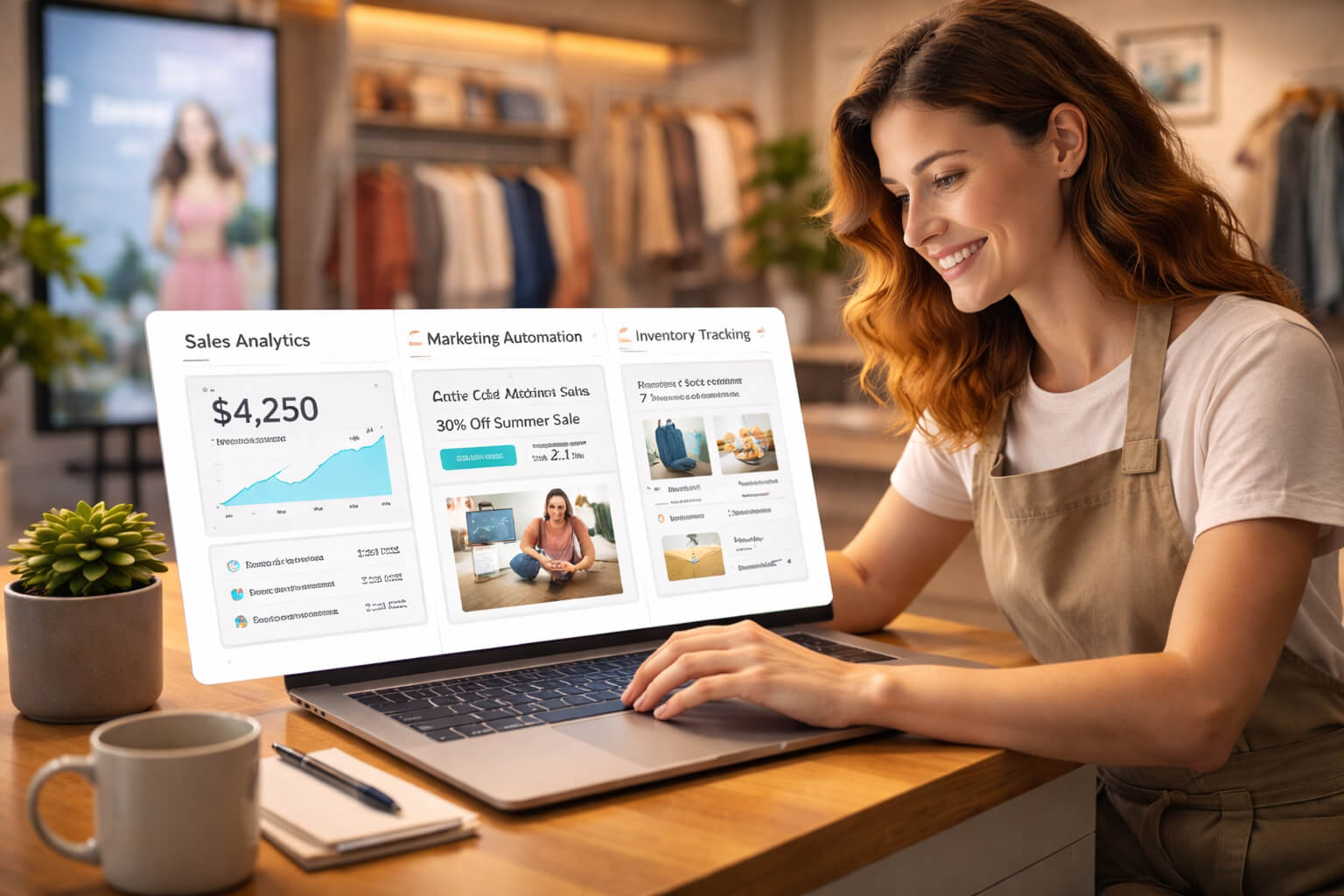
Beginner retail store owner using AI tools to manage sales and operations

Starting with AI in retail is no longer a technical challenge—it is a behavior change challenge.

Most beginners don’t struggle because tools are hard.

They struggle because they don’t know:

  • Where to start
  • What to automate first
  • How to connect tools to real business problems

In 2026, AI is no longer about experimenting.

It is about building simple, repeatable systems that improve your store every day

Even if you are a beginner, you can now:

  • Run marketing like a professional team
  • Respond to customers instantly
  • Organize operations like a structured business
  • Make decisions based on data instead of guesswork

But the key is not using more tools. The key is building a small AI workflow that actually fits your store

Why AI Feels Confusing (and Why It Shouldn’t Be)

Most beginners feel overwhelmed because AI is shown as:

  • Too technical
  • Too broad
  • Too “future-focused”

But retail use of AI is actually very simple.

At its core, AI only does 3 things:

1. Understands information

Example: sales, customers, messages

2. Finds patterns

Example: what sells, when demand increases

3. Helps you act faster

Example: writing, automating, suggesting decisions

That’s it.

So instead of thinking:

“Which AI tool should I learn?”

You should think:

“Which part of my store is wasting the most time or losing money?”

That is where AI starts working.

What Beginner-Friendly AI Actually Means (Real Definition)

Most people think “beginner-friendly” means simple design.

But in retail AI, it means something deeper:

True beginner-friendly AI does 4 things:

  • Reduces decision-making effort
  • Works immediately after setup
  • Requires no technical thinking
  • Gives visible results in days, not months

If a tool doesn’t improve your store within a week, it is not beginner-friendly—it is advanced software in disguise.

1. ChatGPT — Your Business Thinking Partner

For beginners, ChatGPT is not just a writing tool.

It becomes a decision helper for daily retail operations.

Real-world retail scenarios:

Instead of thinking:

“What should I post today?”

You ask:

  • “Create a promotional idea for weekend sales in my clothing store”

Instead of struggling with customers:

  • “Write a polite reply for a delayed order complaint”

Instead of guessing marketing:

  • “Suggest 5 discount strategies for slow-moving inventory”

What changes over time:

Beginners start using ChatGPT for tasks…

But quickly evolve to using it for thinking and planning

It becomes a second brain for store decisions

2. Canva AI — Turning Store Marketing Into a Daily Habit

Most retail beginners fail at marketing because it feels like a “project.”

Canva AI turns it into a daily 5-minute activity.

Real usage workflow:

Instead of designing from scratch:

  • Choose a template
  • Let AI suggest layouts
  • Adjust text for your offer
  • Publish immediately

Practical retail examples:

  • Morning: create “today’s offer” post
  • Afternoon: design WhatsApp broadcast image
  • Evening: prepare festival sale creative

Marketing becomes continuous instead of occasional

Why this matters:

Retail success depends on visibility frequency, not just quality.

3. Zapier — Building Invisible Store Systems

Most beginners don’t realize how much time is lost in repetition.

Zapier solves this by creating automatic reactions inside your business.

Real beginner workflows:

  • Customer places order → automatic thank you email
  • New inquiry → saved into spreadsheet
  • Low stock → alert message sent to phone

Why this is powerful:

You stop doing repetitive work manually.

But more importantly: Your store continues working even when you are not actively managing it

Beginner mindset shift:

Before Zapier:

“I have to remember everything”

After Zapier:

“The system handles it for me”

4. Google Gemini — Turning Daily Work Into Faster Decisions

Beginners already use Google tools daily.

Gemini enhances what they already know.

Real beginner usage:

  • Convert messy sales data into clean insights
  • Summarize weekly performance reports
  • Write customer emails instantly
  • Organize notes into structured plans

Key advantage:

You don’t learn a new system.

You upgrade your existing workflow without changing habits

This is why beginners adapt to it faster than any other AI tool.

5. HubSpot CRM — Turning Customers Into a Repeat System

Most beginners treat customers as “one-time buyers.”

HubSpot CRM changes this mindset.

What beginners start seeing:

  • Who buys repeatedly
  • Which customers respond to offers
  • Which products bring loyalty

Real retail transformation:

Instead of:

“I sold something today”

You think:

“Which customer should I follow up with today?”

Practical beginner actions:

  • Send birthday offers automatically
  • Follow up after purchase
  • Track repeat buyers

This is how small stores turn into stable income businesses

Real Insight: What Beginners Get Wrong About AI

Most beginners think AI is about automation.

But in retail, AI is actually about: reducing friction in decision-making

That means:

  • Less thinking about what to do
  • Faster execution
  • More consistency

Even basic AI usage leads to:

  • Better customer response time
  • More organized operations
  • Higher productivity without hiring staff

The Hidden Truth: AI Does Not Fix Weak Businesses

AI cannot:

  • Bring customers to a dead store
  • Fix bad product selection
  • Replace missing marketing

It only improves what already exists

So if your store is invisible online:

  • AI won’t fix that problem
  • It will only make internal work faster

Where Smart Beginners Actually Win in 2026

The difference between struggling and successful beginners is simple:

Successful ones combine AI + visibility

They don’t rely only on tools.

They also build presence.

For example: create a website instantly using AI.

This helps beginners:

  • Launch online stores quickly
  • Build credibility instantly
  • Reach customers outside local area

And then they scale by learning: how to build a complete website in minutes with AI.

This creates a full system: AI handles operations + website handles growth

Beginner Strategy: How to Actually Start (Simple Framework)

Instead of learning everything, beginners should follow this rule:

Step 1: Identify ONE problem

  • Too much work → automation
  • Low sales → marketing
  • Poor tracking → CRM

Step 2: Pick ONE tool

  • ChatGPT OR Canva OR Zapier

Step 3: Use it daily for 7 days

  • Not occasionally
  • Not “when needed”

Step 4: Measure one improvement

  • Time saved
  • Better response
  • More engagement

Then expand slowly

Final Beginner Reality Check

Most beginners fail in AI not because tools are complex—but because:

  • They try too many tools
  • They don’t stick to one workflow
  • They expect instant business growth

But AI success is built like this: Small actions → repeated daily → system becomes powerful over time

Final Thoughts

AI in retail is no longer advanced technology.

It is a basic business advantage available to everyone.

Even beginners can now:

  • Work faster
  • Sell smarter
  • Operate more efficiently
  • Reduce manual stress

But the real transformation happens when you combine: Simple AI tools + consistent daily use + strong online presence

That is how small retail stores in 2026 become scalable businesses.

Recent Articles

Stay up to date with the latest tips, expert insights, product reviews, and step-by-step guides to help you grow, create, and succeed—no matter your industry or passion.


Portrait studio with a sitter, soft key light and camera demonstrating directional portrait lighting
Portrait Lighting Patterns: Split, Loop and Rembrandt
Judge the light on the faceA portrait lighting pattern describes the arrangement of light and shadow on the face. It is different from the make of the light, the background color, or the overall editi...
Read More
Two educators reviewing curriculum books, sample worksheets and a checklist in a school library
Choosing a School Curriculum: A Practical Review Checklist
Clarify what decision you can makeChoosing a curriculum is different from choosing a school. A curriculum concerns the sequence of knowledge, skills, learning activities, and assessment, together with...
Read More
Teacher supporting a student using geometric learning materials and a notebook in a classroom
Personalized Learning Approaches: Goals, Support and Feedback
Begin with a learning goalPersonalized learning involves making informed choices about instruction and support for a learner. Start with the knowledge or skill being developed, not with a product or a...
Read More
