
January 09, 2026
Reviewed and updated November 23, 2026.
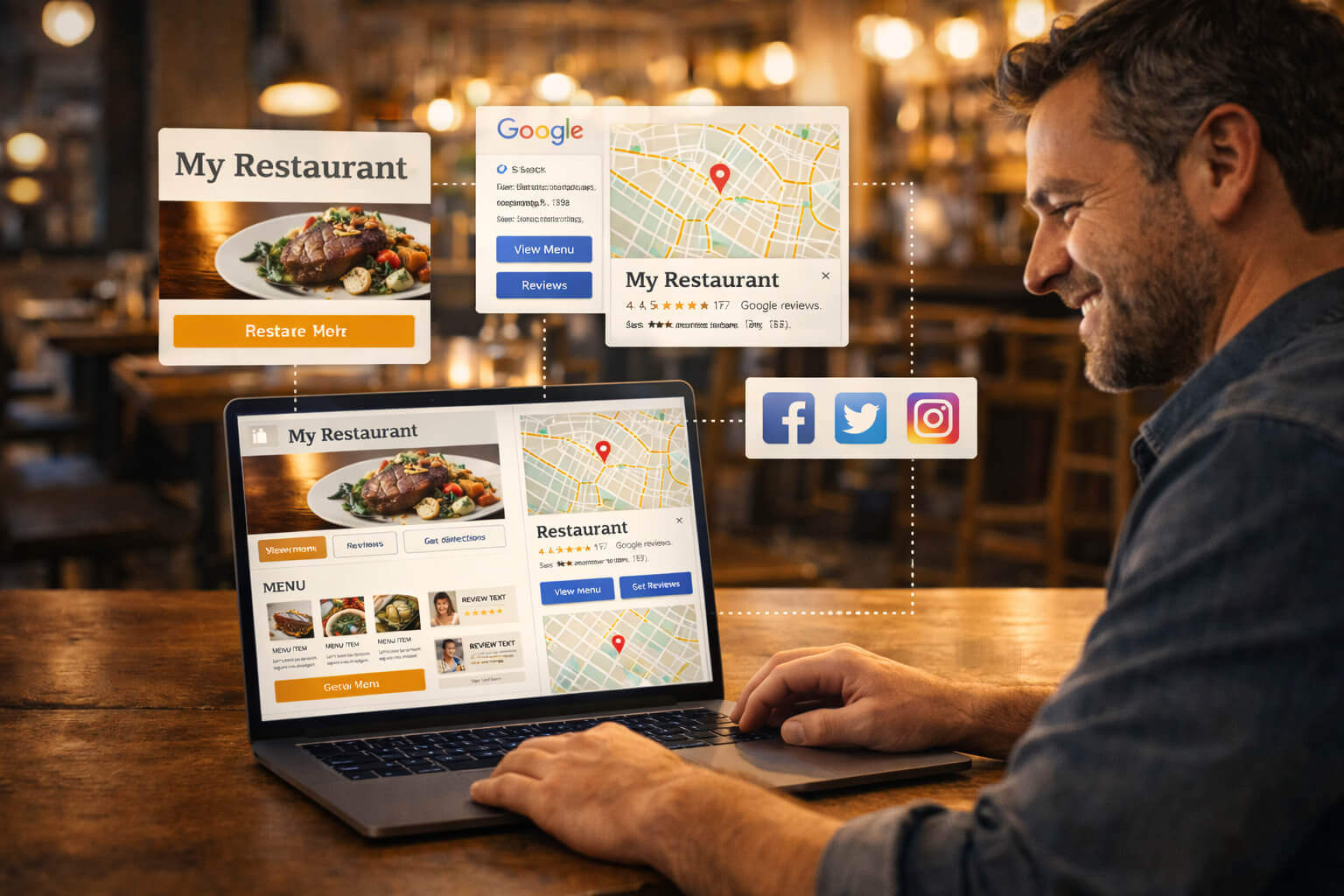
A strong restaurant presence online means people can find consistent, useful information wherever they encounter the business. Your website, business profiles, social accounts, and ordering services have different jobs. Start with a shared record of the facts rather than trying to publish on every channel.
Store this where the relevant staff can maintain it. Include the date each item was checked. For several branches, keep branch-specific facts distinct so a copied announcement does not send diners to the wrong menu or address.
Use the website for stable reference information: menu, location, service details, and links to booking or ordering. A business profile helps people find local information and directions. Social accounts can carry timely updates and conversations. The checkout or booking provider handles the transaction it is configured to support.
A custom domain can give the restaurant a consistent address, but access still depends on domain registration, hosting, and account arrangements. Record who controls the domain and services, how renewal is managed, and who can recover access. Avoid relying on a single former employee’s personal account.
Do not describe an inquiry form as a confirmed reservation. A customer should understand whether they are sending a request, moving to another provider, or receiving an immediate confirmation. This distinction also helps staff handle messages correctly.
Weekly, review incoming questions, failed links, near-term events, and any changed hours or menu items. Before each seasonal menu change, update the website, ordering service, downloadable files, and relevant profiles together. After an event, remove expired booking instructions or mark the page as past.
Assign one owner for each channel and a backup for absences. Keep a short change log: what changed, where, who checked the live result, and any follow-up required. Train front-of-house staff to report repeated questions; they often reveal missing information that traffic reports cannot explain.
Measure the things you can define: contact inquiries received, website tasks completed, booking-button clicks, and confirmed transactions in the provider. Keep them separate. Record a guest’s voluntarily reported discovery source without assuming it explains every touchpoint.
If the basics are reliable, choose one next project based on a real problem. That might be local search visibility, a clearer menu, or a community event. A maintenance routine makes those projects easier to support and gives guests fewer conflicting answers.
Stay up to date with the latest tips, expert insights, product reviews, and step-by-step guides to help you grow, create, and succeed—no matter your industry or passion.


