
December 31, 2025
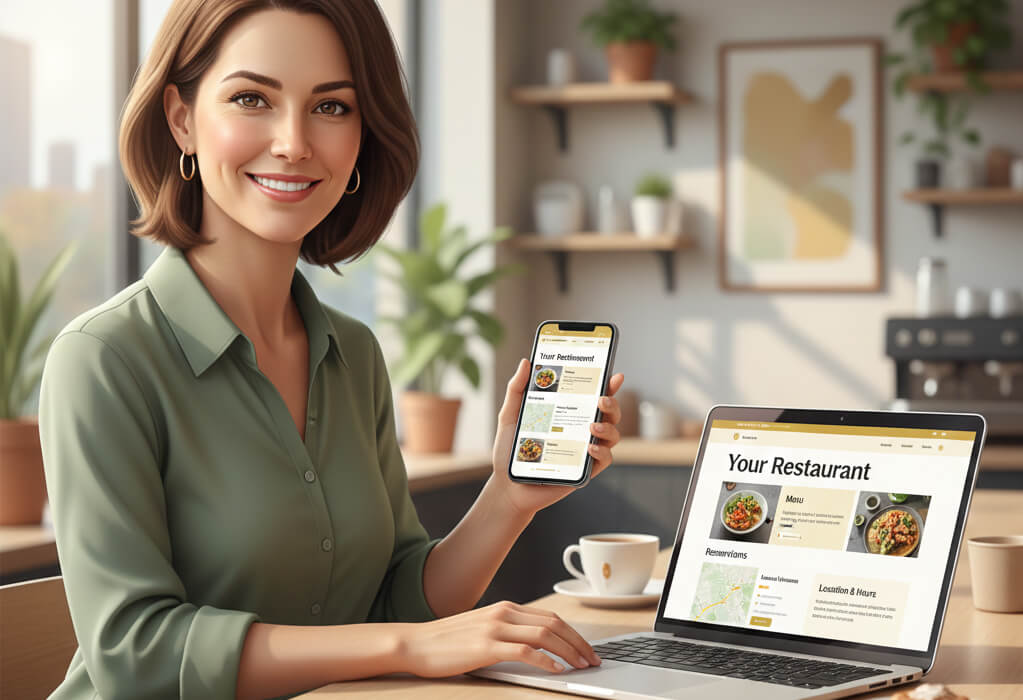
Many restaurant owners delay building a website because they assume it’s too technical, too expensive, or too time-consuming. Some worry they’ll need coding knowledge. Others think a website won’t actually bring customers in.
The truth is much simpler:
You don’t need tech skills to build a restaurant website that works—you just need the right focus.
In 2025, the best-performing restaurant websites are not built by developers obsessing over code. They’re built around clarity, speed, and real diner behavior. When done right, a website becomes a practical business tool—not a technical burden.
This guide explains exactly how non-technical restaurant owners can launch a website that drives real results.
This belief stops more restaurant owners than any other.
Modern restaurant websites no longer require:
What they do require is a clear understanding of what diners are looking for and removing anything that slows them down.
Most diners visit a restaurant website for one reason: to decide quickly.
They want answers, not features.
Restaurant owners who moved past the “tech fear” and launched simple websites often saw immediate improvements—more calls, more bookings, and more walk-ins—without learning anything technical.
Why every restaurant needs a website in 2025—and how to launch one fast
A working restaurant website is not about design trends or fancy effects. It’s about function.
At minimum, your website should:
That’s it.
If a diner can answer these questions in under 30 seconds, your website is doing its job:
Anything beyond this is optional—not essential.
This checklist breaks down what truly matters and removes unnecessary extras:
The ultimate restaurant website checklist
Complex websites often feel impressive—but they usually perform worse.
From a diner’s perspective:
Diners are not browsing for entertainment. They’re making a yes-or-no decision.
Clear structure leads to faster decisions, which leads to:
Restaurants with simpler layouts consistently convert more visitors into paying diners because they remove friction.
How to turn website visitors into paying diners
One of the biggest misconceptions is that every restaurant website must be “designed from scratch.”
Modern restaurant website platforms already provide templates that are optimized for:
These layouts aren’t based on taste or trends—they’re based on data and real diner behavior.
When restaurants switched from custom or cluttered designs to proven layouts, many saw immediate improvements in bookings and engagement.
How one restaurant increased bookings by 40% with a new website
If there is one area to focus on, it’s your menu.
Your menu—not your technology—is what convinces people to visit.
A good digital menu should be:
Easy-to-update menus also:
This is why digital menus consistently outperform printed menus in usability, accuracy, and customer satisfaction.
How digital menus improve guest experience and save costs
Why online menus matter more than printed ones
SEO sounds technical—but for restaurants, it’s mostly about accuracy and consistency.
You don’t need to understand algorithms. You just need:
When these basics are present, Google can automatically connect your restaurant with nearby diners searching for food.
Most local SEO success comes from doing simple things correctly—not advanced tactics.
SEO for restaurants: how to get found online
How restaurants attract local customers through SEO
Years ago, mobile optimization required technical work. Today, it’s mostly automatic.
Modern website builders already:
Since most diners search for restaurants on their phones—often while nearby—mobile performance directly affects foot traffic.
The good news: you don’t need to do anything special anymore. Mobile-first is built in by default.
Why mobile-first websites matter for restaurants
A functional website gives restaurants control.
Instead of relying entirely on third-party platforms, your website allows you to:
Even a simple ordering or booking setup can dramatically improve margins over time.
Direct relationships are always more profitable than rented ones.
How to add online ordering without paying app fees
Why direct ordering beats delivery apps
Restaurants without websites often don’t realize what they’re losing.
Without a website:
Social platforms change. Algorithms shift. Accounts get buried.
A website is the only online asset you fully control—and not having one creates hidden costs that grow over time.
The real cost of not having a restaurant website
You don’t need to be a developer.
You don’t need to learn code.
You don’t need to “figure it out later.”
You just need a website that:
Now, building that kind of website is no longer complicated.
If your website feels technical, it’s built wrong.
A working restaurant website should feel simple—because it is.
Stay up to date with the latest tips, expert insights, product reviews, and step-by-step guides to help you grow, create, and succeed—no matter your industry or passion.