
July 09, 2025
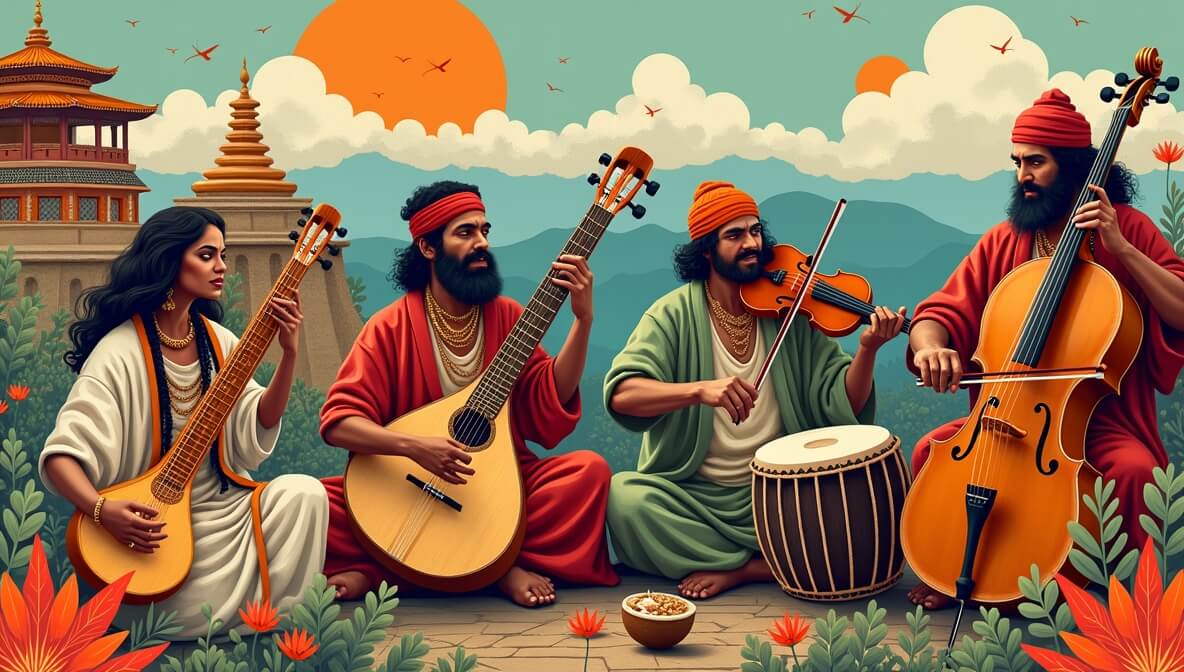
Music is indeed a universal language, yet its expressions are as rich and varied as humanity itself. In this expanded exploration, we’ll dig deeper into how, why, and when cultural contexts shape distinct musical traditions.
Music isn't just entertainment—it's a living record of a culture’s values, history, and relationships. Consider ethnomusicology, a field that blends anthropology, sociology, and music studies to understand music in its cultural context . Ethnomusicologists often learn local languages and traditions, perform alongside natives, and reconstruct lost musical forms—highlighting how music intertwines with daily life and cultural continuity.
Oral tradition dominates in many cultures—shakuhachi music, African folk songs, and Native American chants often lack formal notation (newyorker.com). When notation exists, it's typically mnemonic rather than prescriptive.
The digital age brings both opportunity and risk:
Music stands as a bridge between the deeply local and universally human. It conveys social norms, spiritual values, and emotional landscapes. While humans may share reflexive responses to rhythm and melody, the trained ear, cultural memory, and contextual framing carry the true depth and meaning of any musical form.
Listeners exposed to multiple music cultures (e.g., Western + Indian) exhibit:
Scholars have undertaken massive efforts to preserve global musical heritage:
Let me know if you'd like audio examples, video demonstrations, or links to online courses or libraries—happy to provide!
Stay up to date with the latest tips, expert insights, product reviews, and step-by-step guides to help you grow, create, and succeed—no matter your industry or passion.


