
August 07, 2025
Royalty-free music is not free music—it means you pay once (or sometimes nothing at all) and can use the track multiple times without recurring fees. This is ideal for content creators, podcasters, YouTubers, and indie filmmakers who need quality music without navigating expensive licensing agreements.
Whether you're creating a vlog, launching a podcast, or producing a short film, royalty-free music gives you access to diverse and professional audio without legal headaches. How to Build a Music Reference Library for Creative Projects offers a curated pack of 100 royalty-free tracks to get you started right away!
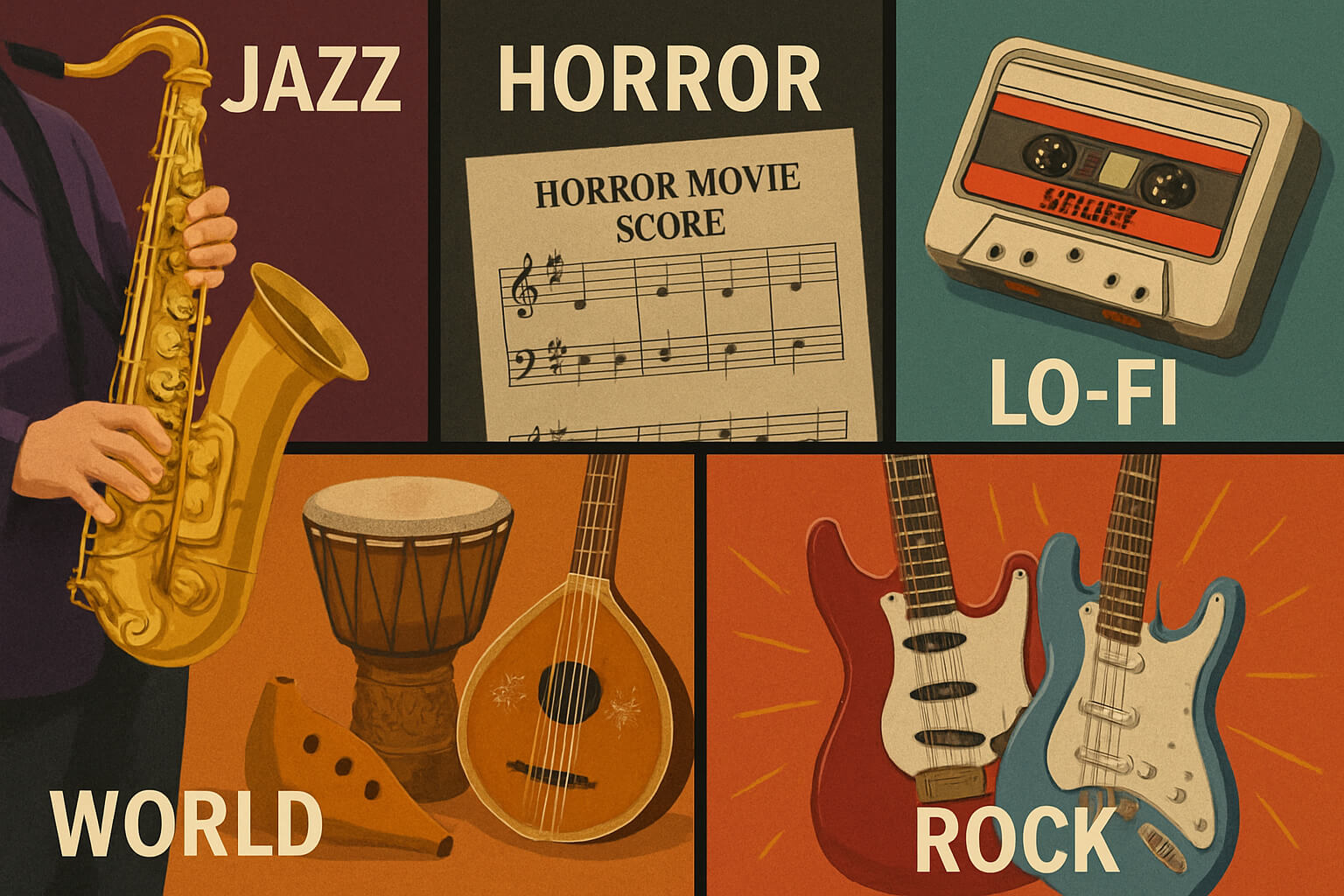
You may think that royalty-free libraries only offer generic background music, but here are five unexpected genres that you can explore—completely royalty-free:
Just because a track is labeled “royalty-free” doesn’t mean it’s automatically license-free. Before using any track, always verify the following:
A genre label narrows a search, but it does not tell you whether a recording will support a scene. Decide whether the music should establish a place, hold a steady background, mark a transition, or draw attention to a moment. Then describe the amount of energy and space the scene needs. These details often produce a more useful shortlist than a genre name alone.
For a spoken introduction, compare candidates while the voice is playing. Listen for busy phrases that compete with key words and sudden changes that distract from the message. For a visual montage, compare how each track’s phrases align with the planned cuts. The same genre can contain recordings that behave very differently in an edit.
Try one track outside the genre you initially expected. A scene that seems to call for a large dramatic arrangement may work better with a sparse pattern, while a quiet sequence may need a clearer pulse. Keep the experiment short and use the same scene for each test. The aim is to hear the relationship between picture, speech, and music.
Write down why a candidate works before continuing the search. Useful notes identify a transition, a texture, or a phrase length rather than simply calling the track “good.” This helps you explain the selection and makes it easier to find an alternative if the first candidate is unsuitable for another reason.
Once a track reaches the shortlist, save its source page and review the information associated with that exact recording. Do not let an exciting genre discovery substitute for checking the conditions relevant to your project. Mark any uncertainty clearly so that a collaborator does not mistake an audition file for a final production choice.
Before release, confirm that the selected file is the version used in the edit and that the relevant documentation is stored with it. If you replace a track late in the process, repeat the review for the replacement rather than copying the first track’s notes. A well-organized selection process supports both creative decisions and a clear handoff.
Keep a few examples of musical roles you frequently need, such as a restrained introduction or a short transition. Record what you like about each example without assuming it is suitable for reuse. The list should improve the language of your next search, not become an unreviewed folder of production music.
Stay up to date with the latest tips, expert insights, product reviews, and step-by-step guides to help you grow, create, and succeed—no matter your industry or passion.


