
August 14, 2025
Not long ago, producing a track meant booking time in a high-end studio, hiring engineers, and investing heavily in gear. Today, thanks to massive shifts in technology and access, the landscape has transformed. A new generation of bedroom producers — artists working from laptops in dorms, bedrooms, and basements — is redefining what it means to create, distribute, and succeed in music.
This isn’t a fringe movement. It's a paradigm shift. These self-taught, self-driven creators are topping charts, racking up billions of streams, and building careers without ever stepping into a traditional studio.
The barrier to entry for music production has plummeted. A decent track can now be built with nothing more than:
Free resources like How to Build a Music Reference Library for Creative Projects and guides to building your home setup (see essential gear) mean aspiring producers don’t need deep pockets — just deep curiosity.
Even smartphones are now legitimate production tools. Apps like BandLab, Soundtrap, and FL Studio Mobile are turning commutes and coffee breaks into production sessions. Learn how to harness them fully in guides like Best Free Mobile Apps for Learning Music Production.
What truly defines bedroom producers is their mindset: resourceful, relentless, and independent.
They don’t wait for permission. They learn everything themselves — from arranging and mixing to branding and marketing — using:
Without the clock ticking in a costly studio, they have the freedom to tinker — refining a synth sound for hours or building unconventional song structures. This freedom fuels innovation, often leading to entirely new genres and sounds.
With platforms like Splice and Audiomovers, a producer in Nigeria can collaborate with a vocalist in Tokyo and a guitarist in Rio — all from their bedrooms.
These platforms allow for:
Want to understand how to use sample packs correctly? This sample pack guide breaks it down clearly.
Global collabs naturally lead to genre-mixing innovations. The line between hip-hop, Afrobeat, electronic, lo-fi, and R&B is blurrier than ever — and that's largely due to bedroom producers merging diverse sonic elements.
Social media platforms have turned marketing into a DIY art form:
Case in point: Lil Nas X’s “Old Town Road” — made using $30 worth of beats and a meme strategy — became a cultural phenomenon without a label.
Digital distributors have replaced A&R reps. Services like:
…enable bedroom producers to release music globally — even earning royalties from Spotify, Apple Music, and Amazon.
For those serious about sustainability, understanding how royalties work is essential to maximizing long-term income.
Bedroom producers are no longer just passionate amateurs — they’re industry leaders. Some of today’s biggest hits are being crafted in bedrooms, not million-dollar studios.
From Billie Eilish and Finneas recording “When We All Fall Asleep…” in a childhood bedroom, to countless SoundCloud artists going platinum, the future of music is intimate, experimental, and globally connected.
The next great hit?
It’s probably being mixed in a bedroom right now — maybe yours.
The music industry is no longer reserved for those with access — it’s open to anyone with creativity, internet, and the courage to hit "upload."
So turn that idea into a track. Turn your room into a studio.
Because the global stage is only one upload away.
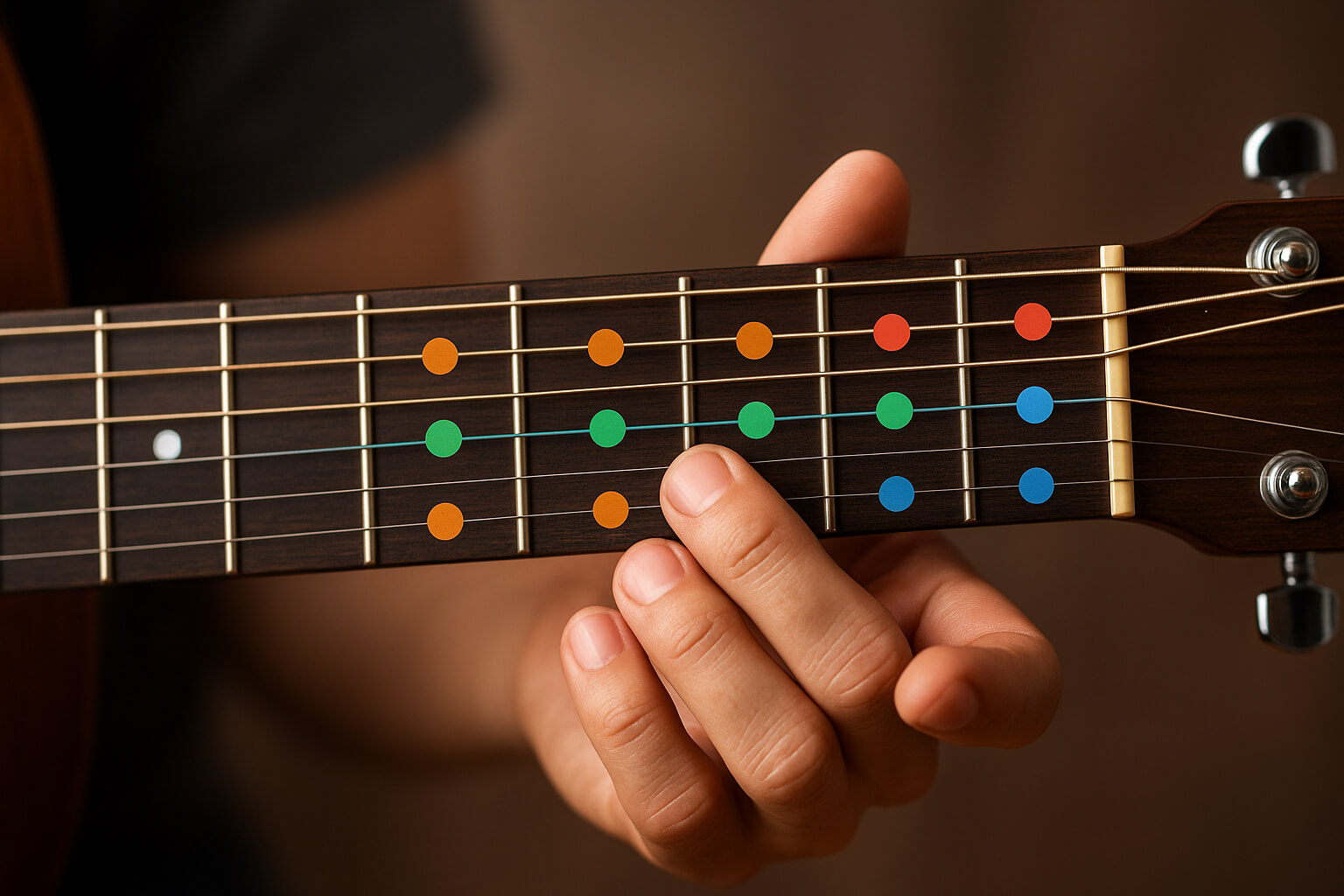
When learning a fretboard pattern, identify the starting note and the relationship of the other notes to it. Play a small portion and listen rather than memorizing the diagram only as a picture. Then locate the same musical idea in another suitable position using the explanation in your learning material.
Check the tuning assumed by the resource before transferring a shape. Keep track of strings and fret positions explicitly. If a diagram contains an exception or a change in fingering, mark it and investigate why. A pattern is most useful when you understand the conditions in which it works.
Create or learn a short phrase using a manageable part of the pattern. Choose a clear beginning and ending, then repeat it with a small rhythmic change. This gives the fingering a musical purpose and helps distinguish knowing a shape from being able to use its notes deliberately.
Record the phrase and identify one detail to improve. You might want a clearer ending, a steadier rhythm, or a smoother move into the next position. Return to the diagram only for the information needed to solve that question. Keep the exercise small enough that you can hear the result instead of concentrating entirely on moving through the whole pattern. Add complexity when the relationship between the shape, notes, and phrase becomes clearer.
At the next session, try recalling the starting note and phrase before opening the diagram. Note which information you remembered and which part needed another look.
Stay up to date with the latest tips, expert insights, product reviews, and step-by-step guides to help you grow, create, and succeed—no matter your industry or passion.


