
Ukulele vs Guitar: Which Should You Learn First?

August 14, 2025

By RocketPages

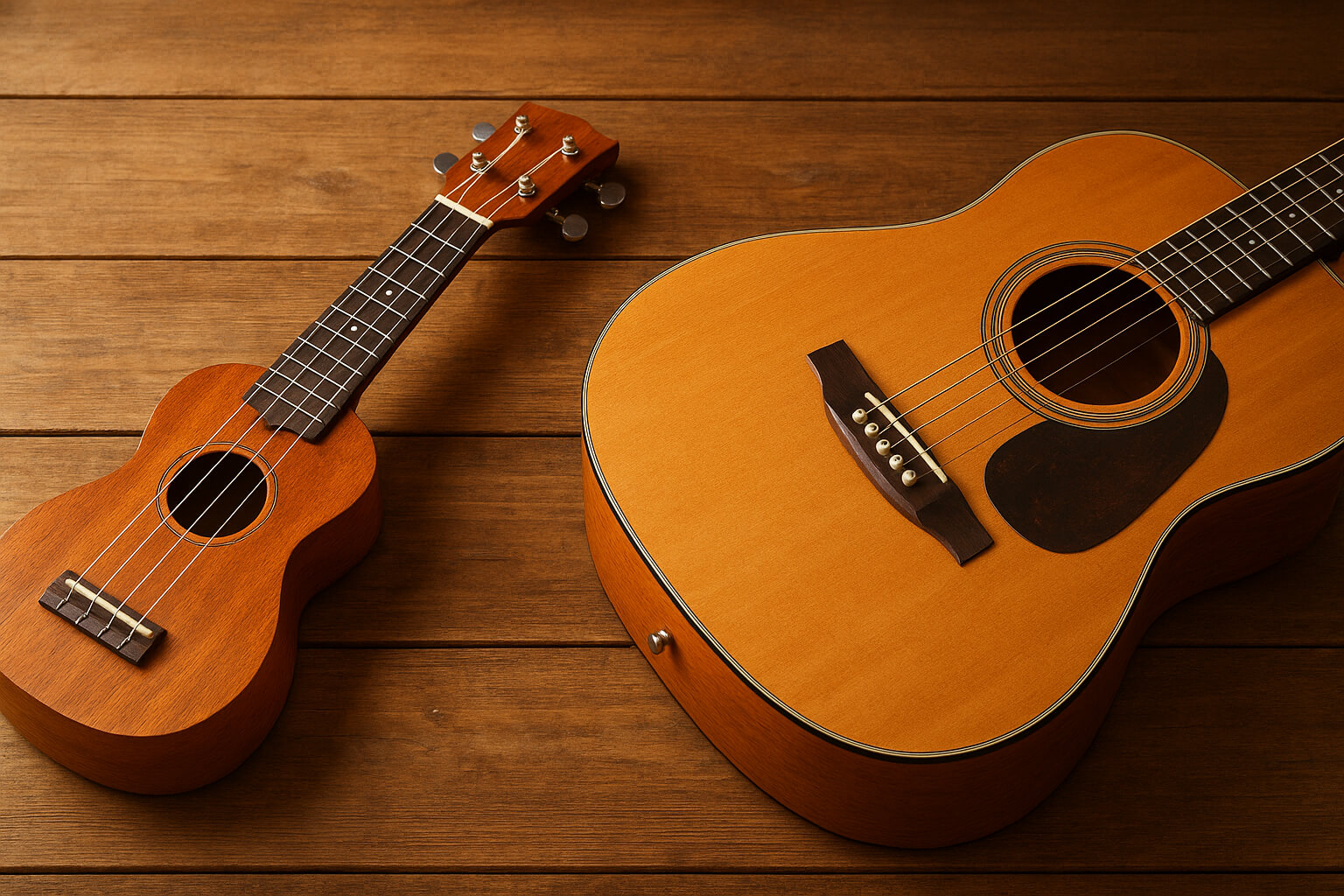
Side-by-side comparison of a ukulele and acoustic guitar on a wooden table, highlighting their size differences.

If you're ready to dive into the world of string instruments, chances are you're torn between two highly accessible favorites: the ukulele and the guitar. They're both widely loved for their musical versatility, rich tones, and sing-along potential — but they offer very different learning experiences.


So, which should you pick as your first instrument? Let’s explore every angle — size, tuning, difficulty, sound, cost, and long-term value — so you can choose the instrument that truly suits you.


1. Size, Shape & Portability


Ukulele


  • Typically measures 21 to 26 inches, depending on type (soprano, concert, tenor).
  • Light and extremely portable — easy for travel, backpacks, or even kids’ laps.
  • Ideal for younger learners or those with smaller hands.


Guitar


  • Standard acoustic guitars range from 36 to 41 inches long.
  • Heavier, bulkier, and may be uncomfortable for small beginners.
  • Travel-sized guitars exist, but still require a case and more carrying effort.


If portability matters — like taking your instrument to school, work, or the beach — the ukulele wins this round.


2. Strings, Tuning & Technical Simplicity


Ukulele


  • 4 nylon strings tuned to G–C–E–A (re-entrant or linear).
  • Fewer strings = easier chord shapes, less finger stretching.
  • Soft strings are easier on fingers — great for beginners of all ages.


Guitar


  • 6 strings, typically steel (acoustic) or nylon (classical), tuned E–A–D–G–B–E.
  • Chord shapes require more finger coordination and strength.
  • Beginners may experience soreness or fingertip pain for the first few weeks.


Want an easier learning curve and quicker gratification? The ukulele is far more beginner-friendly.


3. Sound & Style Versatility


Ukulele


  • Bright, light, bouncy tone — often described as happy or tropical.
  • Excellent for pop, folk, Hawaiian, indie, and acoustic singalongs.
  • Not ideal for aggressive or dark-toned genres (e.g., metal or blues).


Guitar


  • Warm, rich, and dynamic sound with deeper bass.
  • Works in every genre: rock, blues, classical, country, metal, flamenco, jazz, and more.
  • Larger tonal range (due to more strings) and better dynamic control.


Love blues riffs, epic solos, or fingerstyle playing? The guitar offers more expressive range and long-term stylistic growth.


4. Learning Curve: What’s Easier to Start With?


Ukulele


  • Simpler chord shapes and smaller frets make playing feel natural.
  • Most beginners can play 3-chord songs within 1–2 weeks.
  • Perfect for casual learners or those intimidated by complex instruments.


Guitar


  • Takes longer to master beginner chords (F, B, barre chords).
  • Finger soreness is common in the beginning due to steel strings and larger fretboard.
  • However, early struggles often pay off with broader musical opportunities later.


Many teachers agree: If quick wins keep you motivated, start with ukulele. If you’re in it for the long haul, guitar is worth the grind.


5. Cost: What’s Budget-Friendly?


Ukulele


  • Beginner-friendly models: $40–$100 (brands like Kala, Donner, Enya)
  • Low maintenance — no truss rod adjustments or complex parts.
  • Minimal accessories needed (maybe a gig bag and tuner).


Guitar


  • Beginner guitars: $120–$300 (brands like Yamaha, Fender, Cordoba)
  • May require more accessories: case, strap, tuner, capo, picks, etc.
  • Steel strings need more frequent replacement.


On a tight budget? Ukulele wins — it offers more bang for fewer bucks.


6. Transitioning & Long-Term Growth


Start with Ukulele:


  • Easier entry into music and rhythm
  • Develops basic chord fluency and strumming patterns
  • A great stepping stone to guitar — some chord shapes are transferable


Start with Guitar:


  • Builds finger strength, hand dexterity, and familiarity with music theory
  • Sets a strong foundation for bass, electric guitar, and other string instruments
  • Prepares you for advanced techniques like soloing, fingerpicking, and songwriting


Want to be a well-rounded player or future multi-instrumentalist? The guitar offers more upward mobility — but the ukulele makes starting fun and frictionless.


Helpful Tools & Learning Resources


Final Verdict: Ukulele vs Guitar — Which Should You Learn First?


Pick the Ukulele If You…


  • Want to start playing songs fast
  • Are looking for a portable, friendly, fun entry point
  • Are teaching kids or casual learners
  • Enjoy pop, folk, or light acoustic music


Pick the Guitar If You…


  • Want long-term flexibility across genres
  • Are willing to work through early physical challenges
  • Dream of performing, recording, or writing full arrangements
  • Prefer richer tone and deeper dynamics


There’s no wrong choice — only the one that keeps you excited to pick it up every day.

Recent Articles

Stay up to date with the latest tips, expert insights, product reviews, and step-by-step guides to help you grow, create, and succeed—no matter your industry or passion.


Portrait studio with a sitter, soft key light and camera demonstrating directional portrait lighting
Portrait Lighting Patterns: Split, Loop and Rembrandt
Judge the light on the faceA portrait lighting pattern describes the arrangement of light and shadow on the face. It is different from the make of the light, the background color, or the overall editi...
Read More
Two educators reviewing curriculum books, sample worksheets and a checklist in a school library
Choosing a School Curriculum: A Practical Review Checklist
Clarify what decision you can makeChoosing a curriculum is different from choosing a school. A curriculum concerns the sequence of knowledge, skills, learning activities, and assessment, together with...
Read More
Teacher supporting a student using geometric learning materials and a notebook in a classroom
Personalized Learning Approaches: Goals, Support and Feedback
Begin with a learning goalPersonalized learning involves making informed choices about instruction and support for a learner. Start with the knowledge or skill being developed, not with a product or a...
Read More
