
August 01, 2025
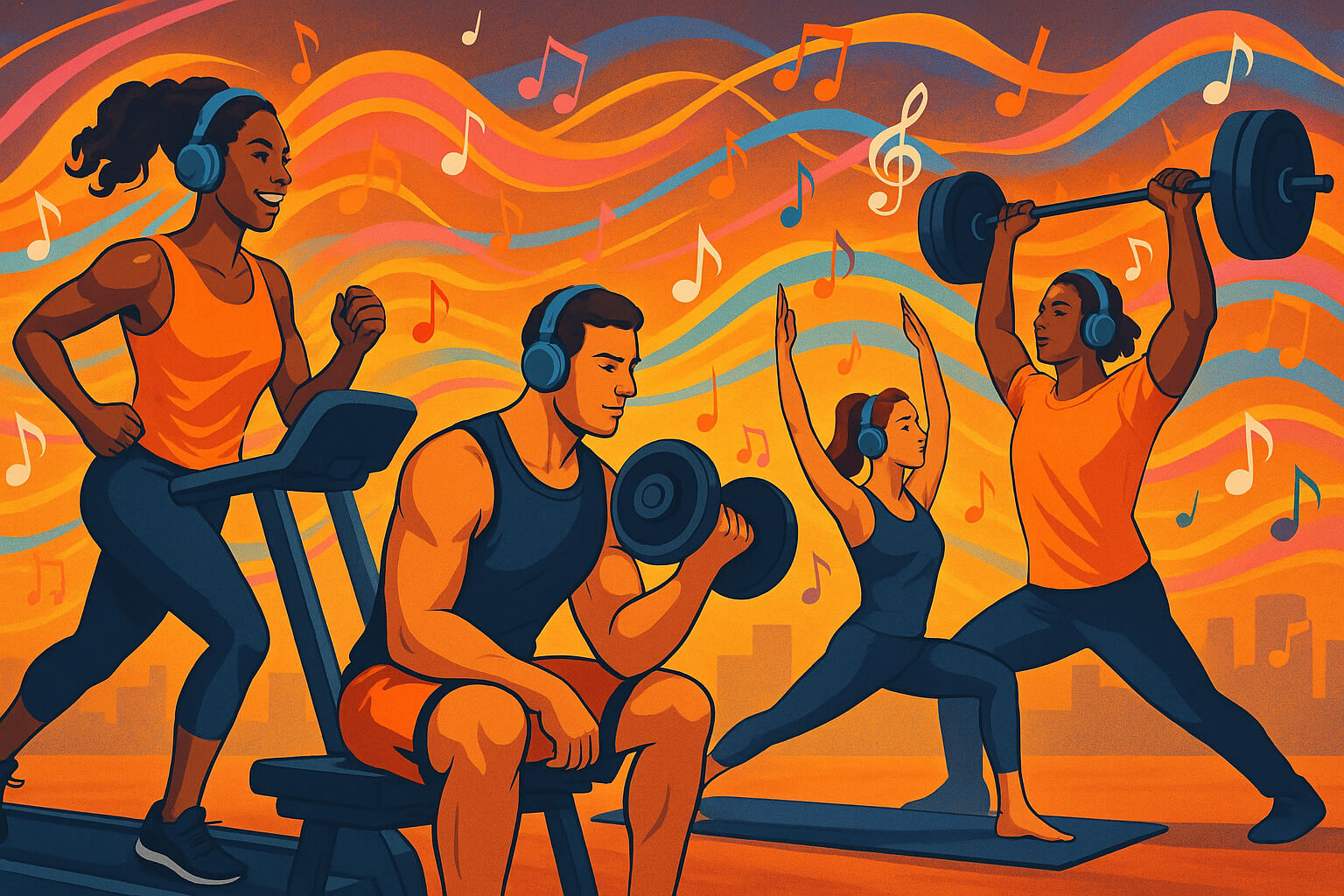
Ever noticed how your energy suddenly spikes when your favorite pump-up track kicks in during a workout? That’s not just a mood shift—it’s science in action. Music is a powerful performance enhancer. It can increase endurance, elevate mood, improve coordination, and even reduce perceived effort during physical activity.
From casual gym-goers to Olympic athletes, people across the fitness spectrum rely on music as a secret weapon to stay motivated, focused, and in rhythm. But why does it work so well?
Let’s dive into the science and psychology behind using music to take your workouts to the next level.
The tempo and rhythm of a track naturally influence how your body moves. This phenomenon, known as rhythmic entrainment, means your body tends to sync to the beat—whether you’re running, cycling, or lifting weights.
Matching your movement to the beat can help you maintain form, reduce variability, and even conserve energy by improving biomechanical efficiency.
Workout music acts as a mental distraction, allowing you to push through discomfort, boredom, or fatigue. This process, known as dissociation, shifts your attention away from physical sensations like soreness or breathlessness.
Studies show that listening to engaging music during workouts can:
This is especially helpful for repetitive activities like running, rowing, or cycling.
Music stimulates the brain’s reward and pleasure centers, triggering a release of dopamine—the “feel-good” neurotransmitter. Certain lyrics, melodies, or memories associated with songs can give you a mental push when you need it most.
This emotional uplift is critical for:
Explore More: The Psychological Benefits of Playing a Musical Instrument
Science aside, music is deeply personal. Songs that you emotionally connect with—whether it’s nostalgia, motivation, or mood—can be even more powerful than BPM-matched playlists.
Incorporate:
This emotional connection can ignite internal motivation and help you break mental barriers during tough workouts.
Numerous studies have shown strong links between music and improved athletic performance:
Even music’s predictability and familiarity can contribute to smoother motor control and sustained attention during exercise.
Learn more: Music for Stress Relief — Beyond Just Relaxation Playlists
Here are 5 actionable tips to maximize the power of music in your workouts:
Plan music around the workout you already intend to do, including instructions from a qualified professional where relevant. Separate preparation, main activity, and finishing time so you can choose a suitable atmosphere for each. Do not let a track’s excitement determine an exercise intensity or duration that you have not otherwise planned.
For activities requiring spoken cues or awareness of surroundings, choose an arrangement and listening setup that allow you to hear what matters. Test this before beginning rather than adjusting repeatedly during a demanding movement. The playlist should support the session while leaving attention available for technique, instructions, and the environment.
Use a familiar activity and compare a short session with your usual music against another suitable option. Keep the exercise plan similar and record practical observations: whether transitions were distracting, whether you could hear instructions, and whether you spent time skipping tracks. These are useful details without claiming that one genre guarantees a particular physical result.
Avoid judging the experiment only by how energetic a song sounds while sitting still. Listen during an appropriate rehearsal of the activity. A dramatic introduction or sudden pause might be appealing in a playlist preview yet awkward in the session. Replace tracks that repeatedly draw attention away from what you need to do.
Check the track order, playback controls, connection, and any access requirements ahead of time. Choose a comfortable listening level and follow relevant guidance for your activity and environment. Keep the device where it will not interfere with movement or require unsafe adjustments. If you need to change something, pause the activity appropriately first.
Afterward, make one or two edits based on what you noticed. You might remove a distracting transition or group tracks differently for the next session. Keep the workout plan and any health advice separate from your musical preferences. A useful playlist is one that fits the practical session you have chosen, not a substitute for deciding what exercise is appropriate for you.
Note whether the music made the session easier to organize and whether it helped you stay engaged with the planned activity. If it distracted you, try simpler audio or a session without it. The useful outcome is a setup that works for your circumstances.
Stay up to date with the latest tips, expert insights, product reviews, and step-by-step guides to help you grow, create, and succeed—no matter your industry or passion.


