
The Evolution of Rock Music: Key Eras and Artists

June 20, 2025

By RocketPages

post-image

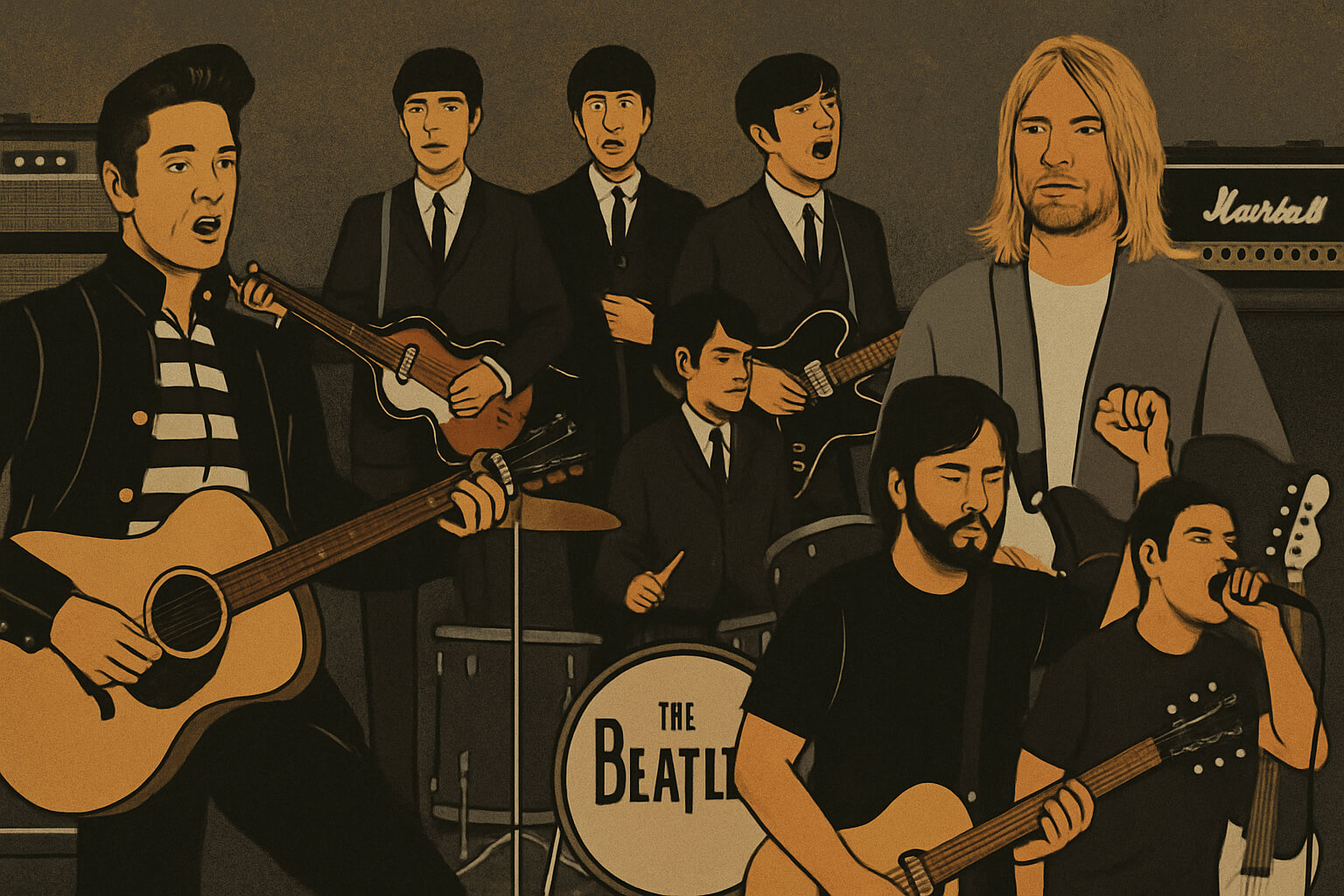
From the rebellious anthems of the '50s to today's genre-blending experimentation, rock music has continually evolved—shaping culture, politics, and generations. With its electric guitars, bold lyrics, and attitude, rock isn't just a genre—it’s a global movement.


In this guide, we’ll walk through the major eras of rock, spotlighting the defining artists and sounds that changed music forever.


1950s: The Birth of Rock ’n’ Roll


  • The mid-1950s marked the birth of rock ’n’ roll, a thrilling fusion of blues, country, gospel, and jazz. With its infectious rhythms and rebellious energy, it resonated with youth and disrupted the cultural status quo.


  • Pioneering Artists:


  • Chuck Berry – Merged rhythm & blues with storytelling and signature guitar riffs.
  • Elvis Presley – “The King of Rock and Roll,” who brought raw energy and mass appeal.
  • Little Richard – Known for his wild performances and genre-defining style.


  • Fun Fact: The phrase “rock and roll” was popularized by radio DJ Alan Freed in 1951, who helped bring Black artists to mainstream radio.


1960s: The British Invasion & Counterculture Rock


  • The 1960s were a time of transformation. Rock grew into a social and political force, fueled by anti-establishment themes and artistic experimentation. The British Invasion, led by The Beatles, brought global attention to rock.


  • Key Movements:


  • Psychedelic Rock – With bands like The Doors and Jefferson Airplane creating mind-expanding soundscapes.
  • Folk Rock & Protest Music – Artists like Bob Dylan tackled civil rights, war, and justice.
  • Garage Rock – Raw and unfiltered sounds from bands like The Kinks and The Who.


  • Iconic Artists:


  • The Beatles – Innovators in songwriting, production, and musical evolution.
  • Jimi Hendrix – Redefined electric guitar with distortion, feedback, and fluid technique.


1970s: The Rise of Hard Rock, Glam, and Punk


  • The 1970s saw rock fragment into subgenres, each pushing boundaries in sound, style, and attitude. From elaborate progressive rock to stripped-down punk, the decade was about exploration and extremes.


  • Genres That Defined the Era:


  • Hard Rock – Bands like Led Zeppelin and Deep Purple brought heavy riffs and stadium-sized sound.
  • Glam Rock – With artists like David Bowie and T. Rex, glam mixed glitter, sexuality, and theatrics.
  • Punk Rock – The Ramones and Sex Pistols captured rebellion with fast, raw, DIY sounds.
  • Progressive Rock – Groups like Pink Floyd, Genesis, and Yes embraced complex arrangements and concept albums.


  • Bowie’s Ziggy Stardust persona introduced narrative and fashion into rock, laying the groundwork for music as performance art.


1980s: Arena Rock, Heavy Metal & The MTV Revolution


  • The 1980s brought rock to its commercial zenith, boosted by MTV’s music video explosion. Visuals became just as critical as sound, leading to larger-than-life artists and arena tours.


  • Styles That Ruled the Charts:


  • Hair Metal – Glamorous and aggressive, bands like Mötley Crüe and Bon Jovi thrived on high-volume hooks.
  • Alternative Rock – Bands like R.E.M. and The Smiths paved the way for indie success.
  • Thrash Metal – Metallica and Slayer brought speed, darkness, and complexity to metal.


  • Crossover Legends:


  • Guns N’ Roses – Merged punk rawness with classic rock intensity.
  • Queen – Blended opera, rock, and visual spectacle to become one of rock’s most iconic acts.


1990s: The Grunge & Alternative Explosion


  • In the '90s, rock shifted toward introspection. The grunge movement, rooted in Seattle, reflected the disillusionment of a generation. Meanwhile, alternative and indie bands pushed creativity beyond mainstream formulas.


  • Grunge Leaders:


  • Nirvana – Their anthem “Smells Like Teen Spirit” shook pop culture and launched a new rock era.
  • Pearl Jam, Soundgarden, Alice in Chains – Defined the grunge sound and ethos.


  • Other Standouts:


  • Radiohead – Known for pushing sonic boundaries with cerebral songwriting.
  • Red Hot Chili Peppers – Blended funk, punk, and rock with emotional depth.
  • Oasis – Champions of Britpop with massive anthems like “Wonderwall.”


  • Want to improve your ear for chord progressions and melodies? Try these ear training exercises to sharpen your musical skills and appreciation.


2000s to Present: Genre Fusion and Rock’s Revival


  • The 21st century has seen rock music adapt to a new digital and cultural age. Blending with hip-hop, EDM, pop, and indie, modern rock is diverse and often genre-fluid.


  • Modern Rock Movements:


  • Garage Rock Revival – With bands like The White Stripes and The Strokes bringing raw guitar-driven music back to life.
  • British Alt-Rock – Groups like Muse and Arctic Monkeys continued the UK’s rich rock legacy.
  • Legacy Rock – Foo Fighters kept stadium rock alive with high-energy performances and heartfelt songwriting.
  • Emo & Pop-Punk Revival – Paramore and My Chemical Romance led an emotional, high-impact movement that’s now seeing a resurgence through Gen Z.


Final Thoughts: Rock Isn’t Dead—It’s Reborn


From smoky blues bars to stadium arenas, and now into digital realms, rock has never stopped evolving. It reinvents itself with each new generation of fans and artists, staying alive through innovation, rebellion, and reinvention.

Whether you're a guitarist, fan, or aspiring producer, understanding rock’s rich past helps you connect more deeply with the sound, soul, and story behind the music.


Explore More Rock-Related Content:


Build a listening comparison across recordings

Choose a small set of recordings discussed in your study material and note their dates and sources. Listen for the roles of voice, guitar, bass, percussion, and production. Describe a specific moment rather than assuming that one recording represents every artist associated with an era.

Compare how an introduction establishes energy, how a verse leads into another section, or how the arrangement creates contrast. Keep a short listening note with a time stamp. These observations turn a historical overview into questions you can investigate while leaving room for overlapping scenes, influences, and individual choices.

Recent Articles

Stay up to date with the newest tips, gear reviews, and step-by-step guides to elevate your photography journey from home and beyond.


Portrait studio with a sitter, soft key light and camera demonstrating directional portrait lighting
Portrait Lighting Patterns: Split, Loop and Rembrandt
Judge the light on the faceA portrait lighting pattern describes the arrangement of light and shadow on the face. It is different from the make of the light, the background color, or the overall editi...
Read More
Two educators reviewing curriculum books, sample worksheets and a checklist in a school library
Choosing a School Curriculum: A Practical Review Checklist
Clarify what decision you can makeChoosing a curriculum is different from choosing a school. A curriculum concerns the sequence of knowledge, skills, learning activities, and assessment, together with...
Read More
Teacher supporting a student using geometric learning materials and a notebook in a classroom
Personalized Learning Approaches: Goals, Support and Feedback
Begin with a learning goalPersonalized learning involves making informed choices about instruction and support for a learner. Start with the knowledge or skill being developed, not with a product or a...
Read More
