
August 01, 2025
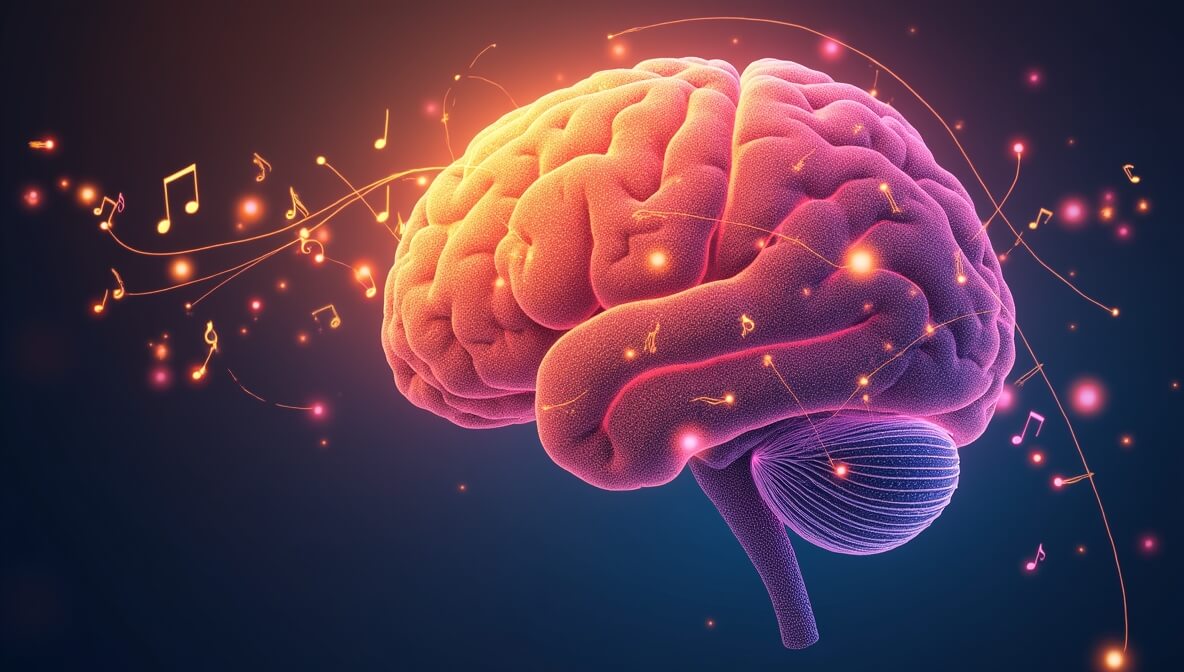
Learning to play a musical instrument isn’t just a creative hobby—it’s a workout for your brain. Whether you're strumming a guitar, playing piano keys, or mastering drum rhythms, music activates and strengthens cognitive functions in profound ways.
But how exactly does playing an instrument benefit your brain? Let’s explore the science-backed cognitive, emotional, and neurological advantages of learning music.
Playing an instrument engages both auditory and motor memory systems. Musicians often show superior memory recall because music practice strengthens:
Research indicates that musicians have larger corpus callosums—the neural bridge connecting the brain’s hemispheres—enhancing information transfer and coordination.
Learning music trains your brain to switch between tasks like:
This multitasking enhances cognitive flexibility, a critical skill for problem-solving, adaptability, and creative thinking in everyday life.
Explore how music sharpens cognition further in The Psychological Benefits of Playing a Musical Instrument.
Practicing an instrument demands deep concentration and sustained attention. Over time, this focused practice trains your brain to:
Music is a language of emotions. Playing an instrument helps you interpret and express emotions better, boosting empathy and emotional regulation.
Musicians often develop a heightened sensitivity to emotional cues in both music and interpersonal communication.
Instrument practice refines motor skills by requiring precise finger movements, coordination, and timing. This neuro-muscular training improves:
This is particularly beneficial for children’s developmental growth and for adults seeking to maintain motor functions with age.
Yes. Brain imaging studies reveal that musicians often have:
Neuroscientists call this phenomenon “the musician’s brain advantage”, a result of consistent musical training over time.
For more on how music aids mental health, check Music for Stress Relief: Beyond Just Relaxation Playlists.
Playing an instrument brings listening, movement, attention, and remembering instructions into the same activity. Those demands make music an interesting subject for research, but they do not establish that every learner will receive a particular health or academic benefit. A comparison between musicians and nonmusicians also needs careful interpretation before it is used to make a claim about cause and effect.
The NCCIH music-and-health overview describes research across different settings and populations. Read the relevant evidence rather than treating all musical activities as one intervention. Everyday lessons, listening to a playlist, and a clinician-led music intervention are different situations. Choose music as a meaningful learning activity without assuming that it will prevent or treat a medical condition.
A useful starting goal concerns something you can practice and notice directly. You might want to keep a simple pulse, recognize a small group of notes, or play a short phrase more consistently. These goals give the session a clear task. They are easier to evaluate than a broad expectation that practice should make your brain work better.
Keep the task small enough to repeat under similar conditions. Record what you attempted and what changed. A note such as “I remembered the order without looking at the diagram” describes a specific learning experience. It does not prove a general improvement in memory, but it does help you decide what to practice next and notice progress in the musical skill itself.
Prepare the reference material, choose one exercise, and decide what you will listen for before playing. After an attempt, pause long enough to identify what happened. You may need to slow the task, isolate a transition, or ask for an explanation. Repeating an unclear exercise without feedback can make a session feel busy without making the next action easier to understand.
A teacher, a clear lesson example, or a short recording of your own practice can provide different kinds of feedback. Use the method that helps you answer the current question. If a recording is useful, listen for one feature rather than judging the entire performance. Keep the observation in a short practice log so that the next session begins with a concrete starting point.
A learning activity can be worthwhile because it is enjoyable, expressive, or shared with other people. Those reasons do not need to be translated into a claim about intelligence or brain structure. Notice which parts of practice you want to return to and which settings help you participate comfortably.
If playing with others is part of your goal, choose a manageable musical role and clarify what the group expects. A simple part performed with attention can be a useful starting point. Keep comparisons with other learners in perspective: their experience, instruments, and available practice time may differ. Evaluate whether the activity fits your interests and circumstances, rather than measuring its value only through broad benefit claims.
When an article mentions a study, ask who participated, what activity they actually did, what was measured, and what comparison was made. Look for the study’s stated limitations. An observed association, a short-term change on a task, and a demonstrated clinical outcome are different findings.
Avoid using a headline as a reason to promise a result to a child, an older relative, or yourself. If you are considering music in relation to a health concern, discuss that concern with an appropriate health professional. For an ordinary learning plan, keep the immediate aim musical: a repeatable routine, suitable feedback, and an activity that you find meaningful enough to continue.
Stay up to date with the latest tips, expert insights, product reviews, and step-by-step guides to help you grow, create, and succeed—no matter your industry or passion.


