
August 01, 2025
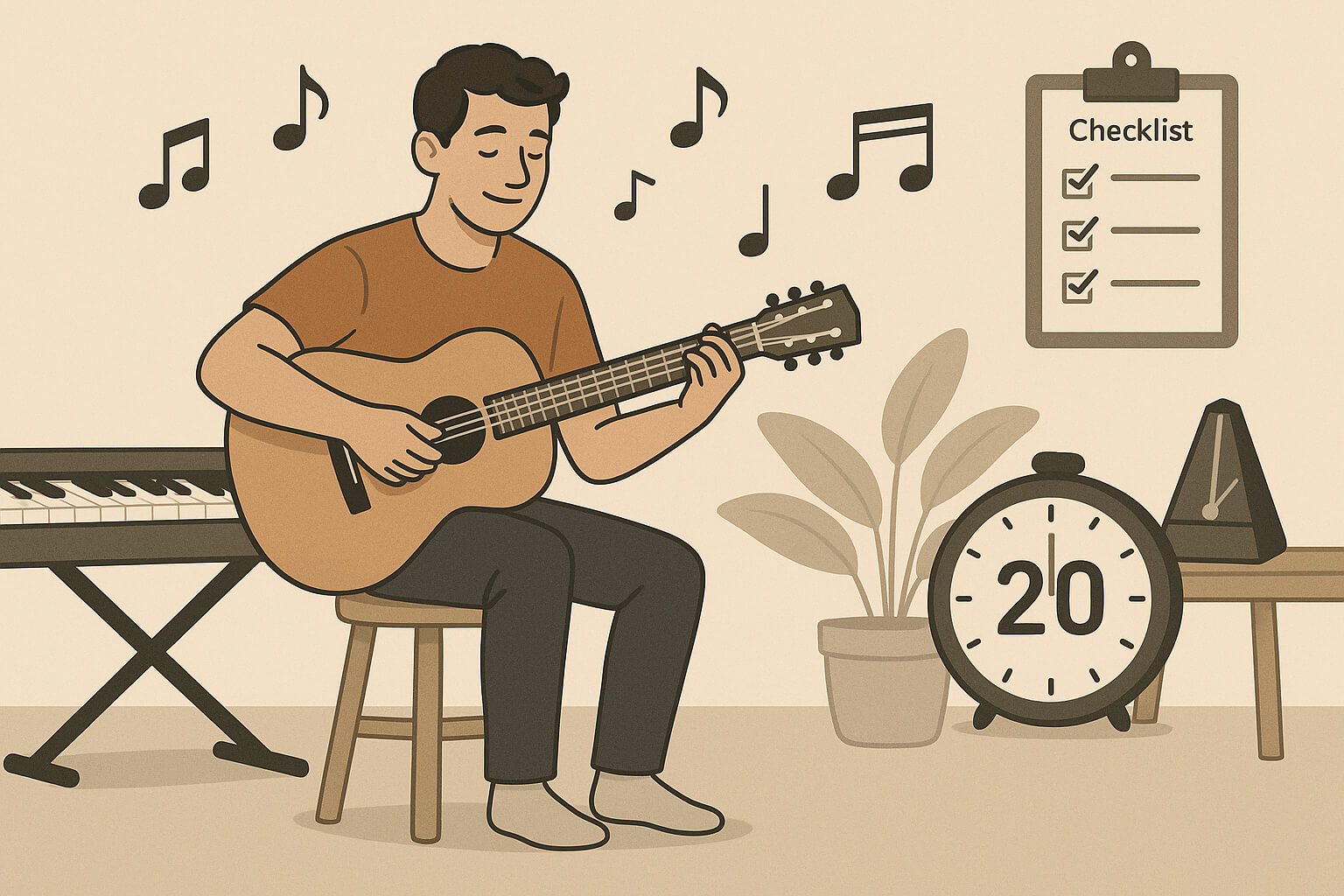
Whether you're a beginner picking up your first instrument or a seasoned musician juggling work and life, finding time to practice can feel impossible. But here’s the truth: you don’t need hours each day to get better.
With the right structure and intention, even 20 minutes a day can lead to noticeable, consistent progress. The secret? Practicing smarter—not longer.
In this guide, you'll learn how to maximize a short practice session to improve technique, theory, creativity, and musical confidence—without burning out.
Short, focused sessions are more sustainable and often more effective than sporadic long ones. Here’s why:
Think of it like compound interest—small investments every day lead to big growth over time.
Here’s how to structure your time for maximum impact:
Get your hands, fingers, and mind moving.
Try:
This primes your coordination and shifts your brain into “practice mode.”
Focus on one specific skill you want to master.
For example:
Use a metronome and aim for slow, clean, and accurate before speed.
Work on a small section of a piece, not the whole song.
Focus on:
Use techniques like looping and slow practice to deeply learn sections before moving on.
Just a few minutes of brain work goes a long way.
Ideas:
Try: Ear Training Exercises: How to Hear Chords and Melodies
End on a high note with fun, free expression.
Try:
Explore: How to Evaluate AI Music Tools for a Creative Workflow
Dive deeper: Practice Makes Perfect — Effective Strategies for Improving Musical Skills
And if you ever find more time? You can stack multiple 20-minute sessions throughout the day—like mental “reps.”
A short session benefits from a clear sequence. Use an opening check, one focused task, a brief musical application, and a closing note. The exact division is a planning choice, not a formula that guarantees progress. Adjust it to the instrument, material, and guidance you are following.
For example, identify the exercise and reference first, spend the main portion on one transition or pattern, then try it inside a short phrase. Finish by recording what happened. Avoid using most of the available time to search for new material. A useful plan makes the first action clear before you begin.
Replace a broad goal such as “improve rhythm” with a task you can repeat and check. You might work on a short passage where the pulse becomes uneven or a specific change between two familiar shapes. Keep the surrounding material available so the isolated exercise remains connected to music you want to play.
After an attempt, name the difficulty before repeating. Did you forget the order, hesitate at a movement, or lose the reference pulse? Those observations suggest different next steps. Slowing the exercise or reducing its length may be more useful than adding repetitions without understanding the problem.
Prepare the lesson, diagram, recording, or notes you need in advance. Keep unrelated recommendations outside the immediate practice plan. If a new question appears, write it down and decide whether it is necessary to resolve now or can wait until after the session.
This does not mean ignoring uncertainty. Stop when an instruction is unclear enough that you cannot practice it meaningfully, and use a reliable explanation or qualified feedback. The distinction is between finding information needed for the present task and repeatedly replacing the task with another attractive lesson.
Use a brief log with the exercise, the version or pace used, one observation, and the next starting point. Review a few entries together before judging the routine. Progress may appear as fewer restarts or clearer understanding rather than an immediate change in speed.
When the task becomes consistent, follow the next suitable step in your learning material. When it remains unclear, change the exercise or seek feedback rather than extending the session automatically. A repeatable short routine is useful when it produces an understandable next action and fits the time you can realistically maintain.
End with a sentence such as: “Next time I will begin at this transition, using the same reference, and listen for this specific change.” Add the file or lesson location. The note should save planning time at the next session, not become a lengthy account that is harder to maintain than the practice itself.
Stay up to date with the latest tips, expert insights, product reviews, and step-by-step guides to help you grow, create, and succeed—no matter your industry or passion.


