
August 11, 2025
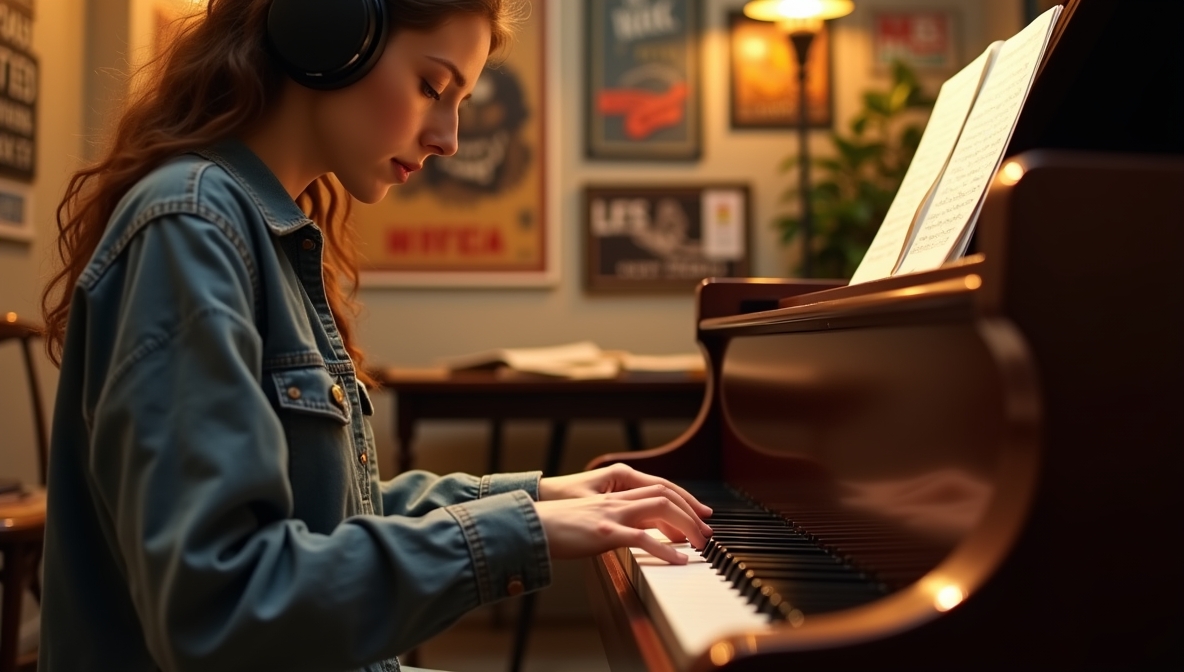
You can learn to play piano without ever reading a single note of sheet music—and no, it’s not just for musical prodigies. Many self-taught pianists rely on their ears, instincts, and pattern recognition to master songs, improvise, and enjoy the instrument on their own terms.
Whether you're learning by ear, using chord-based methods, or simply following your favorite songs on YouTube, this approach can be just as effective—and in some ways, more freeing—than traditional sheet music-based methods.
Learning piano by ear unlocks an entirely different relationship with the instrument. You’re not bound by the written page; you’re connected directly to the sound. According to Pianist Magazine, ear-based playing promotes quicker transposition, improvisation, and emotional expression.
Even legends like The Beatles, Elton John, and Ray Charles often relied on instinct and listening rather than notation. The Mystic Keys confirms that intuitive playing is not only possible—but powerful.
On Reddit, pianists often describe a kind of “musical foresight”—where they hear a few seconds ahead and let their hands follow. That’s not magic; it’s trained instinct. You can develop this sense with practice.
Check out Pianote’s YouTube tutorial, where the instructor teaches Ed Sheeran’s “Photograph” completely by ear—no sheet music, no chord charts, just listening and feeling.
A demonstration can show which keys to play, but pause to identify the pattern you are learning. Name the starting note, notice which movements repeat, and listen for the phrase ending. Then try the passage without the demonstration. This checks whether you can recreate the idea rather than follow a moving image moment by moment.
Keep a short description in your own words. For example, note where a pattern repeats higher or where the final rhythm changes. The description does not have to use advanced terminology to be useful, but it should point to something you can hear and find on the keyboard. Add clearer musical names as you learn them.
Listen to a short, clear phrase and sing or hum it before searching for the notes. Work on a manageable portion rather than the whole recording. Compare your attempt with the reference and identify whether the uncertainty concerns pitch, rhythm, or order. Address one of those questions before repeating the entire passage.
Once you find the notes, preserve the rhythm and phrase shape. Playing the correct keys with unrelated timing will not reproduce the musical idea. Record an attempt and listen without watching your hands. This encourages attention to the result and can reveal details that are difficult to notice while concentrating on movement.
Learning by ear, using chord symbols, following demonstrations, and reading notation can support different tasks. You can begin with an accessible method and add another when it helps solve a specific problem. For example, a written rhythm may clarify a passage that is difficult to remember from a video alone.
Keep your practice goal concrete: play a short phrase independently, recognize a repeated chord pattern, or enter at the right point in a song. Review that goal after several sessions and seek feedback when the result remains unclear. Independence comes from understanding and checking the music you play, rather than avoiding or relying exclusively on any single resource.
Stay up to date with the latest tips, expert insights, product reviews, and step-by-step guides to help you grow, create, and succeed—no matter your industry or passion.


