
August 04, 2025
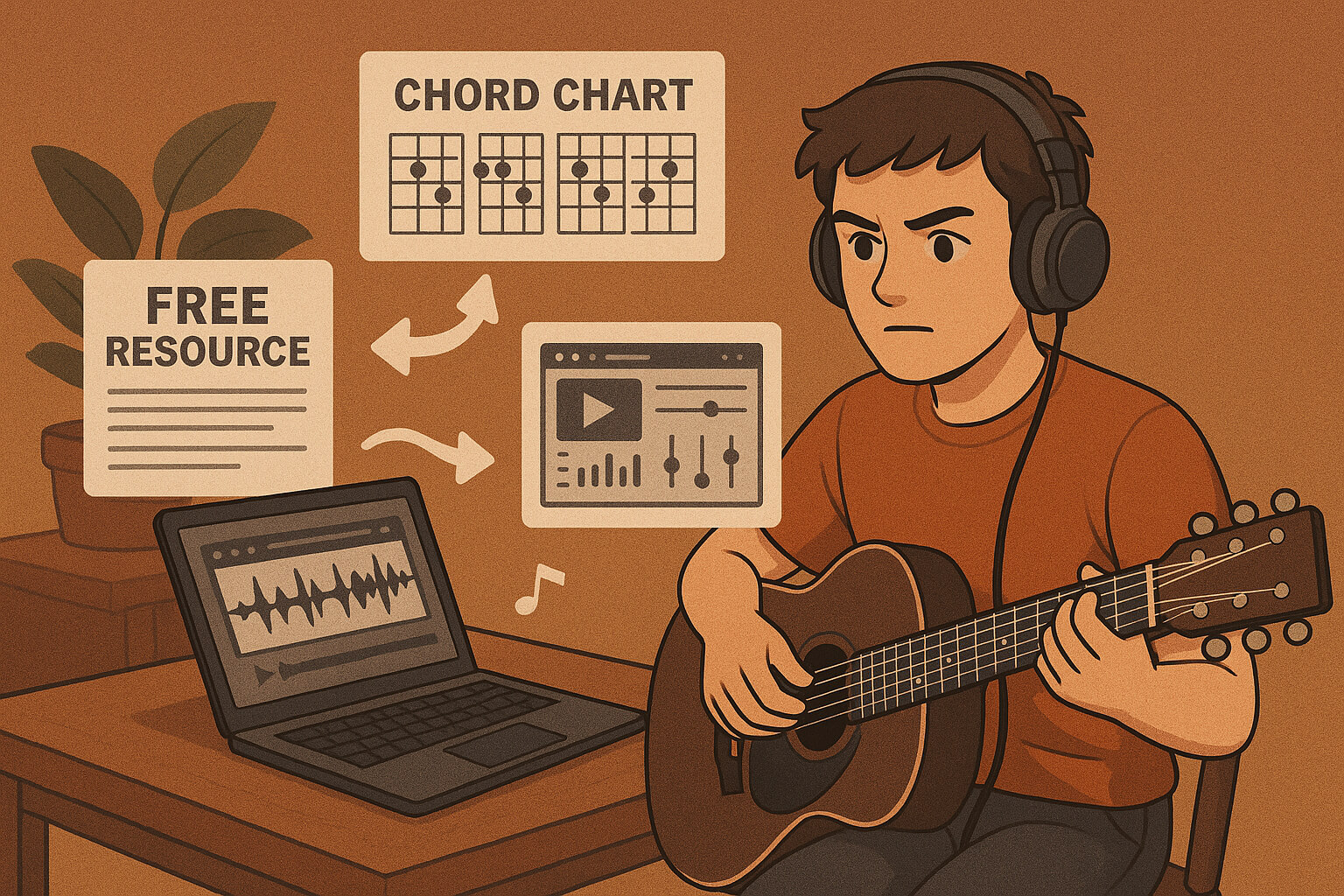
Think learning music is only for those with big budgets? Think again! Thanks to the wealth of free resources online, you can learn any aspect of music — from playing instruments to mastering music theory and even creating your own tracks — without ever needing to pay for lessons.
Ready to dive in and become your own teacher? Here’s how to do it effectively, efficiently, and for free.
Start with a clear vision of what you want to accomplish. Setting specific goals makes your learning journey focused and intentional.
Ask yourself:
Once you’ve got a goal, you’ll know exactly what resources to focus on. For example, if you want to learn guitar chords, you don’t need to spend time learning advanced theory (unless you want to — no judgment!).
Tip: Write your goals down, and review them weekly to stay on track!
Thanks to the internet, free, high-quality music lessons are everywhere. Explore platforms offering structured lessons that can act like a personal teacher.
One of the best ways to develop musical intuition is by simply listening and playing along with your favorite songs. This approach helps you connect with music on a deeper level.
Here’s how to get started:
Pro Tip: Slow down the video or track if needed! There are apps that let you change speed without altering pitch.
A little downloadable help goes a long way. Free guides are a perfect way to supplement your learning.
Use these resources to build your foundation and practice independently. Remember: repetition is key!
Without a teacher, it’s easy to get lost in endless YouTube videos and tutorials. That’s why creating a consistent daily practice routine will make all the difference.
Consistency > Duration: 20–30 minutes a day is more effective than a single 2-hour session per week. Keep it regular!
Pro Tip: Use apps like TonedEar to do quick ear training during your routine.
Learning by watching is an underrated but incredibly powerful tool.
Pro Tip: Break down professional performances or covers — try mimicking small sections until you’ve got the feel down!
These tools and resources will help you progress faster by providing structure, inspiration, and accountability.
Being a self-taught musician doesn’t mean you’re on your own. You’re still part of a global community of learners, creators, and musicians sharing free resources, knowledge, and inspiration.
With the power of online tutorials, downloadable materials, and practice routines, you can build a personalized learning path that matches your pace and musical goals. And remember, you don’t need a teacher to have a clear plan — you can learn all the essentials and even discover new musical passions for free.
Self-teaching can give you the creative freedom to explore your music. So grab your instrument, hit play on a tutorial, and start making music today.
To add even more value, here are some extra tools and platforms for further learning:
Choose one main sequence of lessons and give each session a manageable task. Keep the current lesson, exercise, and reference easy to find. Use other resources to answer specific questions rather than replacing the whole sequence whenever something becomes difficult. This helps preserve continuity and makes missing prerequisites easier to identify.
Attempt the exercise without following the demonstration, then compare the result. Record a short example where useful and note one detail to check next. Separate an unclear instruction from a movement or listening task that simply needs more work; those problems call for different next steps.
A video or worksheet cannot necessarily evaluate your individual setup or explain every result you produce. If a question remains unresolved, seek suitable feedback through a reliable learning community or other available support. Share a short example and explain the intended task so the response can be specific.
Pause movements that cause persistent discomfort and obtain appropriate guidance. Keep your routine realistic and review several sessions together. Independent study works best when it includes ways to notice uncertainty, ask useful questions, and revise the plan, rather than assuming that access to a large collection of free material is enough by itself.
Stay up to date with the latest tips, expert insights, product reviews, and step-by-step guides to help you grow, create, and succeed—no matter your industry or passion.


