
July 30, 2025
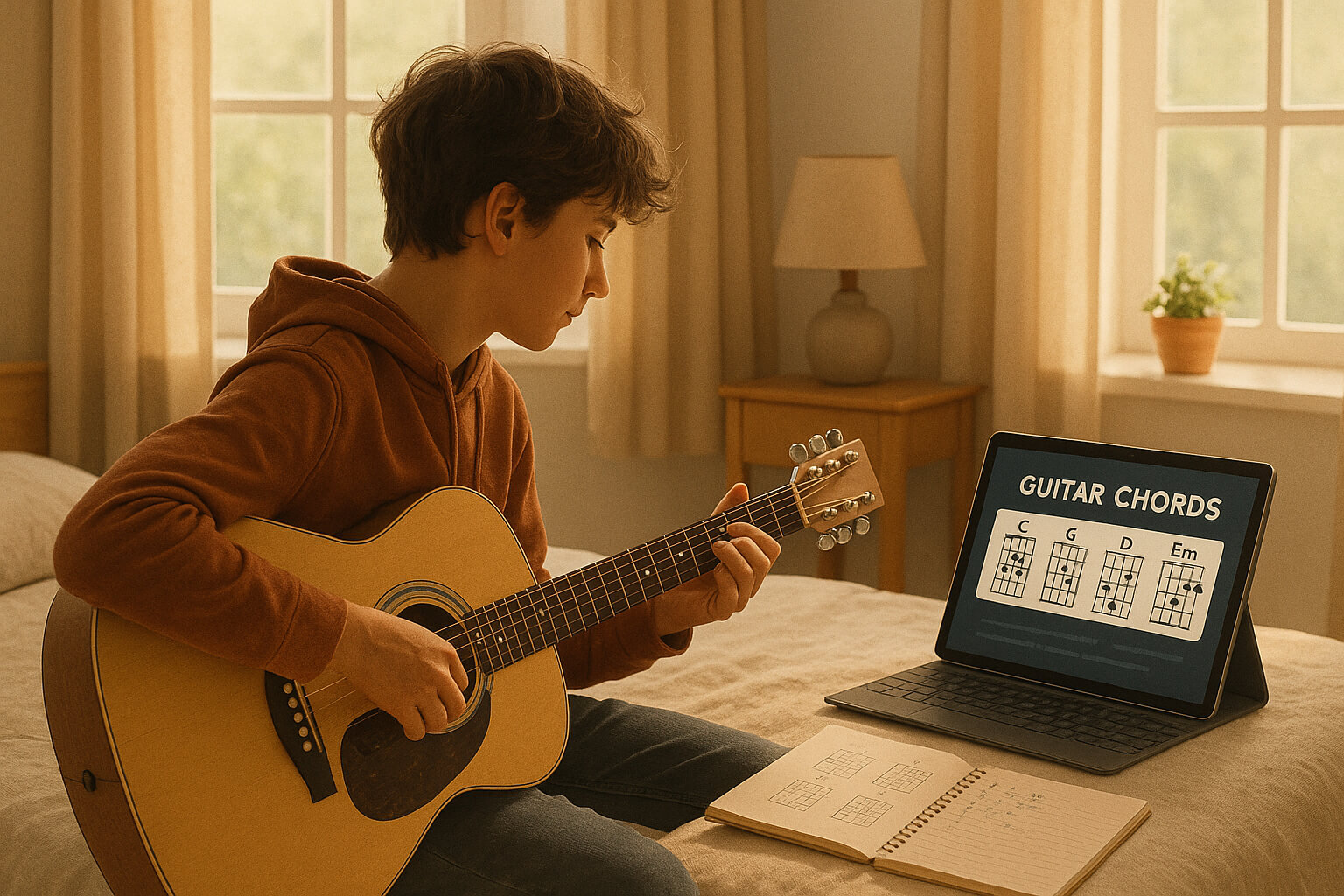
You don’t need a private tutor—or a big budget—to start your guitar journey. Thanks to modern tools, apps, and communities, learning guitar has become more accessible and structured than ever. Whether you're a total beginner or picking up the guitar again after years, you can now build a step-by-step learning path using completely free resources.
Here’s how to build a solid guitar learning journey with apps, eBooks, YouTube lessons, practice routines, ear training exercises, and supportive communities—all designed to take you from zero to confident guitarist.
Before you dive into apps or videos, download a beginner-friendly chord guide that covers:
This is perfect if you prefer starting offline at your own pace with a structured, no-pressure approach.
Beginner Guitar Chord Practice Checklist
Apps like JustinGuitar, Yousician, Fender Play, Uberchord, and GuitarTuna offer:
JustinGuitar’s app is renowned for its friendly, progressive learning path, while Yousician is praised for gamified lessons and real-time feedback. Pairing app practice with efficient strategies ensures long-term progress.
Practice Strategies – Effective Techniques Guide
YouTube is a goldmine for free, high-quality guitar instruction. Recommended channels:
Pair these with structured theory articles on chord progressions and guitar styles exploration for a more rounded understanding.
Understanding Chord Progressions — A Deeper Dive for Songwriters
Explore Different Guitar Styles
Having a structured practice plan will help you avoid aimless strumming. Here's a proven daily blueprint:
Bad habits can be hard to undo. Focus on:
The Importance of Proper Posture & Ergonomics for Musicians
Accuracy is key. Make these habits part of your practice:
Studio Monitors vs Headphones for Mixing – Pros and Cons
Developing your ear is what separates a good guitarist from a great musician. Free ear-training exercises include:
Ear Training Exercises — How to Hear Chords and Melodies
Learning with others accelerates growth. Join:
Building Your Fanbase – Strategies for Indie Musicians
Gamified tools keep practice sessions fun:
Though not entirely free, these tools offer free trials that can be valuable for motivation boosts.
Demystifying Synthesizers — Analog vs Digital Explained
The fastest progress happens when learning feels fun and rewarding. Here's how to stay motivated:
Overcoming Plateaus – Strategies for Breaking Through Learning Barriers
You don’t need an expensive teacher or a fancy course to become a guitarist. By leveraging free resources, sticking to a consistent, structured practice routine, and engaging with supportive communities, you can progress faster and enjoy the journey.
Intention + Consistency + the Right Tools = Progress.
Start small, stay consistent, and celebrate every chord you master.
Use one course or channel as the main sequence, a reference for specific questions, and a way to review your attempts. Avoid treating every recommended resource as another course you must complete. A smaller collection with clear roles leaves more time for playing and makes it easier to identify where a missing explanation belongs.
Check each provider’s current access conditions before planning around a free offering. Save the lesson link and note any equipment or prior knowledge it assumes. Try one complete activity before adding the resource to your routine. The useful test is whether you can understand and repeat its task at your present level.
Watch a short section, pause, and attempt the chord, rhythm, or phrase without following the screen. Then return to check a specific detail. Record a short example and listen for the result described in the lesson. If the task is unclear, write down the exact point rather than replacing it immediately with another video.
Finish with a note about where to restart. For example, identify a chord change that needs a simpler rhythm or a phrase whose last note loses its duration. Bring that example to appropriate feedback if needed. A useful free learning plan depends on clear tasks, review, and progression as much as on finding material without a fee.
Remove links you no longer use and keep the current lesson easy to find. If a resource changes, replace its role in the routine rather than rebuilding everything. Your notes should preserve what you are practicing independently of any platform’s progress display.
Stay up to date with the latest tips, expert insights, product reviews, and step-by-step guides to help you grow, create, and succeed—no matter your industry or passion.


