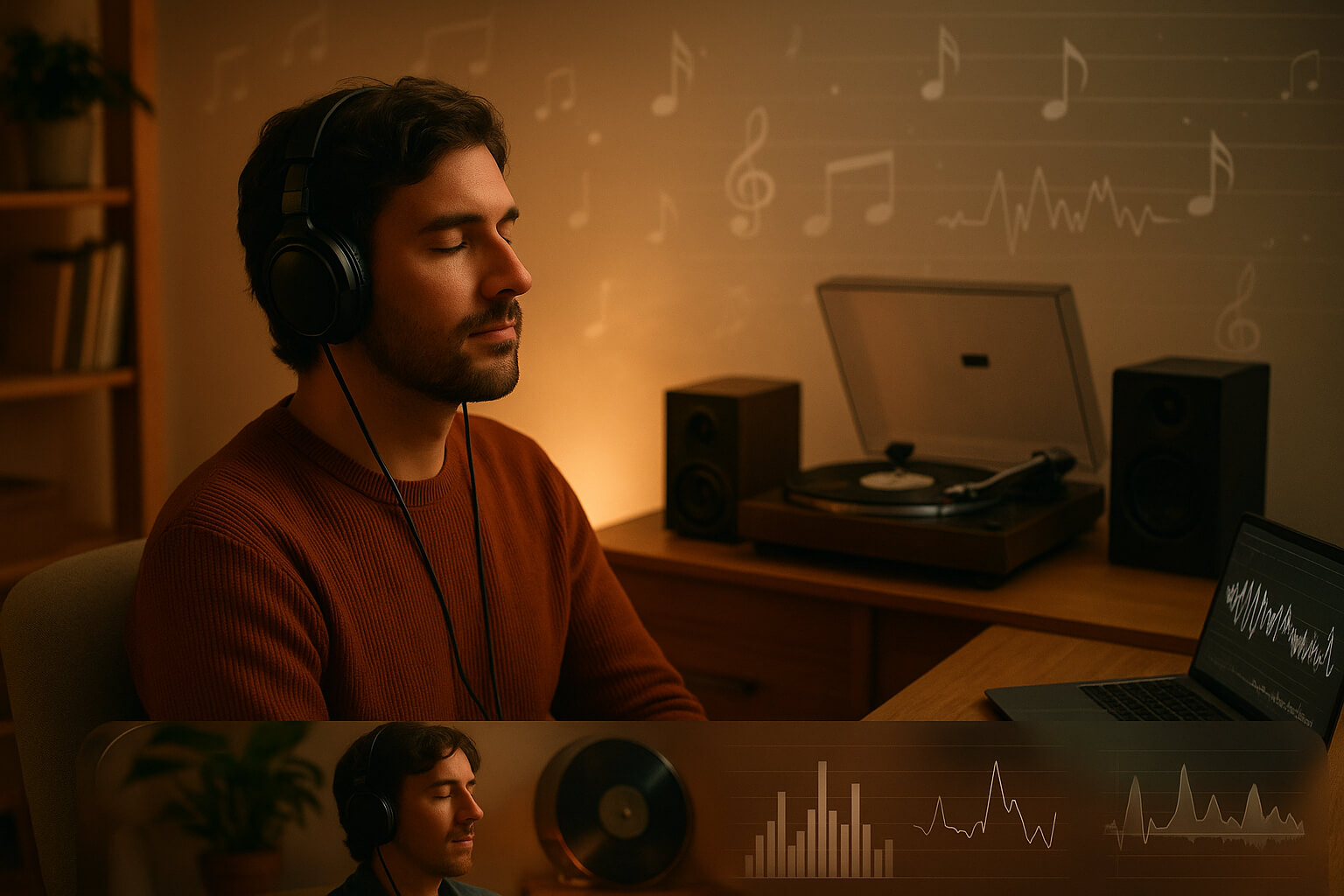
We all enjoy music. Whether it's dancing to a catchy tune or humming along to a favorite song, music is a universal form of expression. But critical listening takes your experience to a whole new level. It’s about engaging deeply with every layer of a piece of music—examining its structure, its emotional power, its technical craftsmanship, and the story it tells.
Whether you’re a musician, producer, music student, or simply an enthusiastic listener, learning how to listen critically will enrich your understanding and appreciation of music. It will transform the way you hear and interact with songs, whether you’re listening for enjoyment, learning, or creation.
What Is Critical Listening?
Critical listening is the process of intentionally analyzing and evaluating music, instead of simply enjoying it passively. It involves actively listening for specific components that make up a musical composition. This deeper engagement enables you to understand not only the emotional aspects of music but also the technical elements that contribute to its overall impact.
Here are the main elements you’ll focus on while practicing critical listening:
- Tonality and Key: What key is the song in? Is there a sense of tension or resolution created by the tonality?
- Instrumentation: Which instruments are featured? How do they interact or complement one another?
- Arrangement and Structure: What form does the song take (verse-chorus, ABAB, through-composed)? How does the structure build or release tension?
- Mixing and Production: How are elements like balance, EQ, stereo placement, and dynamic range handled? How does the mixing create a sense of space or movement?
- Lyrical Content and Vocal Delivery: What emotions do the lyrics convey? How does the vocal performance align with the message of the song?
- Emotional and Cultural Context: What kind of mood or atmosphere is the song trying to create? Does the song have cultural, historical, or political significance?
This kind of listening is what mixing engineers, musical critics, composers, and professional musicians do as part of their craft, but anyone can learn how to listen critically.
Why Learn Critical Listening?
- Enhance Your Musical Taste and Understanding:
- Critical listening helps you appreciate different musical styles, complexities, and arrangements. It broadens your music knowledge beyond casual listening.
- Train Your Ear for Production, Performance, or Songwriting:
- By listening critically, you can train your ear to pick up on nuances in music that inform production, performance, and songwriting choices.
- Catch the Emotional or Technical Intention:
- You’ll become better at identifying the emotional intent behind a song, as well as the technical choices that bring that emotion to life.
- Develop Vocabulary to Express Your Musical Opinions:
- Critical listening helps you articulate what you like or dislike about a track, enabling you to communicate more effectively in music discussions.
- Appreciate Genres or Artists You May Have Overlooked:
- Often, genres or artists that you might initially dismiss reveal new depths when you approach them with a critical ear.
Related reading: How to Evaluate AI Music Tools for a Creative Workflow.
How to Start Listening Critically
1. Choose the Right Environment
- For critical listening to be effective, your environment matters. Distractions, poor-quality sound systems, or noisy spaces will limit your ability to focus on the finer details.
- High-Quality Headphones or Speakers: Studio monitors or closed-back headphones will provide the best clarity and fidelity for music analysis. Avoid relying on cheap earbuds or portable speakers that distort the sound.
- Quiet, Dedicated Listening Space: Set aside time to listen without interruptions. This will allow you to focus fully on the track and its details.
2. Focus on One Element at a Time
- Don’t overwhelm yourself by trying to analyze everything in the song at once. Instead, focus on one layer or element for each listening pass. Here’s how you can break it down:
- Drums: Pay attention to the rhythm section. Are the drums tight and punchy, or loose and laid-back? Are the patterns simple or complex?
- Bass: Notice how the bass interacts with the kick drum. Is it driving the rhythm or providing harmonic support? Does the bass line add melodic interest or stay in the background?
- Vocals: Examine the vocal performance. What’s the emotional tone? Is the singer’s voice powerful or subtle? How is the vocal performance mixed—are they upfront or blended into the arrangement?
- Harmony: What kind of chords are being used? Are they traditional or unexpected? How do they create movement and tension in the music?
- Texture: Is the sound rich and layered, or sparse and minimal? How do the textures of the different elements (e.g., strings, synths, vocals) work together to create a particular atmosphere?
- Related reading: How to Build a Music Reference Library for Creative Projects.
3. Ask Yourself These Questions While Listening
- To dive deeper, ask yourself the following questions during each listening session:
- What emotion is this track trying to evoke? Is it happy, sad, tense, nostalgic, etc.?
- How does the arrangement develop over time? Does the song build tension, then release it? Are there any unexpected shifts in dynamics?
- How are transitions handled in the song? Does it move smoothly from section to section, or does it have sudden, jarring shifts?
- How is the dynamic range managed? Is it loud all the time, or does it have quiet, intimate moments before building to loud, energetic peaks?
- How do the instruments interact—do they complement each other, or do they clash? Are there any surprising instrumental choices?
4. Use Tools to Visualize the Sound
- To take your critical listening skills to the next level, consider using visualization tools. These allow you to “see” the sound, which can enhance your understanding of the frequencies, dynamics, and structure of the song.
- Recommended Tools:
- Voxengo SPAN: A free, detailed spectrum analyzer.
- Youlean Loudness Meter: An easy-to-use loudness meter to monitor volume levels.
- MeldaAnalyzer: A comprehensive audio analyzer that provides insights into frequency balance and dynamics.
- Pairing these tools with what you hear can help you train both your analytical ear and your intuitive listening skills.
5. Compare Reference Tracks
- One of the best ways to improve critical listening is by comparing tracks. Pick a song you know well and then listen to a new one right after. Here are some things to focus on:
- Low End Comparison: How does the bass and kick drum compare? Is the low end tight and controlled, or muddy and undefined?
- Vocal Processing: Is the vocal mix subtle, with natural reverb, or heavily processed with effects like delay and auto-tune?
- Energy and Feel: Does the new song have the same energy as the reference track, or does it feel more relaxed or more intense?
- Related reading: Music Download Checklist: Source, Quality, and Usage Terms.
Train Your Ear Over Time
Like learning an instrument, critical listening is a skill that improves with regular practice. Use your critical listening skills when analyzing various music types:
- Your own mixes or recordings (this helps you spot areas for improvement).
- Popular music across genres (expand your knowledge of musical styles and techniques).
- Film scores, video game music, and commercials (study how music serves different emotional, narrative, or branding purposes).
Related reading: How to Prepare for a Music Production Consultation.
Try This Simple Critical Listening Exercise
Here’s a quick, structured exercise to get started:
- Choose a song you love and one you’ve never liked.
- Listen to the first song purely for enjoyment.
- Listen to it again, but focus only on rhythm—how does the groove make you feel?
- On the third pass, focus only on harmony—what chords are being used? How does the harmony drive the emotion of the song?
- On the final pass, reflect—did you gain a new appreciation or notice something you missed on previous listens?
Bonus Tools & Practice Resources
To further develop your critical listening skills, consider incorporating the following resources:
- Ear training apps:
- TonedEar: A free web app that helps you practice identifying intervals, chords, and scales.
- Tenuto: A mobile app with exercises for ear training, note reading, and more.
- SoundGym: An online tool designed to train your ear for mixing and production.
Final Thoughts
Casual listening may be enjoyable, but critical listening is transformational. It gives you the tools to uncover what makes music effective, beautiful, and emotional. Whether you’re producing beats, writing songs, or simply deepening your appreciation for music, critical listening can unlock a whole new world of musical exploration.
Press play—then press in. There’s a world inside every track.