
August 08, 2025
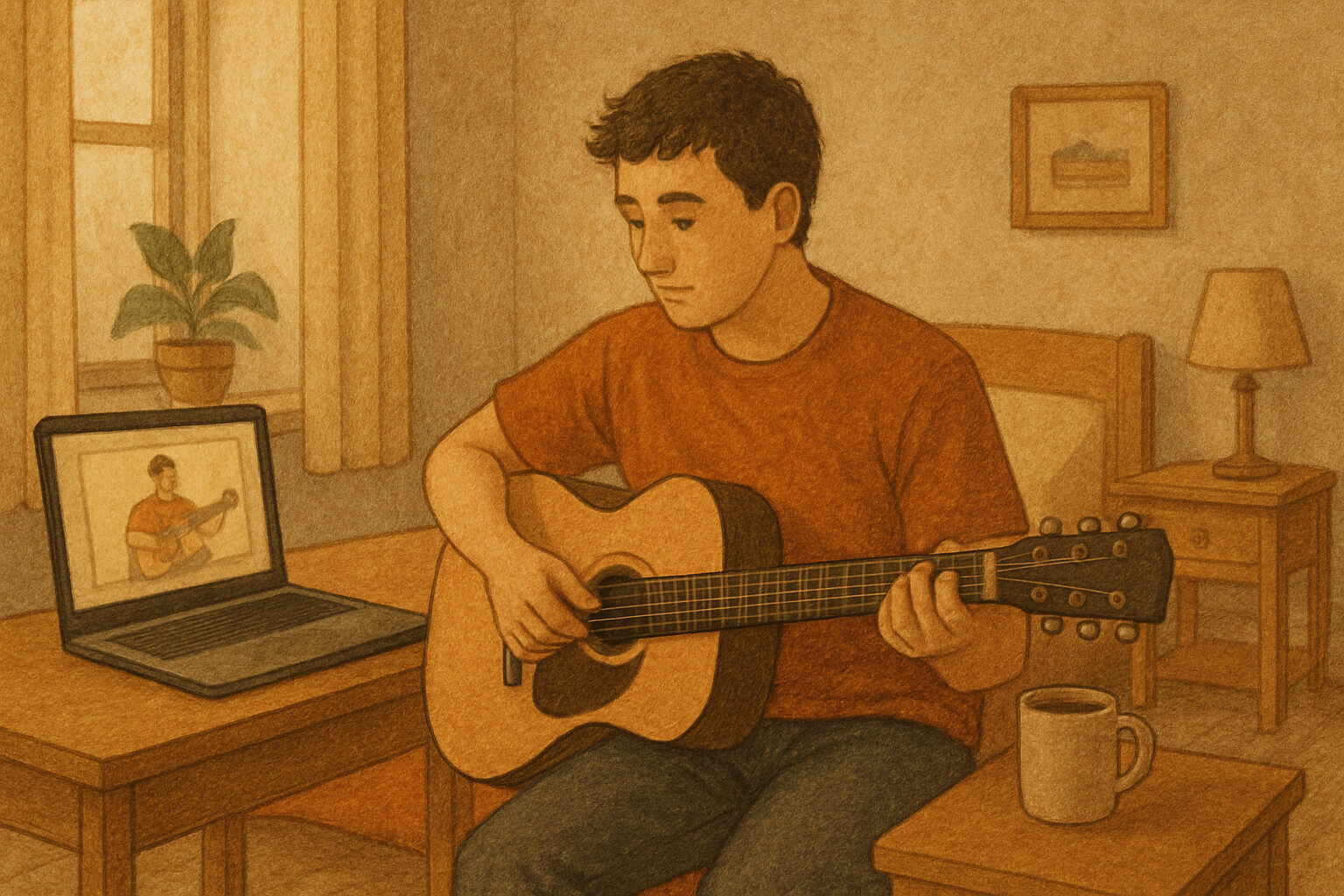
Learning guitar has never been more accessible. With thousands of online tutorials, apps, and video lessons available at the click of a button, many beginners are asking: Do I really need a teacher, or can I learn guitar entirely online? The answer is yes—you can, but it comes with a few important considerations.
While learning guitar online offers freedom, there are a few challenges you might encounter:
Even with online resources, there are times when working with a real-life teacher might still be beneficial:
There are also hybrid learning models that combine online lessons with occasional in-person sessions. This approach offers the best of both worlds—structure from an online course and personalized guidance from a teacher.
How to Find Your Unique Singing Voice — Tips and Exercises
(Yes, this applies to guitarists who also sing!)
You can absolutely learn guitar online without a teacher—thousands of successful players have done it. The key to success lies in choosing structured lessons, staying disciplined with regular practice, and proactively seeking out ways to fix any mistakes. For many players, starting out online and eventually bringing in a teacher for specialized advice is the perfect combination.
To make your guitar learning journey easier, check out these helpful resources:
Use a primary lesson sequence, a way to record attempts, and a method for resolving questions. Follow one short activity, attempt it without the demonstration, then listen to the result. Identify a particular issue such as an unclear string or a late chord change. This gives your next session a purpose beyond replaying more videos.
Do not assume that completing a lesson means every movement and sound is understood. Compare your attempt with the task described by the instructor. If the sound differs, identify where you need another explanation. When online material cannot resolve the question, seek appropriate individual feedback rather than repeatedly guessing at a technique.
Choose one resource to organize the order of topics. Use other explanations to answer specific questions, then return to the main sequence. Constantly switching courses can hide missing prerequisites and make it difficult to tell whether a topic was actually learned or merely encountered several times.
Write down the lesson location, exercise, and one observation after practice. Include the exact point you want to revisit. A useful note may say that two shapes are familiar separately but the movement between them interrupts the rhythm. That observation points toward a transition exercise rather than another unrelated chord lesson.
If an instruction remains unclear, progress stalls on the same specific task, or a movement causes persistent discomfort, pause and seek suitable help. Bring a short example and explain what you tried. Independent learning can include targeted feedback; the practical aim is to understand and check your playing, not to avoid every outside source of instruction.
Stay up to date with the latest tips, expert insights, product reviews, and step-by-step guides to help you grow, create, and succeed—no matter your industry or passion.


