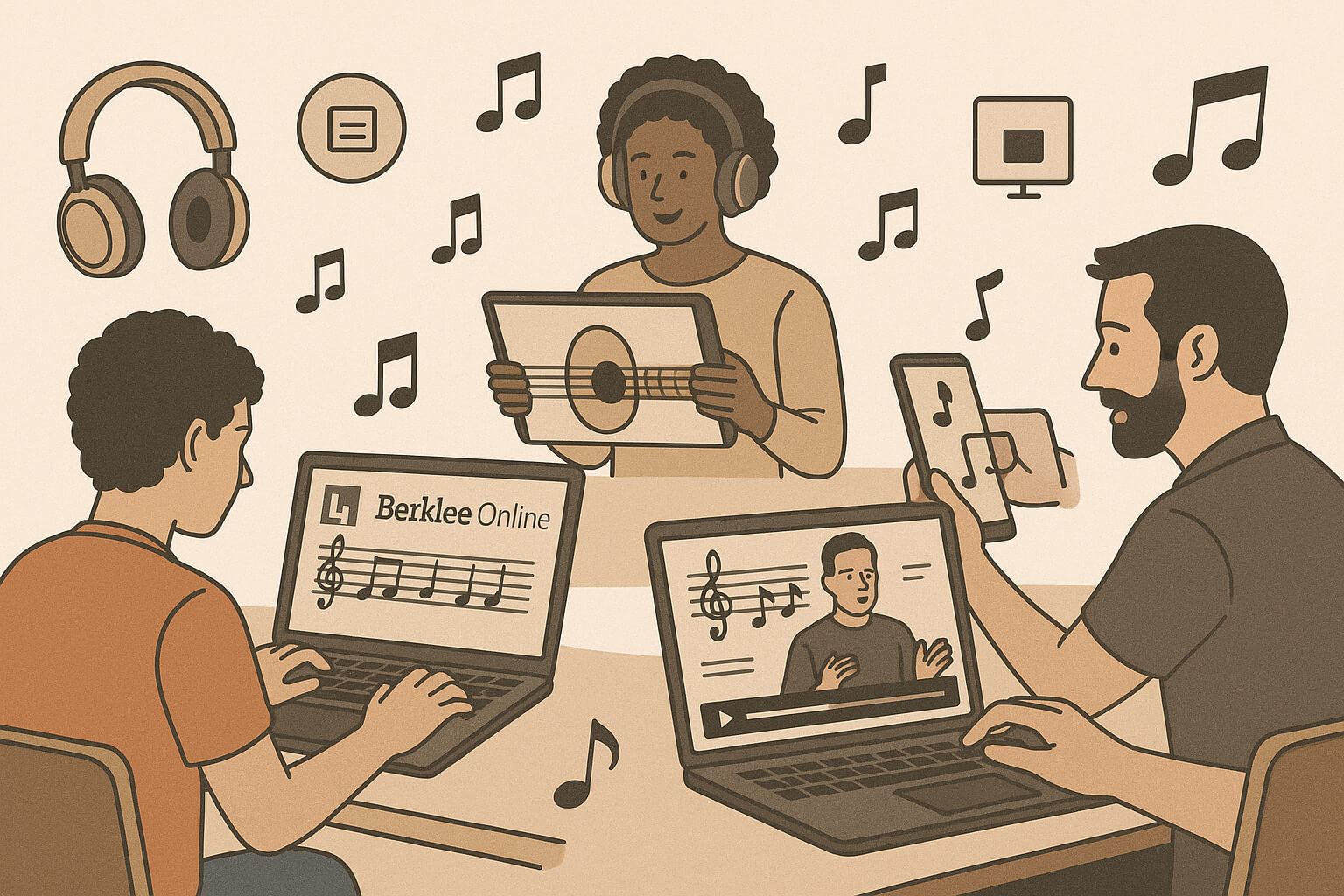
Top Online Music Schools for Hobbyists and Professionals: Learn from Anywhere, Grow at Your Pace
Whether you're picking up an instrument for the first time or fine-tuning your skills as a seasoned performer, the world of online music education has something to offer. The convenience of learning from home, paired with expert instruction and interactive tools, has made online music schools an excellent option for both hobbyists and professionals alike.
In this guide, we explore some of the best online music platforms, detailing what makes each one unique and who will benefit most from their offerings.
1. Berklee Online – For Serious Musicians Ready to Level Up
- Best For: Aspiring Professionals & Advanced Musicians
- As the online extension of the prestigious Berklee College of Music, Berklee Online brings world-class music education to your living room. Whether you're pursuing a degree, professional certificate, or simply want to enroll in individual courses, this platform is built for musicians aiming to reach professional or academic heights.
- What Sets It Apart:
- Comprehensive courses in performance, composition, music theory, songwriting, music business, production, and more
- Faculty includes Grammy Award-winning musicians and producers
- Accredited programs with options for Bachelor’s and Master’s degrees
- Perfect For: Serious musicians who want credentials from a globally respected institution without relocating.
- Website: https://online.berklee.edu/
2. Coursera – University-Level Music Courses for Every Learner
- Best For: Flexible Learning for Hobbyists & Pros
- Coursera offers access to music courses from top universities such as Berklee, Yale, and the University of Edinburgh. From foundational music theory to advanced production techniques, Coursera caters to a wide range of interests and experience levels.
- What Sets It Apart:
- Courses range from beginner to advanced
- Self-paced and instructor-led options available
- Many courses offer certificates and are free to audit
- Perfect For: Learners looking for a balance between academic quality and flexible scheduling.
- Website: https://www.coursera.org/
3. MasterClass – Creative Wisdom from Music Legends
- Best For: Hobbyists & Creatives Seeking Inspiration
- MasterClass isn't a traditional music school—it's a source of inspiration and creative insight. Featuring lessons from music legends like Alicia Keys, Hans Zimmer, Carlos Santana, and Herbie Hancock, it’s a visually stunning experience for those who want to peek into the creative minds of the world’s best.
- What Sets It Apart:
- Stunning video production with cinematic visuals
- Emphasis on creativity, artistry, and personal storytelling
- Unlimited access to all courses with a single subscription
- Perfect For: Musicians and creatives who want to be inspired rather than instructed step-by-step.
- Website: https://www.masterclass.com/
4. SoundGym – Train Your Ears Like a Pro
- Best For: Audio Engineers & Producers (Beginners to Pros)
- SoundGym turns ear training into a fun, interactive challenge. Designed for audio engineers, music producers, and musicians, it focuses on honing your listening skills—essential for mixing, mastering, and live sound.
- What Sets It Apart:
- Gamified learning environment with real-time audio-based games
- Detailed analytics to track your auditory progress
- Community challenges and leaderboards for extra motivation
- Perfect For: Producers and sound engineers who want to sharpen their ears in a fun, efficient way.
- Website: https://www.soundgym.co/
5. Yousician – Learn an Instrument with Real-Time Feedback
- Best For: Hobbyists Learning Guitar, Piano, Bass, Ukulele, & Voice
- Yousician makes learning fun and interactive by listening to you play and giving instant feedback. Whether you're learning your first chords or advancing to full songs, this app adapts to your level and keeps you motivated with structured lessons and progress tracking.
- What Sets It Apart:
- Step-by-step tutorials designed for beginners and intermediate players
- App listens to your playing and provides real-time corrections
- Engaging interface that feels like a game
- Perfect For: Self-motivated hobbyists who want a guided, playful learning experience.
- Website: https://www.yousician.com/
6. Udemy – A Budget-Friendly Library of Music Courses
- Best For: Affordable Learning for All Skill Levels
- Udemy hosts thousands of music-related courses covering a wide range of topics—from music theory and singing to FL Studio tutorials and jazz improvisation. Each course is available as a one-time purchase, with lifetime access and regular discounts.
- What Sets It Apart:
- Vast selection of topics and instructors worldwide
- No subscription needed; pay only for what you need
- Frequent promotions and bundles
- Perfect For: Budget-conscious learners who want flexible, self-paced courses on specific music topics.
- Website: https://www.udemy.com/
Free Resources for Beginners & Creators
Conclusion: A World of Music Awaits – Choose Your Path
From structured academic programs to casual video lessons by global superstars, there’s an online music platform for everyone. Whether you're pursuing a professional career in music or simply following your passion, these platforms give you the flexibility to learn at your own pace, on your own terms.
Explore, experiment, and most importantly—enjoy the music.
Compare the actual learning arrangement
Write a brief describing your current level, musical goal, available time, and preferred schedule. Use it to ask providers about prerequisites, lesson format, feedback, and expected independent work. A school’s broad reputation does not explain how a particular course would fit your situation. Request the details for the program you are considering.
Review current fees, access duration, equipment requirements, and relevant policies directly with the provider. Include the time needed for assignments and any live sessions. If a credential matters to your goal, investigate exactly what is awarded and how the relevant organization describes it rather than inferring recognition from a course title.
Examine a sample and plan the follow-through
Try a sample lesson or attend an available information session. Identify the task it asks you to complete and how you would receive useful feedback. Ask what happens when a prerequisite is missing or an assignment remains unclear. These questions reveal the support arrangement more directly than the size of the course catalogue.
Before enrolling, place the proposed study routine into a realistic week. Leave time for practice, review, and technical preparation. Compare programs using the same brief and record unanswered questions. A suitable choice should have a clear connection between the learning experience offered and the musical work you intend to do, with costs and commitments you can explain.
Save the comparison and the provider’s answers before deciding. If a key detail is missing, ask a focused follow-up about that program. A general admissions response may not describe the particular class, tutor arrangement, or schedule you intend to use.