
Best Music for Sleep- A Guide to Restful Nights

July 31, 2025

By RocketPages

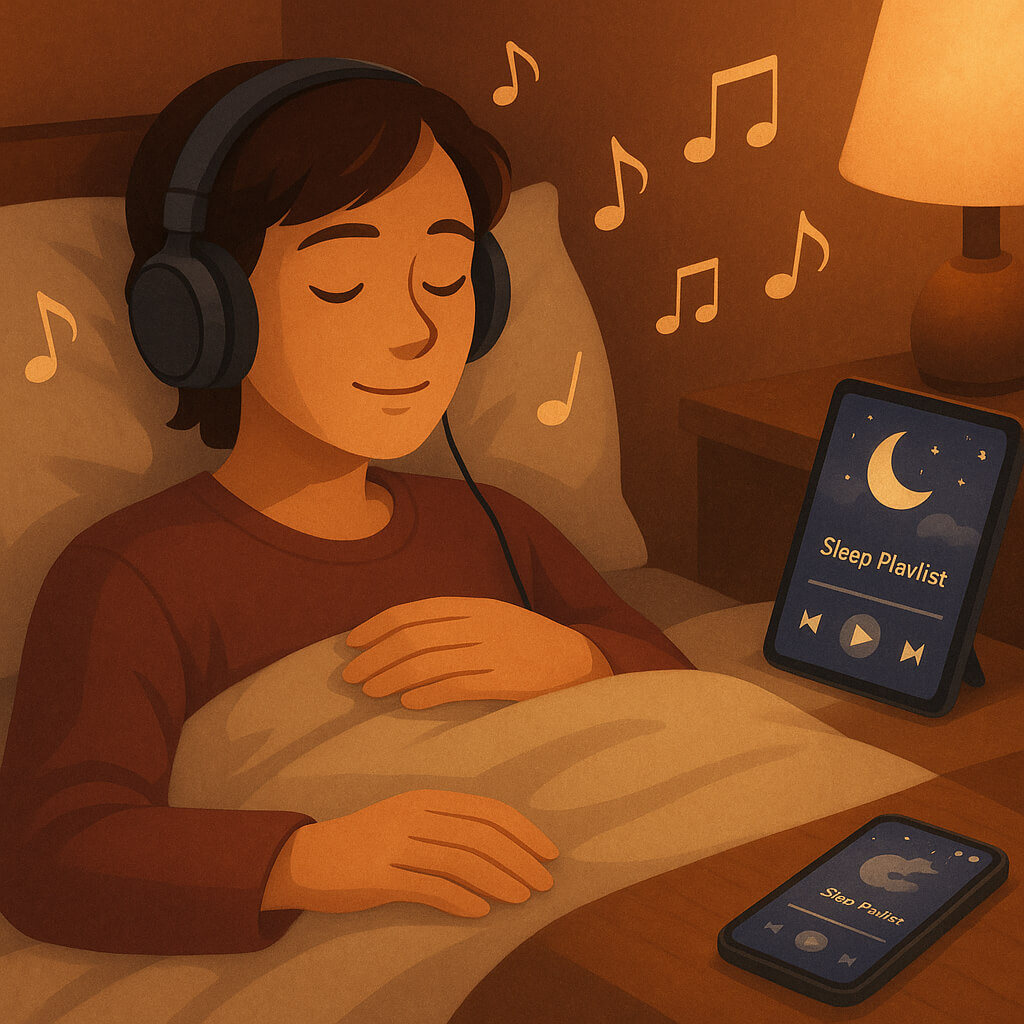
Person listening to relaxing sleep music in bed with headphones, lights dim, promoting peaceful rest.

Struggling to fall asleep at night? You’re not alone—and you’re not without a solution. Research shows that music can be one of the most powerful natural sleep aids. The right kind of music not only helps you relax but also slows your heart rate, calms racing thoughts, and prepares your brain for rest.


This guide explores the best types of music for sleep, why they work, and how you can build your own sleep-friendly playlist to transform your bedtime routine.


Why Music Helps You Sleep


When you listen to calming music, your brain begins to sync with the rhythm and tempo. This process—known as entrainment—can lead to:


  • Slower breathing and heart rate
  • Lower blood pressure
  • Reduced levels of cortisol (the stress hormone)
  • Activation of the parasympathetic nervous system (rest and digest mode)


In other words, music helps signal your body that it’s time to wind down. It’s especially useful for people who suffer from anxiety, insomnia, or an overactive mind at bedtime. Music can set the stage for a restful night by helping ease your transition from the busyness of the day into the calm of sleep.


Pro Tip: To enhance the benefits, avoid using electronic devices with bright screens before bedtime. Instead, focus on soothing sounds that don’t stimulate your mind.


What Type of Music Is Best for Sleep?


Not all music helps you fall asleep. Loud lyrics, sudden tempo changes, or intense rhythms can keep you awake rather than soothe you. The best sleep music usually shares these traits:


  • Slow tempo (around 60–80 BPM)
  • Minimal instrumentation
  • No vocals (or very soft, ambient ones)
  • Smooth, repetitive patterns


Here are some genres and styles that are ideal for your sleep playlist:


1. Ambient and Atmospheric Music


  • Ambient music is perfect for sleep because it’s non-intrusive and can create a calm, enveloping atmosphere. Think soft synths, gentle drones, and soundscapes. Ambient tracks often create a feeling of floating or spaciousness, helping the mind disengage. The lack of jarring shifts in rhythm or dynamics makes this genre ideal for sleep.
  • If you’re curious, explore curated sleep music tracks designed to calm the nervous system and ease you into slumber.
  • Example Playlist: Tracks that last for 30–60 minutes with slow-changing, atmospheric sound patterns work best.


2. Classical Music


  • Classical music is often considered the gold standard for sleep. Composers like Debussy, Satie, and Bach can provide structure without stimulation. Opt for solo piano or slow string pieces rather than energetic symphonies or operas.
  • The gentle melodies and soft harmonies of classical music encourage relaxation, making it an ideal choice for winding down. Avoid anything too dramatic or fast-paced, as this could disrupt your sleep process.
  • Pro Tip: Try listening to the Nocturnes by Chopin, or Clair de Lune by Debussy to enjoy soothing, sleep-friendly pieces.


3. Nature Sounds and Binaural Beats


  • Blending music with nature sounds (like ocean waves, rain, or forest sounds) can be especially soothing. These sounds are not only calming but also act as a distraction, blocking out external noise and helping you focus on the sound rather than your thoughts.
  • Binaural beats are another great option. These are frequencies that are specifically designed to entrain the brain into specific states of consciousness, such as relaxation, focus, or deep sleep. Listening to binaural beats with headphones can guide your brain into a relaxed or drowsy state, making it easier to fall asleep.
  • If you prefer a more natural, immersive experience, experiment with various nature soundscapes. You can combine music and sound effects for a personalized bedtime soundtrack.


4. Lo-Fi and Chillhop (Without Lyrics)


  • If you enjoy a little rhythm in your sleep music, lo-fi beats can be a great option. These tracks combine light melodies with soft, steady rhythms to create a relaxed mental focus that helps some people drift off to sleep. Lo-fi often features smooth, repetitive patterns that don’t jar you awake or stimulate the mind, making it ideal for a chill, sleep-friendly vibe.
  • You can even experiment with chillhop music—slow, jazzy, instrumental hip-hop—without vocals, which works well for people who like a bit of a groove in their background while unwinding.


How to Build Your Perfect Sleep Playlist


Now that you know which genres work best, here’s how to curate your own sleep playlist:

  1. Start with 30–60 minutes of music to give your body time to unwind before bed.
  2. Avoid songs with sudden volume spikes or heavy percussion. The goal is smooth transitions and steady rhythms.
  3. Use a sleep timer on your phone or app so the music won’t disrupt deep sleep once you’re already asleep.
  4. Pair your playlist with a nighttime routine: dim the lights, put away screens, and start your playlist around the same time each night to create a consistent sleep schedule.


Related reading: How to Build a Music Reference Library for Creative Projects; How to Choose a Music Discovery Newsletter.


Make It a Habit


  • Just like brushing your teeth or winding down with a warm cup of tea, using music for sleep works best when it becomes a consistent part of your bedtime ritual. Over time, your brain begins to associate your sleep playlist with relaxation, making it even more effective.
  • You may find that the music you choose becomes a trigger for your body to start preparing for sleep. As soon as the playlist starts, your body recognizes the cue, making it easier to transition from the chaos of the day into a calm and restful state.
  • Pro Tip: To really maximize its effectiveness, keep your sleep music consistent. The more you use it, the more powerful the association becomes.


Final Thoughts


  • Music isn’t just entertainment—it’s a tool for healing and rest. By curating a gentle, calming playlist and listening with intention, you can invite your mind and body into a state of peace and restoration.
  • Whether you need a peaceful soundscape, soothing classical tunes, or gentle nature sounds, the perfect sleep music exists for you. Tonight, skip the scrolling and press play on something peaceful. Your future self will thank you in the morning.
  • Remember, the key is consistency. Over time, you’ll find that music becomes a powerful ally in your pursuit of restful, restorative sleep. So, take a deep breath, press play, and let the peaceful sounds guide you to a night of sweet dreams.

Review the listening setup

Choose a comfortable listening level and a practical playback arrangement. Note whether the audio suits your routine. Seek appropriate professional advice for persistent sleep difficulties rather than relying on a playlist as treatment.

Recent Articles

Stay up to date with the latest tips, expert insights, product reviews, and step-by-step guides to help you grow, create, and succeed—no matter your industry or passion.


Portrait studio with a sitter, soft key light and camera demonstrating directional portrait lighting
Portrait Lighting Patterns: Split, Loop and Rembrandt
Judge the light on the faceA portrait lighting pattern describes the arrangement of light and shadow on the face. It is different from the make of the light, the background color, or the overall editi...
Read More
Two educators reviewing curriculum books, sample worksheets and a checklist in a school library
Choosing a School Curriculum: A Practical Review Checklist
Clarify what decision you can makeChoosing a curriculum is different from choosing a school. A curriculum concerns the sequence of knowledge, skills, learning activities, and assessment, together with...
Read More
Teacher supporting a student using geometric learning materials and a notebook in a classroom
Personalized Learning Approaches: Goals, Support and Feedback
Begin with a learning goalPersonalized learning involves making informed choices about instruction and support for a learner. Start with the knowledge or skill being developed, not with a product or a...
Read More
