
Best Free Online Piano Courses in 2025

August 01, 2025

By RocketPages

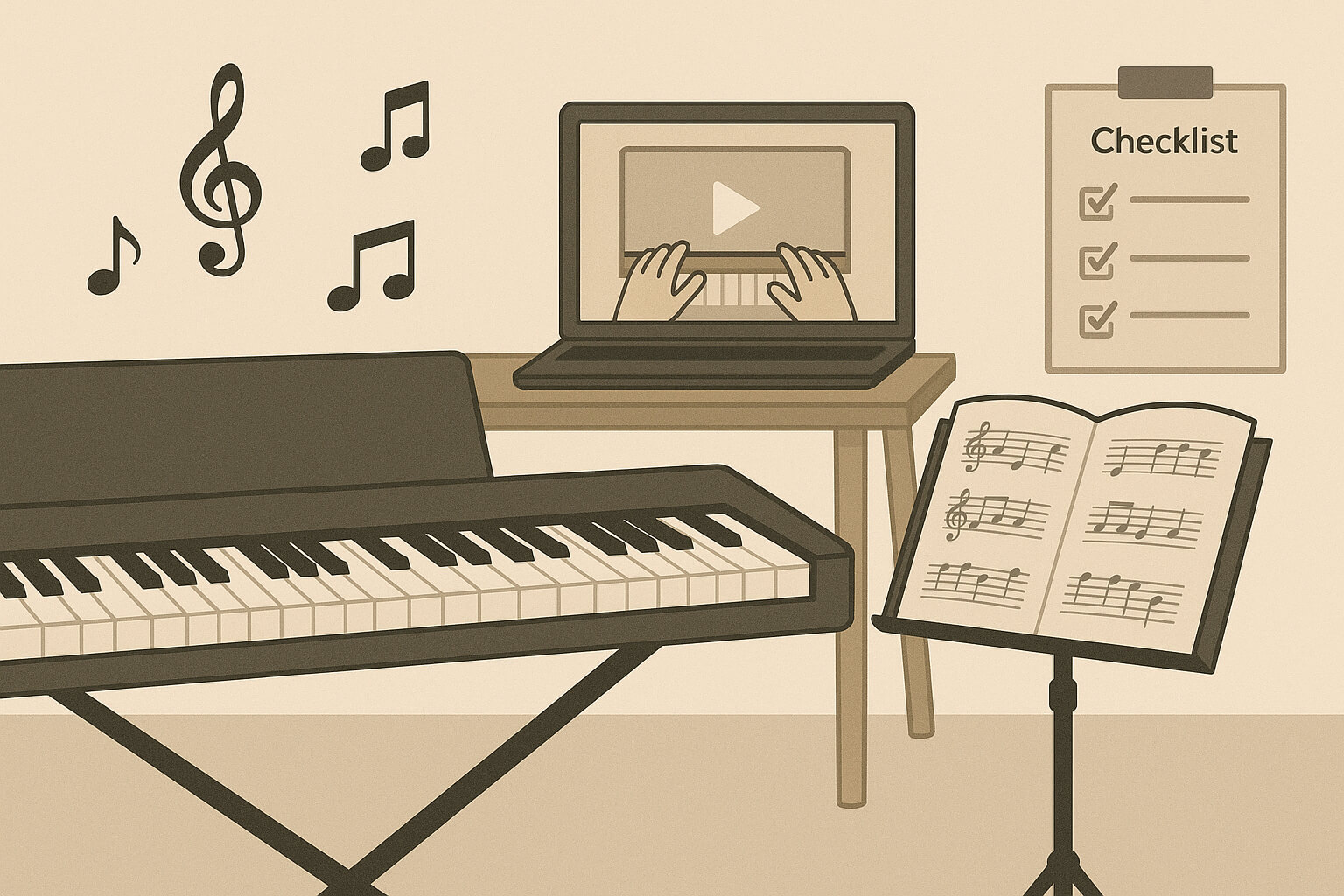
Home piano learning setup with digital piano, laptop tutorial, and floating musical notes symbolizing online piano courses.


Top platforms, apps, and video tutorials to start playing today—for free.


Learning piano in 2025 is easier than ever—and you don’t need a private tutor or a big budget to get started. Whether you're a curious beginner or a self-taught intermediate, free online piano courses offer high-quality instruction, interactive lessons, and real musical progress—all from the comfort of your home.


Below, you’ll find a carefully curated list of the best free piano learning platforms, YouTube channels, and freemium apps that deliver real results, even if you’ve never touched a keyboard before.


Why Learn Piano Online for Free?


Still unsure if online piano lessons are for you? Consider the benefits:

  • Zero cost – Save hundreds on lessons
  • Flexible pace – Learn on your schedule
  • Multiple formats – Choose video, written, or interactive feedback
  • Wide variety – Explore classical, pop, jazz, and theory in one place
  • Great for all ages – Kid-friendly and adult-focused resources available


Best Free Online Piano Learning Platforms (Web-Based)


1. 🎵 Hoffman Academy


  • Best for absolute beginners and young learners
  • This family-friendly platform uses engaging video tutorials, playful visuals, and methodical lesson plans to teach piano basics, reading music, rhythm, and technique.
  • Why it stands out:
  • Clear, engaging videos with real piano demonstrations
  • Strong focus on theory and musical literacy
  • Optional premium features (worksheets, practice tracks)
  • Visit: hoffmanacademy.com


2. PianoLessons.com (Powered by Pianote)


  • Best for adults who want fast results and song-based learning
  • PianoLessons.com offers a comprehensive video library with tips from professional pianists. Ideal for learners who want flexibility, inspiration, and bite-sized tutorials.
  • What’s included:
  • Dozens of video lessons (no sign-up required)
  • Tutorials on chords, scales, improvisation, and full songs
  • Complementary lessons from the well-known Pianote instructors
  • Visit: pianolessons.com


3. PianoNanny.com


  • Best for learners who prefer text-based lessons with audio support
  • This award-winning site offers an old-school yet powerful approach to piano learning. It’s self-paced, structured, and surprisingly thorough.
  • Why it’s unique:
  • Three-level curriculum: Beginner, Intermediate, Advanced
  • Written explanations with embedded audio clips
  • No videos—great for slow, reflective learners
  • Visit: pianonanny.com


4. YouTube Piano Channels


  • Best for visual learners and casual players
  • YouTube continues to dominate as a free learning platform. These standout channels provide beginner-friendly videos, song tutorials, music theory, and improvisation tips.
  • Top Channels to Follow:
  • Lessons on the Web – Step-by-step tutorials with a focus on theory
  • Pianote – Song breakdowns, practice tips, and live sessions
  • Nahre Sol – Experimental piano, creativity, and music analysis
  • Pro Tip: Create playlists for chord exercises, theory drills, and practice songs.


Best Freemium Piano Learning Apps (with Free Content)


These apps offer limited but valuable free lessons, often enough to kickstart your journey.


1. Yousician
  • Best for gamified, interactive learning
  • Yousician listens to your playing and provides instant feedback. You can play along with exercises and songs in a fun, game-like format.
  • Free features:
  • Daily lesson limit
  • Skill tracking and badges
  • Progress-based unlocks
  • Available on iOS, Android, and desktop


2. Flowkey


  • Best for learning songs with hands-on video guides
  • Flowkey combines video lessons with interactive sheet music. It works with both acoustic pianos and MIDI keyboards.
  • Free plan includes:
  • Access to select beginner songs
  • Basic finger placement tutorials
  • Works with microphone or MIDI input
  • 📲 Compatible with all devices
  • Try it: flowkey.com


3. Skoove


  • Best for learners who want feedback and theory blended together
  • Skoove provides structured, interactive lessons with listening-based feedback. It adapts to your pace and supports ear training alongside technique.
  • Free plan includes:
  • Beginner course series
  • Basic songs and music theory
  • Multi-language support


Beginner-Friendly Learning Path (Step-by-Step)


Here's a simple 4-step approach for total beginners:


1. Start foundational lessons

  • Begin with Hoffman Academy or PianoLessons.com


2. Practice basic songs and chords

  • Use Flowkey, Yousician, or YouTube tutorials


3. Strengthen your music theory

  • Watch Lessons on the Web or read PianoNanny


4. Explore creativity and improv


Bonus Free Resources


  1. Seven-Day Beginner Piano Practice Plan
  2. Beginner Guitar Chord Practice Checklist
  3. Ear Training Exercises — Hear Intervals & Chords
  4. How to Evaluate AI Music Tools for a Creative Workflow


Final Thoughts


In 2025, learning piano online for free is more viable and exciting than ever. With dozens of interactive courses, trusted YouTube instructors, and feedback-based apps, there’s no reason to wait. Start small, stay consistent, and let the music build from there.


Whether you’re playing a few chords or tackling your first Beethoven piece, the best time to begin is today.

Evaluate the opening lessons before committing

Open the course’s current information and check what is available without payment, what requires an account, and what materials are assumed. Historical descriptions of a free course may not describe its current access. Try an introductory lesson before building a long practice plan around it. Note whether the explanation, demonstration, and exercise are understandable at your starting level.

A useful opening sequence should help you identify what to do next. Look for clear instructions about the notes, rhythm, hand use, or listening task being introduced. If the course assumes knowledge you do not have, find the prerequisite explanation rather than repeatedly replaying a lesson whose starting point is unclear.

Test whether you can practice independently

After watching or reading a short section, pause the resource and attempt the exercise. Then return to check one detail. This reveals whether you can use the lesson without following every movement on screen. Write down any instruction that remains ambiguous and use the course’s support or another reliable explanation to resolve it.

Keep the test small. For example, play a short note pattern with a steady count and listen for whether the final note receives its intended duration. A course that gives you a clear way to check such a task may be more useful than one offering a large catalogue with little guidance about practice or progression.

Use one course as the main sequence

Choose a primary course for the order of topics and use other resources to answer specific questions. Jumping among unrelated lesson sequences can leave gaps or make familiar topics feel like progress while difficult prerequisites remain untouched. Keep a note of your current lesson and the evidence that you are ready for its next step.

Review the choice after a few sessions. Can you locate the next activity, understand the practice task, and notice whether you completed it? If not, identify the problem before abandoning the whole approach. You may need a clearer explanation, a simpler exercise, or individual feedback rather than an entirely new list of courses.

Keep a course comparison note

Record the access checked, equipment assumed, first useful lesson, and one unresolved question for each candidate. Choose using those observations and your available practice time. Revisit current provider information whenever access, device compatibility, or the course structure matters to your plan.

Recent Articles

Stay up to date with the latest tips, expert insights, product reviews, and step-by-step guides to help you grow, create, and succeed—no matter your industry or passion.


Portrait studio with a sitter, soft key light and camera demonstrating directional portrait lighting
Portrait Lighting Patterns: Split, Loop and Rembrandt
Judge the light on the faceA portrait lighting pattern describes the arrangement of light and shadow on the face. It is different from the make of the light, the background color, or the overall editi...
Read More
Two educators reviewing curriculum books, sample worksheets and a checklist in a school library
Choosing a School Curriculum: A Practical Review Checklist
Clarify what decision you can makeChoosing a curriculum is different from choosing a school. A curriculum concerns the sequence of knowledge, skills, learning activities, and assessment, together with...
Read More
Teacher supporting a student using geometric learning materials and a notebook in a classroom
Personalized Learning Approaches: Goals, Support and Feedback
Begin with a learning goalPersonalized learning involves making informed choices about instruction and support for a learner. Start with the knowledge or skill being developed, not with a product or a...
Read More
