
Understanding Zoonotic Diseases: The Animal-Human Link

August 30, 2025

By RocketPages

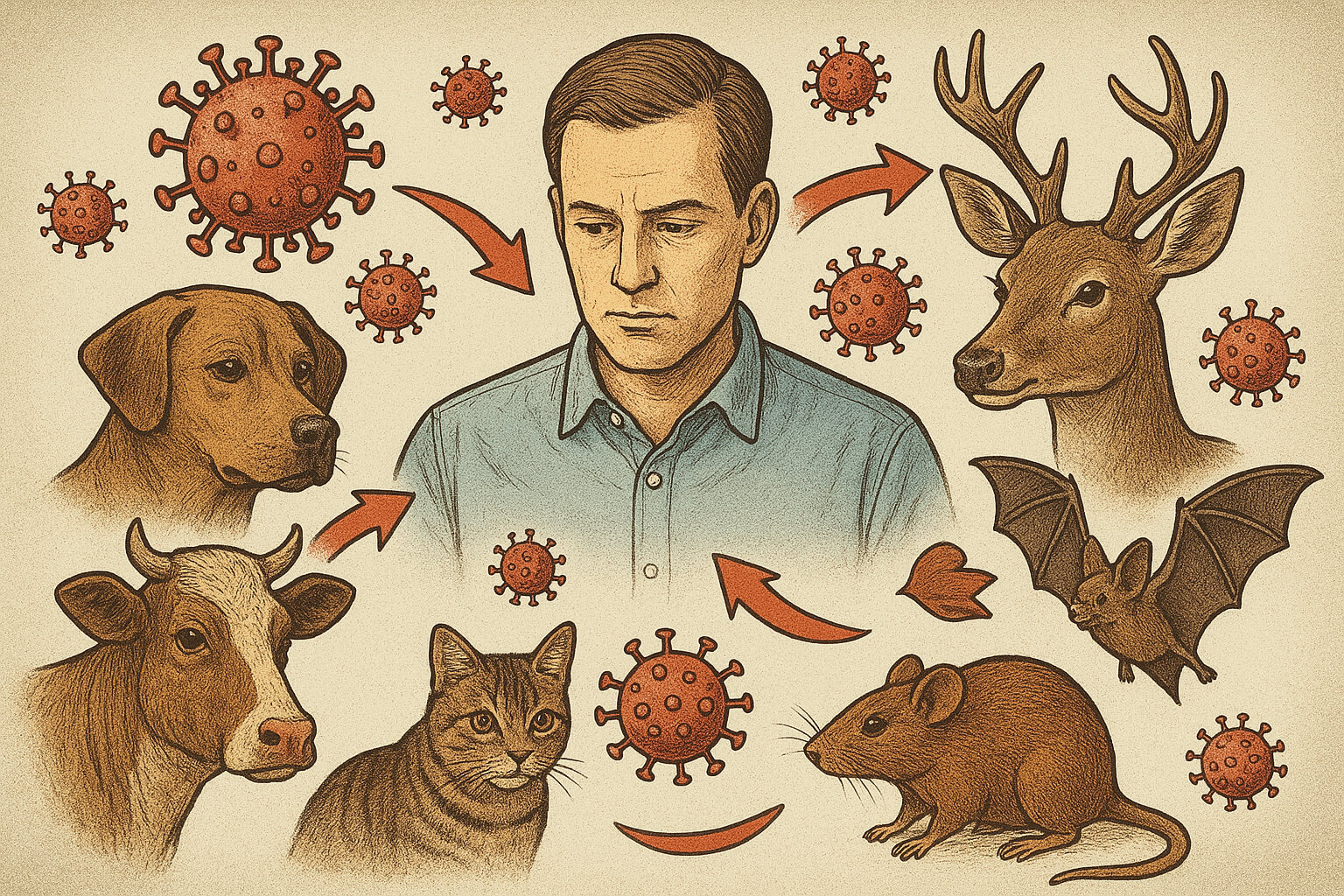
Visual representation of humans, pets, and wildlife connected by virus icons, symbolizing zoonotic disease transmission.

Our lives are deeply connected with animals—through pets, farming, wildlife, and shared ecosystems. These bonds enrich our lives, providing companionship, livelihoods, and ecological balance. Yet this closeness also brings risk in the form of zoonotic diseases—infections that can pass between animals and humans.

Understanding how these spillovers happen, and what we can do to prevent them, is critical for protecting both people and animals.

What Are Zoonotic Diseases?

Zoonoses are diseases caused by viruses, bacteria, parasites, or fungi that are shared between humans and animals. They can spread through:

  • Direct contact: Bites, scratches, or handling sick animals.
  • Food & water: Contaminated meat, milk, or water sources.
  • Vectors: Carriers such as ticks, fleas, and mosquitoes.
  • Environments: Farms, markets, or even homes with poor hygiene.

These diseases aren’t rare—they make up over 60% of known infectious diseases in humans, according to WHO. They can be mild (like ringworm) or severe (like Ebola or avian influenza).

Learn more from global health leaders:

Related reading on responsible prevention: Ethical Pet Ownership

Common Examples (From Everyday to Global)

Zoonoses affect daily life as well as global health:

  • Rabies: Almost always fatal if untreated, but preventable with vaccination. Spread through bites from infected dogs, bats, or other mammals.
  • Salmonellosis: Often linked to contaminated food or handling reptiles and poultry. Causes severe gastrointestinal illness.
  • Leptospirosis: Spread via contaminated water or urine from rodents and livestock. Can cause liver or kidney damage.
  • Avian & Swine Influenza: Viruses that originate in birds or pigs, sometimes mutating to affect humans.
  • Lyme Disease: Caused by ticks that feed on infected wildlife. Increasing with deforestation and climate change.
  • Coronaviruses: SARS, MERS, and COVID-19 highlight how animal reservoirs can lead to global crises.

Community awareness helps lower risks—see How to Help Stray Animals and why Adoption and Animal Rescues reduce unsafe, illegal trade.

How Do Spillovers Happen? The Animal–Human–Environment Web

Zoonotic spillovers are not random—they often follow human-driven pressures:

  • Deforestation & urbanization: As humans clear forests, wildlife is forced into closer contact with farms and communities, raising transmission risks.
  • Food systems & hygiene: Industrial farming, overcrowded animals, and unsafe food handling create conditions for pathogens to spread. Ethical, fair trade systems help reduce these risks.
  • Learn more: Fair Trade Practices

For a deeper look at environmental drivers, see UNEP on zoonoses & environment.

Prevention: What Works (From Home to Policy)

1) Personal & Household

  • Wash hands after handling animals, cleaning litter boxes, or touching raw meat.
  • Keep pets vaccinated and dewormed.
  • Avoid exotic/wild pets; choose adoption via reputable shelters (Why Adoption Is Best).
  • Service and therapy animals should follow strict health and hygiene protocols—see The Role of Service Animals.

2) Community & Schools

3) Veterinary, Public Health & Policy

  • One Health surveillance: Human, animal, and environmental health sectors working together.
  • Trade & welfare reforms: Stronger rules for animal markets, transport, and farming.
  • Disaster planning: Include pets and livestock in emergency shelters to prevent chaotic disease spread.
  • See: Protecting Animals in Disasters

Wellness Foundations That Lower Overall Risk

Strong, healthy communities are more resilient to outbreaks. Preventing zoonoses links directly to general wellness:

What To Do If You Suspect a Zoonotic Infection

  • Seek immediate medical care and disclose any animal exposures, bites, or scratches.
  • Contact a veterinarian if pets or livestock show unusual symptoms.
  • Report unsafe wildlife trade, breeding, or illegal markets to local authorities.

Guidance from experts:

Further Reading

Closing

Zoonotic diseases are a shared challenge at the crossroads of human, animal, and environmental health. By making responsible choices at home, promoting humane practices in communities, and supporting policies that strengthen the One Health approach, we create safer and healthier futures for all species.

Protecting people means protecting animals—and protecting animals means protecting our shared world.

Recent Articles

Stay up to date with the latest tips, expert insights, product reviews, and step-by-step guides to help you grow, create, and succeed—no matter your industry or passion.


Portrait studio with a sitter, soft key light and camera demonstrating directional portrait lighting
Portrait Lighting Patterns: Split, Loop and Rembrandt
Judge the light on the faceA portrait lighting pattern describes the arrangement of light and shadow on the face. It is different from the make of the light, the background color, or the overall editi...
Read More
Two educators reviewing curriculum books, sample worksheets and a checklist in a school library
Choosing a School Curriculum: A Practical Review Checklist
Clarify what decision you can makeChoosing a curriculum is different from choosing a school. A curriculum concerns the sequence of knowledge, skills, learning activities, and assessment, together with...
Read More
Teacher supporting a student using geometric learning materials and a notebook in a classroom
Personalized Learning Approaches: Goals, Support and Feedback
Begin with a learning goalPersonalized learning involves making informed choices about instruction and support for a learner. Start with the knowledge or skill being developed, not with a product or a...
Read More
