
Preventing Substance Abuse Education and Support

September 01, 2025

By RocketPages

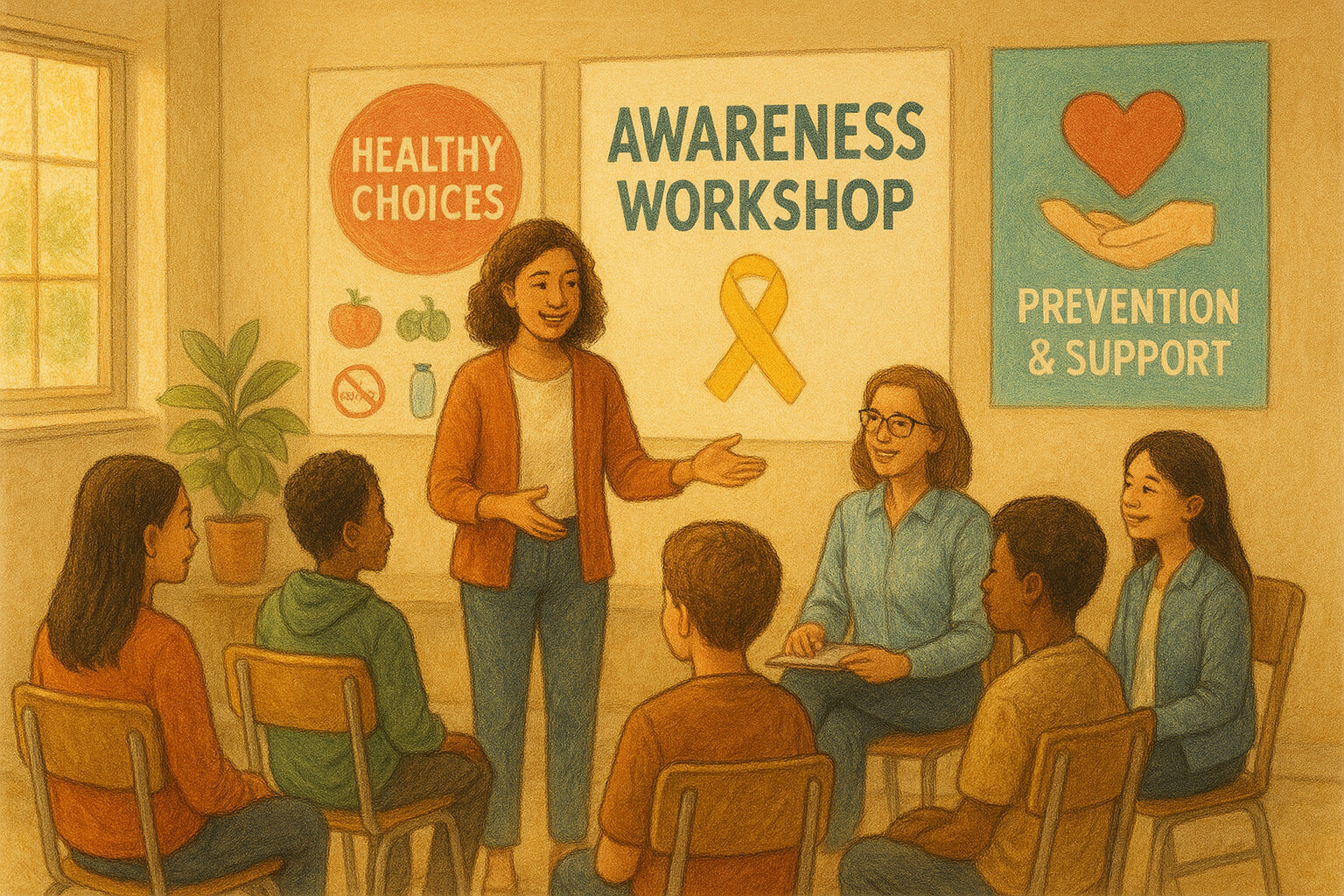
Students in an awareness workshop discussing healthy choices with a counselor, highlighting education and community support in preventing substance abuse.

Substance abuse is a complex and ongoing public health challenge that affects people of all ages and backgrounds. It leads to devastating consequences for individuals, families, and communities—fueling cycles of addiction, crime, homelessness, and poor mental and physical health.

While treatment remains essential for those already affected, prevention is our strongest weapon. Focusing on education, early intervention, emotional support, and community infrastructure allows us to stop the problem before it starts—and build a society where healthier choices are the norm.

The Role of Education in Prevention

1. School-Based Prevention Programs

Education begins early. Studies from the National Institute on Drug Abuse (NIDA) show that comprehensive prevention programs in schools can reduce substance abuse rates by up to 30%. These programs are most effective when:

  • Introduced before high-risk behavior starts (typically in elementary or middle school)
  • Include interactive lessons, not just lectures
  • Involve peer education, real-life scenarios, and critical thinking
Related: See how after-school programs benefit kids and families by offering positive environments that reduce risky behaviors.

2. Parental Involvement and Open Communication

Parents and guardians are one of the first lines of defense. Teens whose parents talk to them regularly about the risks of drugs and alcohol are 42% less likely to use substances, according to the Substance Abuse and Mental Health Services Administration (SAMHSA).

Tips for parents:

  • Be approachable and honest.
  • Avoid scare tactics; focus on facts and empathy.
  • Set clear expectations and model healthy behavior.

3. Public Awareness Campaigns

  • National campaigns like Red Ribbon Week or National Prevention Week use storytelling, celebrity advocates, and community engagement to spread awareness. These efforts help normalize conversations around substance use and make educational resources more accessible.
  • Explore youth empowerment and mentorship strategies that support resilience in high-risk environments.

Building Strong Support Systems

Education alone isn't enough. People at risk need support systems that help them cope with life’s stressors without turning to substances.

Emotional and Mental Health Support

  • Substance use often stems from unaddressed trauma, anxiety, depression, or loneliness. Counseling, therapy, and support groups give individuals the tools to manage their mental health in a healthy way.
  • Related reading: Navigating Grief and Loss: Finding Support and Healing

Peer and Family Networks

Having trusted relationships—whether with family, friends, coaches, or mentors—helps buffer against the temptations of substance use. These support systems:

  • Provide accountability
  • Reduce isolation
  • Promote self-worth and emotional resilience

Community-Level Solutions That Work

Communities have immense power in substance abuse prevention. When neighborhoods work together, they create safer environments and accessible resources.

Community Centers and Outreach Programs

  • By organizing educational events, peer mentoring, and recovery services, community centers become lifelines for at-risk youth and adults.
  • Example: The power of community in health recovery shows how support systems foster healing and reduce relapse.

Access to Healthy Alternatives

  • When communities invest in sports, art, gardening, and vocational training, they offer constructive outlets that reduce boredom, build skills, and provide a sense of purpose.
  • See how vocational training empowers youth and reduces dependence on negative coping mechanisms.

Shifting Focus: From “Just Say No” to “Say Yes To…”

Prevention messaging is most effective when it's positive and empowering, not fear-based.

Instead of solely focusing on what not to do, emphasize what to do instead:

  • Say yes to connection
  • Say yes to healthy expression
  • Say yes to support, purpose, and wellness

Incorporating life skills education—like goal setting, emotional regulation, and conflict resolution—into prevention programs builds long-term resilience.

Interested in supporting youth development? Read Character Education: Nurturing Values in Youth

Prevention Is a Shared Responsibility

Preventing substance abuse is not the job of one group—it’s a collective effort. Schools, families, policymakers, healthcare providers, and nonprofit organizations must work together to build environments where people feel supported, informed, and hopeful.

This includes:

  • Expanding access to affordable mental health care
  • Providing youth with mentors and positive role models
  • Funding community outreach and prevention programs
  • Reducing stigma so individuals feel safe seeking help

Final Thoughts

  • Substance abuse prevention isn’t just about avoiding harm—it’s about creating space for growth, healing, and connection. By investing in education, mental health support, and community engagement, we can prevent suffering before it starts and empower individuals to live healthier, purpose-driven lives.
  • Every person educated, every child supported, and every community strengthened brings us one step closer to a future free from the devastation of substance misuse.

Recent Articles

Stay up to date with the latest tips, expert insights, product reviews, and step-by-step guides to help you grow, create, and succeed—no matter your industry or passion.


Portrait studio with a sitter, soft key light and camera demonstrating directional portrait lighting
Portrait Lighting Patterns: Split, Loop and Rembrandt
Judge the light on the faceA portrait lighting pattern describes the arrangement of light and shadow on the face. It is different from the make of the light, the background color, or the overall editi...
Read More
Two educators reviewing curriculum books, sample worksheets and a checklist in a school library
Choosing a School Curriculum: A Practical Review Checklist
Clarify what decision you can makeChoosing a curriculum is different from choosing a school. A curriculum concerns the sequence of knowledge, skills, learning activities, and assessment, together with...
Read More
Teacher supporting a student using geometric learning materials and a notebook in a classroom
Personalized Learning Approaches: Goals, Support and Feedback
Begin with a learning goalPersonalized learning involves making informed choices about instruction and support for a learner. Start with the knowledge or skill being developed, not with a product or a...
Read More
