
December 24, 2025
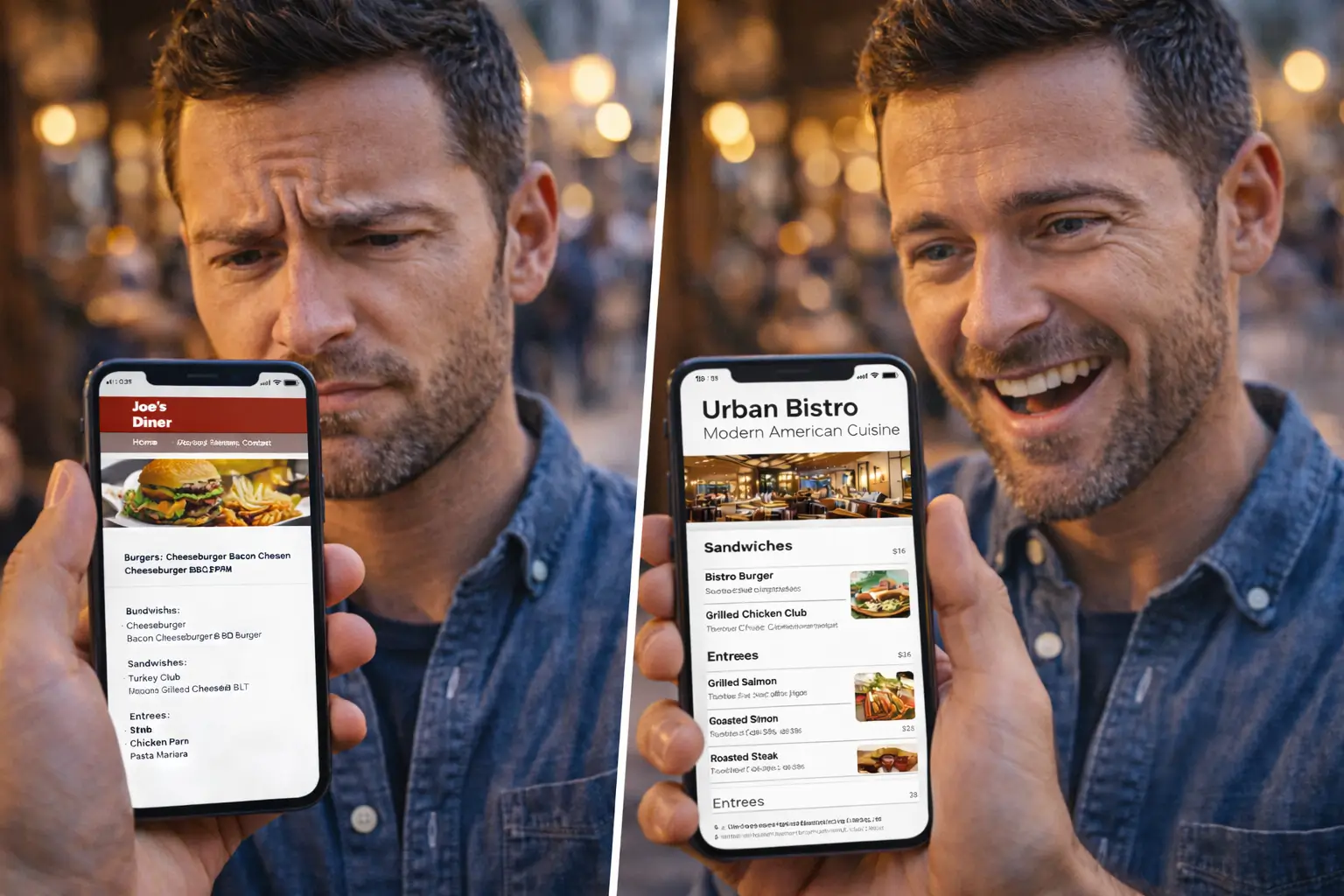
In today’s digital-first dining world, diners form opinions before they ever step through your door. Your website is the first “bite” of your restaurant experience.
If it looks outdated, cluttered, or unclear, visitors subconsciously assume the same about your food. That judgment happens in seconds—and once it forms, it’s incredibly hard to reverse.
Your website doesn’t just inform; it shapes expectations, builds trust, and influences perceived quality. Let’s explore exactly how.
Humans are hardwired for visual decision-making. Before tasting or smelling anything, the brain asks: “Does this look appealing?”
Every element of your website communicates a message about your restaurant:
Food photography is especially critical because it translates the sensory experience into visuals, allowing diners to “taste” with their eyes before ordering: The science of food photography for restaurant websites
A slow-loading, cluttered, or broken website creates negative assumptions, even if your food and service are excellent:
Perception often becomes reality in the mind of a diner. This is why ignoring your website isn’t just aesthetic—it has a real, measurable cost: The cost of not having a website for your restaurant
Your menu is more than a list of dishes—it’s a psychological preview of your culinary quality.
Well-designed menus:
Digital menus also allow fast updates, seasonal specials, and dietary information, creating transparency and reinforcing trust:
Brand consistency isn’t just visual—it communicates competence and attention to detail.
When your colors, fonts, tone, and imagery feel intentional, diners’ brains interpret that as: “This restaurant knows what it’s doing.”
Consistency across your website, menus, and photos reinforces trust and sets expectations for quality and professionalism: Restaurant branding 101: why your online identity matters
Most diners explore your website on their phone, often moments before deciding where to eat.
If your site:
…diners assume the same friction will occur in the dining experience. Mobile-first websites aren’t optional—they’re a direct extension of perceived quality: Mobile-first websites: why restaurants can’t ignore them
Google interprets website quality through user behavior. High bounce rates from confusing layouts or slow pages signal low value, hurting rankings.
A well-structured website not only builds trust with diners but also improves discoverability, bringing more hungry customers to your door:
When your website combines design, menus, photography, and speed, diners don’t just browse—they imagine themselves dining.
This emotional connection drives:
The right website turns passive interest into active engagement: How to turn website visitors into paying diners
Restaurants that invested in website design and visual updates see measurable impact. For example, one restaurant increased bookings by 40% simply by enhancing clarity, imagery, and user experience: How one restaurant increased bookings 40% with a new website
Chefs carefully plate dishes because presentation matters. Your website is the digital equivalent.
It communicates whether your food is:
Before diners taste your food, they taste your website. Make that first bite unforgettable: Design, clarity, and visuals aren’t optional—they’re your first flavor impression.
Stay up to date with the latest tips, expert insights, product reviews, and step-by-step guides to help you grow, create, and succeed—no matter your industry or passion.