There is a moment that every serious guitarist eventually experiences — the moment when you stop thinking about the notes you are playing and start thinking about how they sound. Not just whether they are in tune or in time, but the quality of the sound itself: its warmth, its edge, its presence in a room, the way it responds to the lightest touch of your pick, the way it sustains and decays, the way it makes you feel before you have even consciously registered what you are hearing.
That moment is the beginning of a lifelong relationship with guitar tone.
Tone is, in the most fundamental sense, your musical identity as a guitarist. The notes you play are the vocabulary — the words and phrases of your musical language. But tone is the voice that speaks those words, and it communicates as much as the words themselves. A single sustained note played with a warm, slightly overdriven tube amp tone says something completely different from the same note played through a clean solid-state amp with a chorus pedal. The same blues lick can sound mournful through one signal chain and joyful through another. A riff that sounds menacing with heavily gained midrange distortion sounds playful and light through a clean sparkly tone.
The giants of guitar history understood this instinctively. Jimi Hendrix's tone — the combination of his Stratocasters, his Marshall stacks, his Fuzz Face and Univibe pedals, and above all the ferocity and sensitivity of his right hand — is instantly recognizable from the first note of any recording. Eric Clapton's tone has shifted across different phases of his career, but each phase has been defined by a specific, intentional sonic identity. David Gilmour's sustained, soaring leads are inseparable from his sound — the tone is the emotion. John Mayer has spoken extensively about his obsession with tone, and every aspect of his gear and technique reflects that obsession.
What these players share is not expensive gear or technical superiority — it is intentionality. They have each developed, through years of exploration, experimentation, and attentive listening, a tone that is uniquely theirs and that serves their music with precision and expressiveness. And while the specific gear, technique, and aesthetic preferences differ enormously between them, the underlying process of developing a personal tone is one that every guitarist can engage with, at any level and with any budget.
This guide is your comprehensive roadmap to that process. It covers everything that shapes guitar tone — the instrument itself, pickups and electronics, amplifiers, effects, and the most important tone shaper of all, your own hands and technique. It provides practical strategies for developing and refining your sound. It explores creative experiments that can unlock new tonal territory. And it situates guitar tone within the broader context of music recording and production, where your signal chain connects to the digital tools that capture and shape it further.
Why Tone Is Your Most Important Musical Asset
Before diving into the mechanics of tone shaping, it is worth spending a moment on why tone matters so deeply — why it is worth the investment of attention, time, and often money that serious tone development requires.
Tone Communicates Emotion Before Notes Do
Music is organized sound that communicates emotion. The notes, chords, and rhythms of a piece of music create the emotional architecture — the melodic contours, harmonic tensions and resolutions, and rhythmic impulses that carry emotional meaning. But tone is the medium through which that emotional information travels from instrument to listener, and it shapes the emotional character of every note before the listener's brain has even processed what note is being played.
A thick, warm, slightly compressed tone with long sustain creates an immediate impression of intimacy and fullness that a thin, bright, percussive tone does not — even if both are playing the same chord. A heavily distorted tone with aggressive midrange creates a sense of tension and intensity that a clean, glassy tone dissipates. These are not subtle differences — they are the difference between music that moves people and music that merely informs them.
This is why tone development is not a peripheral concern for guitarists who are serious about musical expression. It is central to the work. The most technically accomplished guitarist in the world is limited in their expressive range if their tone does not serve the emotional content of their music. And conversely, a player with modest technical skills but a well-developed, intentional tone can communicate with a directness and power that more technically advanced players with underdeveloped tones cannot match.
Tone Establishes Musical Identity
Beyond individual emotional expression, tone is the primary vehicle of musical identity. The recognizability of a great guitarist's tone — the ability to identify them from a single note — is one of the most powerful forms of artistic branding available to a musician. It is what makes David Gilmour's leads instantly distinguishable from B.B. King's, even when they are playing in similar tempos and keys. It is what makes Stevie Ray Vaughan's Texas shuffle feel categorically different from Eric Clapton's British blues, even when the underlying musical structures are similar.
Developing a recognizable personal tone requires not just mastering the technical dimensions of gear and technique, but developing clear aesthetic preferences — knowing what you like and why, what serves your music and what does not, and making consistent choices across your signal chain that reflect those preferences coherently. This is a process of self-discovery as much as technical development, and it deepens over the entire course of a musical career.
Understanding music theory and notation connects to this identity-building process — when you understand the language of music formally, you can be more intentional about how your tone serves specific musical situations. The Ultimate Guide to Music Reading for Beginners: Notes, Rhythms, and Symbols provides the foundational music literacy that helps guitarists understand their music more completely — enabling more intentional connections between what they are playing harmonically and rhythmically, and how their tone serves that musical content.
Tone Places You in a Genre and a Mix
Tone also serves important practical functions in musical contexts. In a band or ensemble, your tone must work within the sonic landscape created by all the instruments together — it must find its place in the frequency spectrum, occupy the appropriate sonic space, and contribute to the overall sound without overwhelming other elements or getting lost in the mix.
Different genres have different tonal conventions that serve specific sonic and emotional functions. The scooped midrange, high-gain distortion of metal rhythm guitar is engineered to create maximum aggression and density in a specific frequency range. The bright, clean, single-coil tone of funk guitar is designed to cut through a mix with rhythmic precision. The warm, compressed tones of jazz guitar fill the harmonic space without competing with the horn section. Understanding these conventions — and knowing when to follow them and when to subvert them — is part of developing the tonal intelligence that distinguishes musically sophisticated guitarists from technically competent ones.
What Shapes Guitar Tone: The Complete Signal Chain
Guitar tone is not created at any single point in the signal chain — it is the product of every component from the strings on the guitar to the speakers in the amp, with every element in between contributing to the final sound. Understanding each link in this chain, what it contributes, and how to optimize it is the foundation of informed tone development.
1. The Guitar: Your Tonal Foundation
- The guitar itself is the beginning of everything. Before any signal reaches a pickup, the acoustic resonance of the instrument — shaped by its body construction, the woods used, the neck profile, the bridge design, and dozens of other physical characteristics — determines the raw sonic material that the pickups will convert to electrical signal. This acoustic foundation shapes the tone in ways that no amount of downstream processing can fully compensate for.
- Body construction and tonewoods are among the most significant variables. A solid mahogany body, as found in a Les Paul, produces a warm, thick tone with strong midrange and generous sustain — ideal for rock, blues, and metal. An alder body, standard in many Stratocasters, offers a more balanced frequency response with clear highs and punchy lows. Ash bodies tend toward brightness and articulation, while swamp ash adds warmth and complexity. Semi-hollow and hollow body guitars introduce the acoustic resonance of the body cavity into the tone, adding airiness, warmth, and in the case of full hollow bodies, potential feedback at high volumes.
- Scale length — the distance between the nut and the bridge saddles — affects string tension, which in turn affects attack character, note clarity, and overall feel. Longer scale lengths, like the 25.5" standard of most Fenders, produce tighter, brighter tones with more note-to-note clarity. Shorter scale lengths, like the 24.75" of most Gibson guitars, produce a slightly warmer, looser tone with a different attack character.
- String gauge is one of the most accessible and immediately impactful tone variables. Heavier strings produce more volume and mass of tone — more fundamental, more sustain, more physical resistance. Lighter strings are easier to bend and produce a brighter, more immediate tone. The relationship between string gauge, playing technique, and tonal preference is deeply personal — legendary players like Stevie Ray Vaughan famously used extremely heavy strings, while other iconic players prefer lighter gauges.
2. Pickups and Electronics: Your Guitar's Voice Box
- If the guitar body is the acoustic instrument, the pickups are the microphone — the transducers that convert the mechanical vibration of the strings into the electrical signal that travels through the rest of the signal chain. The character of that transduction is one of the most significant tonal determinants in the entire chain.
- Single-coil pickups, as found in Stratocasters, Telecasters, and many vintage-inspired guitars, produce a clear, articulate tone with strong high-frequency content and a characteristic "bite" that makes them particularly effective for clean and lightly overdriven tones. The clarity and spankiness of a good single-coil through a clean amp is one of the most beautiful sounds in guitar — perfectly suited to funk, country, blues, and pop. The trade-off is susceptibility to electromagnetic interference — the 60-cycle hum that is the signature noise floor of single-coil pickups.
- Humbuckers, invented by Seth Lover at Gibson in the 1950s to eliminate the single-coil hum, use two coils wired in opposition to cancel electromagnetic interference. The sonic consequence of this cancellation is a pickup that is warmer, thicker, and more compressed than a single-coil — with stronger midrange, more sustain, and a darker high-frequency character. Humbuckers are the foundation of classic rock, metal, jazz, and any application that prioritizes warmth and power over clarity and articulation.
- P90 pickups occupy the fascinating middle ground — single-coil construction with a wider coil that produces a tone somewhere between a classic single-coil and a humbucker. More midrange punch than a Stratocaster single-coil, more bite and clarity than a humbucker. P90s have experienced a significant revival in recent years, appreciated by players across genres for their uniquely expressive character.
- Beyond pickup selection, the electronics of the guitar — the volume and tone potentiometers, the capacitors in the tone circuit, the wiring configuration — all subtly affect the tonal character and the dynamic responsiveness of the instrument. A guitar wired with premium components and quality control wiring responds differently and typically more musically than one with cheap, poorly toleranced components. Even something as simple as rolling back the tone knob slightly changes the frequency character of the output in ways that can be genuinely beneficial.
3. Amplifiers: The Heart of Your Tone
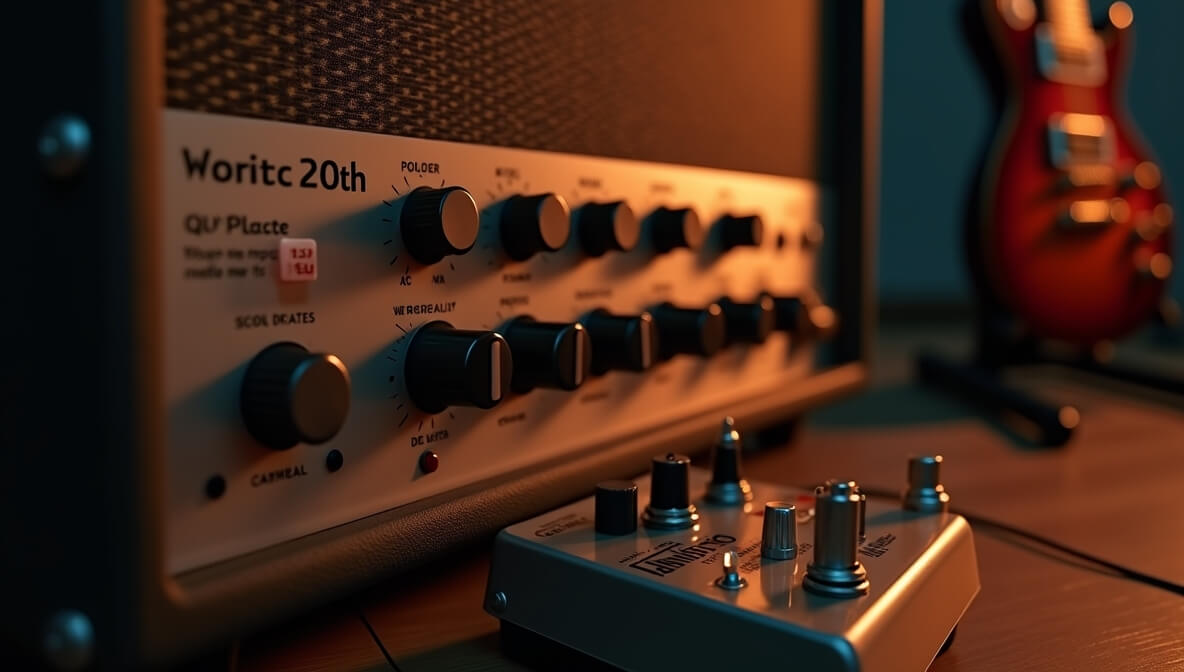
- For most guitarists, the amplifier is the most important single piece of tone-shaping equipment in the signal chain. More than any other component, the amplifier determines the fundamental character of the guitar's sound — its warmth or brightness, its dynamic responsiveness, its saturation character, its frequency content, and the way it interacts with playing technique.
- Tube amplifiers — using vacuum tubes in both the preamp and power amp stages — are the most celebrated choice of tone-conscious guitarists for reasons that are both sonic and tactile. Tube amps produce a distinctive harmonic saturation when pushed — a musical distortion character that becomes progressively richer and more complex as the input signal increases, responding dynamically to the player's touch in ways that solid-state circuits typically do not. Playing hard produces more saturation and compression; playing softly cleans up. This touch-sensitivity is one of the most valued characteristics of a great guitar amp, and it is one that tube circuits produce most naturally.
- The difference between a great tube amp and a mediocre one can be profound — and understanding how to use the amp's controls to shape your tone is fundamental to getting the best from your signal chain. The EQ controls on an amplifier — typically bass, middle, and treble, sometimes with presence and resonance — are more powerful tone-shaping tools than most guitarists initially appreciate. Small adjustments to the midrange, in particular, can dramatically change the character of a tone — boosting mids for warmth and cut, scooping them for a more modern or metal character.
- Solid-state amplifiers use transistor-based circuits rather than tubes, producing a cleaner, more consistent sound that does not respond to input level in the same way as tubes. For applications that demand extreme cleanliness and consistency — certain jazz styles, country, high-headroom rhythm tones — solid-state amps have genuine advantages. They are also lighter, more reliable, and lower maintenance than tube amps.
- Modeling amplifiers and digital profilers have become increasingly sophisticated tools, capable of producing highly accurate simulations of both classic and boutique tube amp characters, as well as an enormous variety of speaker cabinet and microphone combinations. For home recording, practice, and situations where a wide variety of tones is needed from a single unit, quality modeling amps now provide genuinely excellent tonal options.
- When recording your amp's output for capture in a digital audio workstation, the audio interface through which the signal enters your computer is a critical tonal link. Understanding Audio Interfaces: The Gateway to High-Quality Sound Recording explains everything you need to know about selecting, configuring, and using audio interfaces for guitar recording — ensuring that the tone you have carefully developed in your amp and signal chain is captured accurately and with the quality it deserves.
4. Effects Pedals: Enhancement, Colour, and Transformation
- Effects pedals are the most visible and in some ways the most misunderstood element of tone shaping. In the hands of players who use them thoughtfully, effects are precision tools that enhance and extend the expressive range of a guitar tone. In the hands of players who approach them without discipline, they become a way of burying mediocre base tone under layers of processing that obscure rather than express.
- The foundational principle of effective effects use is straightforward: your clean, unprocessed tone should sound good before you add anything. If the core tone — guitar into amp, no effects — does not excite you, adding effects will not fix it. Effects should enhance a tone that is already working, not compensate for one that is not.
- Overdrive, distortion, and fuzz add harmonic saturation and sustain to the signal, ranging from the gentle edge of a low-gain overdrive through the aggressive saturation of a high-gain distortion to the chaotic, asymmetrical clipping of a fuzz pedal. Each has its place and character, and the interaction between a specific overdrive or distortion pedal and a specific amplifier is one of the most important and most explored tonal relationships in guitar.
- Reverb and delay are the spatial dimension of guitar tone — the tools that place the guitar in a sonic environment, from the smallest room to the most cavernous space. Used tastefully, reverb and delay transform a dry, close guitar sound into one that breathes and inhabits a space, adding dimension and emotional resonance that dry tones cannot achieve. Reverb and Delay: Adding Depth to Your Mixes provides a comprehensive exploration of how these effects work, how to set them effectively, and how to use them musically rather than just technically — essential reading for any guitarist seeking to use time-based effects with intentionality and taste.
- Modulation effects — chorus, flanger, phaser, tremolo, vibrato — add movement and animation to guitar tones, creating the swirling, pulsing, or shimmering textures that define specific sonic aesthetics from 1960s psychedelia to 1980s clean tones to modern ambient guitar.
- Compression is one of the most powerful and least understood tone-shaping tools available to guitarists. A compressor evens out the dynamic range of the signal — reducing the difference between the loudest and quietest notes — and in doing so, changes the attack character, sustain, and overall feel of the tone. Used subtly, compression makes a clean tone feel silkier and more even. Used aggressively, it creates the hyper-compressed, percussive character of country chicken-picking or funk rhythm playing. Compression in Music Production: A Beginner's Guide demystifies this often-confusing tool with clear, practical explanations that are as relevant to guitarists as to producers — helping you understand what compression is actually doing to your signal and how to use it musically.
- Pedal order — the sequence in which effects are connected in the signal chain — affects tone significantly and is one of the most frequently debated topics in guitar tone discussion. The conventional signal chain runs: tuner → dynamics (compression, volume) → gain (overdrive, distortion, fuzz) → modulation (chorus, phaser, flanger) → time (delay, reverb). But "rules" in tone shaping exist to be understood and then broken intentionally — placing reverb before overdrive, for example, creates a distinctly different and sometimes more interesting tonal result than the conventional order.
5. Your Hands: The Irreplaceable Tone Shaper
- Every experienced guitarist understands, at some level, that gear is only part of the tone equation. The rest is the player — the physical technique, the musical intuition, and the personal touch that make the same gear sound completely different in different hands. This is not a metaphor or an overstatement. It is a documented phenomenon: give the same guitar and amp to two players with different techniques, and they will sound different.
- Pick attack — how hard you strike the string, at what angle, with what part of the pick — shapes the attack transient of each note and the harmonic content of the signal. A hard, perpendicular attack produces a bright, aggressive attack. A softer, angled attack produces a warmer, rounder onset. These differences are subtle in isolation but cumulative across an entire performance — they shape the overall character of the playing.
- Picking position — where along the length of the string you pluck — has one of the most dramatic effects on tonal character available to the guitarist without changing any gear settings. Picking near the bridge emphasizes the treble harmonics and creates a thinner, brighter, more aggressive tone. Picking over the neck pickup area produces a warmer, fuller, more vocal tone with stronger fundamental. Moving between positions during a performance is one of the most expressive and most underused tonal techniques available.
- Vibrato, bends, and articulation — the physical gestures that animate notes beyond their bare pitch content — are among the most personal and most developed aspects of any guitarist's technique. B.B. King's vibrato is instantly recognizable. So is Eric Clapton's. These techniques are shaped by years of playing, listening, and physical refinement — they are the most deeply personal aspect of guitar tone, and the most difficult to teach or acquire from external resources.
- Developing the ear to perceive these subtleties in your own playing, and in the playing of guitarists who inspire you, is one of the most important long-term tone development practices. Ear Training Exercises: How to Hear Chords and Melodies provides structured approaches to developing the aural acuity that allows you to identify tonal nuances, recognize what makes specific tones work, and hear your own playing with the critical precision that intentional tone development requires.
Practical Strategies for Developing Your Guitar Tone
Understanding what shapes tone is necessary but not sufficient — the real development happens through deliberate practice, systematic experimentation, and attentive listening. Here are the strategies that produce the most significant tone development over time.
Start With Clean Tone and Work Outward
- The most common tone development mistake is reaching for gain and effects before establishing a great clean tone. Clean tone is unforgiving — it reveals the quality of the guitar, the pickup output, the amp's preamp character, and the player's technique without any saturation or processing to smooth over deficiencies. If the clean tone is thin, harsh, or lifeless, no amount of downstream processing will truly fix it.
- Begin your tone development by working exclusively with clean tones until you genuinely like what you hear. This process typically involves careful attention to string action and intonation, pickup height adjustment, amp EQ optimization, and the development of picking technique that produces the desired attack character. Once you have a clean tone you are proud of, additions — a light overdrive, some reverb, maybe a touch of compression — enhance something that is already working.
Record and Critically Listen
- One of the most powerful tone development practices is recording yourself and listening back critically — in headphones, on different speakers, at different volumes. The tone that sounds great through your amp in the room may sound completely different when captured through a microphone and played back through a different system. Regular recording practice reveals discrepancies between how you perceive your tone in the playing environment and how it actually sounds to a listener, which is ultimately the only perception that matters musically.
- Integrating this practice with digital audio workstation software creates a powerful feedback loop for tone development — recording multiple takes with different settings and comparing them objectively, processing guitar tracks to understand how your tone fits in a mix, and developing the production perspective that transforms good guitar tones into great recorded guitar sounds. Digital Audio Workstations Explained: Choosing the Right Software helps you navigate the DAW landscape to find the right tool for your recording and tone development workflow — covering the major options with their specific strengths and the considerations that should guide your selection.
Develop Your Amp Relationship Before Your Pedal Collection
- Many guitarists accumulate effects pedals in search of better tone when the more productive investment would be in understanding and optimizing their amp. An amp that is dialed in correctly — the right gain staging, the right EQ balance, the right volume for the gain structure to behave as intended — produces tone that no pedal collection can replicate. Pedals work best as supplements to a great amp tone, not substitutes for it.
- Spend time learning your amp's controls intimately — how the preamp gain affects tone and compression, how the power amp responds to different master volume settings, how the EQ controls interact with each other and with the guitar's controls. This deep familiarity with your amp's behavior is foundational tonal knowledge that pays dividends regardless of what other gear you add to the chain.
Match Your Tone to Your Genre and Context
- Tone that works brilliantly in one musical context may be completely wrong in another. A heavily saturated, midrange-forward lead tone that cuts through a metal band's full-volume performance will be overwhelming and inappropriate in a singer-songwriter acoustic set. A clean, compressed, glassy country tone that sits perfectly in a country band's mix will disappear in a rock context.
- Developing tonal versatility — the ability to adjust your sound appropriately for different musical contexts — is as important as developing a personal tonal signature. The most musically effective guitarists are those who can serve the music they are playing in any context, which sometimes means dramatically changing the signal chain and approach from one musical situation to another.
Embrace the Plateau and Push Through It
- Every guitarist who takes tone development seriously will encounter periods of plateau — times when the sound feels stuck, when nothing seems to improve, when the gap between how your tone sounds and how you want it to sound feels insurmountable. These plateaus are a normal part of the development process, and they are often the precursor to the most significant breakthroughs. Overcoming Plateaus: Strategies for Breaking Through Learning Barriers addresses this universal experience with practical, evidence-based strategies for breaking through creative and technical stagnation — approaches that are as applicable to tone development as to any other dimension of musical skill.
Guitar Tone in the Mix: Understanding the Bigger Picture
For guitarists who record or play in bands, individual tone quality is only part of the picture. How your tone interacts with other instruments in a mix — where it sits in the frequency spectrum, how it complements or conflicts with other sounds — is equally important and requires a different kind of listening and optimization.
Frequency Space and Mix Relationships
- In any ensemble or recording, each instrument occupies a portion of the audible frequency spectrum, and the goal of good arrangement and mixing is to ensure that every element has its own space — clearly audible, contributing to the overall sound without masking or competing with other elements. Guitar typically occupies a broad range of the mid-frequency spectrum, and the specific EQ character of the guitar tone determines how it relates to other instruments in that range — bass, keyboards, vocals, and other guitars.
- Understanding how to shape your guitar tone to serve the mix — which frequencies to boost or cut, how much midrange presence helps you cut through without overwhelming the vocals, how to use the amp's EQ and presence controls to find the right spectral balance — is one of the most practically important tone development skills for any guitarist who plays with other musicians. Understanding the Basics of Music Mixing and Mastering provides the foundational framework for understanding how individual instruments, including guitar, are shaped and balanced within a mix — giving guitarists the production perspective that makes them better collaborators and more sonically aware players.
Creative Tone Experiments: Breaking Out of the Familiar
Some of the most interesting and most personal tonal discoveries happen through deliberate experimentation — trying approaches that are outside your normal habits and seeing what they reveal. Here are some creative experiments worth trying.
Roll off the tone knob entirely and play through a clean amp. The resulting tone — all fundamental, almost no high-frequency content — is surprisingly musical and forces a different kind of playing. Many jazz guitarists and blues players use variations of this approach to great effect.
Place a reverb pedal before your overdrive in the signal chain. Conventionally, reverb goes after gain — but running a room or plate reverb into the front end of a distortion or overdrive creates a smeared, washy, atmospheric overdrive character that is genuinely different from anything achievable in the conventional order.
Use extreme picking position variations within a single phrase. Start a phrase picking near the bridge and gradually migrate toward the neck pickup as the phrase develops. The tonal transformation that results — from bright and aggressive to warm and full — is a form of musical expression that does not require any gear changes at all.
Record a guitar part and intentionally play it back through a different signal chain than the one it was recorded with. The disconnect between the tone you were hearing while playing and the tone you are hearing on playback can be startling and revealing — and sometimes the "wrong" tone for a part is actually more interesting than the intended one.
Your Tone Will Evolve: Embrace the Journey
One of the most important things to understand about guitar tone is that it is not a destination — it is a journey. The tone you have today is not your final form. As your playing develops, as your musical influences expand, as your aesthetic sensibilities mature and evolve, your relationship with tone will change in ways that are impossible to predict and fascinating to experience.
The tone that excited you five years ago may feel limiting now. The gear you once thought was permanent may be replaced by something that serves your current musical vision better. The genre you were committed to may give way to something new, requiring a completely different tonal approach. All of this is not a failure of commitment — it is the natural evolution of a developing musical identity.
Stay curious. Keep listening to music that moves you and trying to understand why the tones in it affect you the way they do. Stay honest about what serves your music and what does not. And resist the temptation to chase trends, accumulate gear for its own sake, or measure your tonal development by comparison to other players. The goal is not to sound like someone else — it is to sound more completely and more intentionally like yourself.
Conclusion: Tone Is the Voice Behind the Notes
Great guitar tone is not primarily about expensive gear or endless tweaking. It is about intentional expression — developing a sound that serves your music, reflects your personality as a player, and connects you to your audience with directness and authenticity.
The chain of elements that shapes that sound — from the resonance of your guitar's body to the character of your pickups, the warmth of your amplifier, the space created by your reverb, and the sensitivity of your touch — is yours to understand, shape, and evolve throughout your musical life. Every element offers creative decisions. Every decision reflects your values and preferences as a musician.
Engage with those decisions consciously, listen attentively and critically, experiment fearlessly, and let your tone grow with you. The sound you are developing is not just a technical achievement — it is your musical voice, and it is worth every moment of attention you give it.
Explore Further: